Fallout from Indonesia's Raw Material Export Restrictions... Will South Korean Electricity and Food Prices Rise?
- Input
- 2026-07-06 05:59:00
- Updated
- 2026-07-06 05:59:00
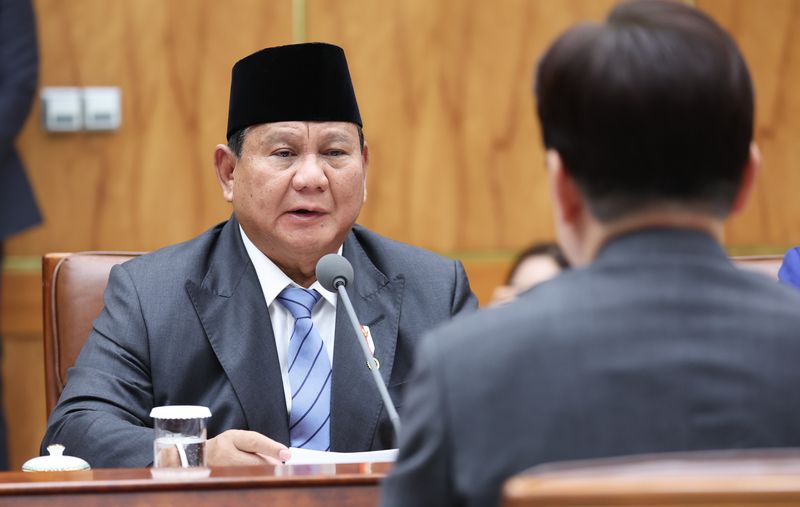
Indonesian President Prabowo Subianto speaks at an expanded summit with President Lee Jae-myung held at the Blue House on the 1st.
Consequently, the current export method, which is directly handled by private companies, is scheduled to transition to a system where state-owned enterprises act as intermediaries, with the system reportedly set to be fully implemented starting in 2027. The market anticipates that this measure will have a significant ripple effect on the global supply chain.
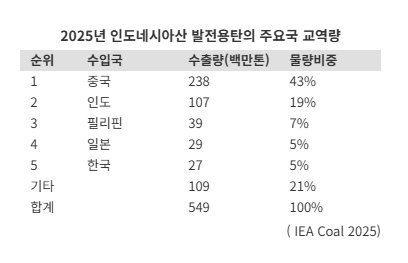
In particular, given that 96% of ferronickel exports go to China, and that China and India are the largest importers of coal and palm oil, China is expected to be the most significantly affected. Indonesia explains the purpose of these regulations as economic necessity, such as securing fiscal soundness and stabilizing the exchange rate.
However, the market interprets this as containing not only economic reasons but also a strategic intention to strengthen resource nationalism and enhance international negotiating power. Since 2014, Indonesia has continuously expanded resource export restrictions, including a ban on raw ore exports, and has pursued policies to induce foreign companies to transfer mining development and operation rights to state-owned enterprises or domestic companies.
In particular, given that this measure was announced amidst conflicts over high-speed rail debt issues with China and nickel production quotas, there is speculation that it could be used as a strategic card in future negotiations with China. Choi Bu-sik, a research fellow at the POSCO Research Institute, pointed out, "It appears inevitable that there will be a burden on Korean industries in the short term," adding, "Rising coal prices could lead to increases in electricity rates, and rising palm oil prices could act as a factor stimulating food prices.
" In fact, Indonesian coal accounts for approximately 25% of Korea's total imports, and specifically for power generation coal, it accounts for about 33%, so significant impacts on electricity costs are expected in the event of price fluctuations. Regarding palm oil, it is known that in Korea, food and biodiesel uses each account for about 50%, and since palm oil and palm by-products account for a high proportion of 66% of biodiesel, a slight impact on diesel prices is also expected.
In particular, given the numerous cases of Korean companies operating local palm plantations, entry into the local market is a concern. It has been pointed out that the impact on palm plantation operators also needs to be closely monitored.
However, there are also forecasts that this could present new opportunities for the stainless steel industry.
Analysis suggests that if the price competitiveness of the Chinese stainless steel industry, which has grown based on low-cost Indonesian nickel, weakens, the Korean stainless steel industry could potentially gain a relative windfall.
Research Fellow Choi Bu-sik stated, "Efforts are needed to resolve the difficulties faced by Korean companies and industries through various government dialogue channels, such as the Korea-Indonesia Strategic Partnership Agreement and Korea-Indonesia Core Minerals Cooperation," adding, "Furthermore, it is time to strengthen monitoring to see if the Indonesian government implements additional export restrictions.
"
[email protected] Park Shin-young Reporter