Could AI Data Centers Drain Water Resources? "Actual Water Consumption Could Be 12 Times Higher Than Reported"
- Input
- 2026-07-05 04:56:37
- Updated
- 2026-07-05 04:56:37
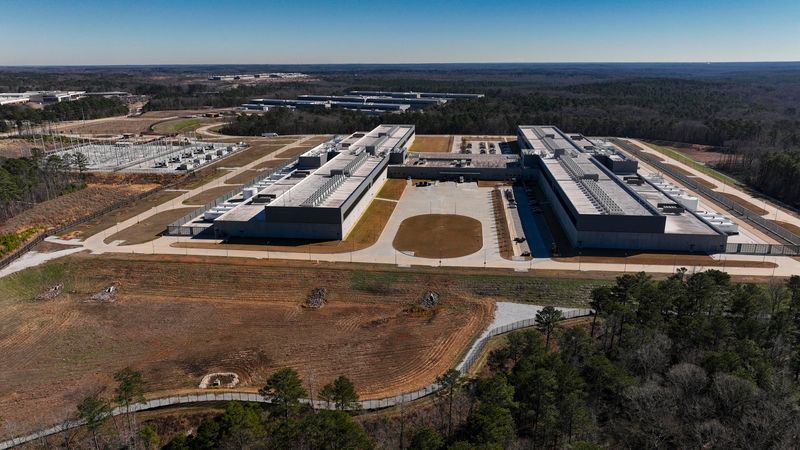
There are growing concerns that artificial intelligence (AI) data centers run by Microsoft (MS), Google, and Amazon could trigger severe water shortages. Depending on how they are powered, water use at these data centers is expected to rise sharply over the next several years.
As the water consumption of so-called hyperscalers, which build massive data centers to provide cloud services, has surged, regions hosting these facilities are facing the risk of water depletion.
Actual water consumption could be 12 times higher than reported
The Wall Street Journal (WSJ) reported on the 3rd local time that concerns over water shortages are mounting as investment in U.S. AI infrastructure this year is estimated at $1 trillion.
Their actual water use is also omitted from annual sustainability reports. Meta Platforms is the only company that discloses both its own data center water use and that of its power suppliers. There is no legal requirement for these companies to disclose water consumption.
According to a 2024 analysis by Lawrence Berkeley National Laboratory, indirect water consumption by U.S. data centers has historically been about 12 times higher than direct consumption. This suggests that the water use of power utilities supplying electricity to data centers could be 12 times greater than the amounts hyperscalers report in their annual filings.
Experts have warned that local conflicts could intensify over water, a resource that is becoming increasingly scarce.
The illusion created by indirect consumption
According to Google's 2025 sustainability report, its direct water consumption for cooling was about 41.261 billion liters, up 34% from a year earlier.
However, that figure does not include the water used by power utilities that supply electricity to the data centers. According to Alex de Vries-Hao, a researcher at VU Amsterdam University in the Netherlands, Google's indirect water consumption is about three times higher than its direct use.
Meta Platforms, MS, and Amazon say they use renewable energy and therefore have zero direct water consumption, but that claim acts as a screen that obscures the true scale of water resources needed to run data centers.
Water resource crisis
Paradoxically, about two-thirds of newly built U.S. data centers are concentrated in water-stressed regions such as Phoenix, Arizona, where drought is severe.
Matthew Pine, CEO of global water treatment company Xylem, pointed out that companies are "chasing cheap land and power," which is why data centers are being built in water-scarce areas as they seek sites for large-scale facilities.
NVIDIA has introduced a closed-loop cooling system that needs no additional water once filled, and MS has said it will adopt the technology in all new data centers starting next year. Even so, the water shortage problem is expected to remain difficult to solve.
Most existing data centers still use older cooling systems that are energy-efficient but evaporate large amounts of water, and retrofitting them would cost an astronomical sum.
Alex de Vries-Hao of VU Amsterdam University warned, "What we are seeing is just the tip of the iceberg."
[email protected] Song Kyung-jae Reporter