Hanwha sets sights on building a 10-cm-resolution satellite network in very low Earth orbit, aiming to lead the trillion-dollar space market
- Input
- 2026-07-03 08:36:49
- Updated
- 2026-07-03 08:36:49
[Financial News] As the global space economy is rapidly being reshaped by private-sector-led "New Space," Hanwha Group has made a bold move to build a satellite constellation network in very low Earth orbit (VLEO) at altitudes below 400 kilometers. The company plans to vertically integrate everything from satellite manufacturing to data analysis using its own artificial intelligence (AI), based on independent launch vehicle technology such as Nuri (KSLV-II). The strategy is seen as an effort to reduce reliance on overseas partners, secure "space sovereignty," and take the lead in building an independent ecosystem in the global space market, which is expected to grow to $1 trillion.
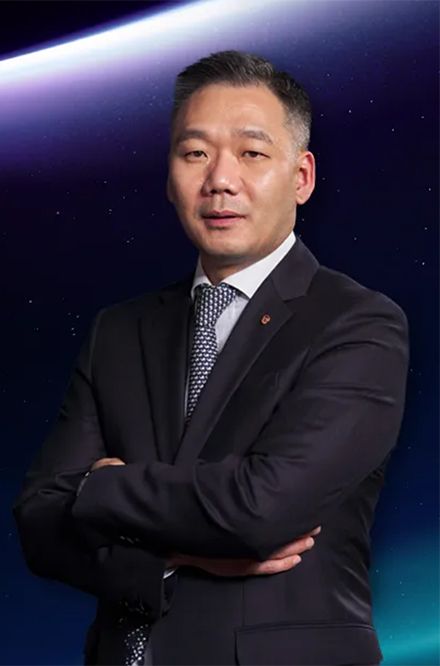
Kim Sun, head of Hanwha Group's space business division and executive vice president at Hanwha Aerospace, unveiled the vision for a VLEO satellite constellation and an integrated value chain in a Hanwha Group newsroom report on the 2nd, stressing the need to secure space sovereignty, which is directly tied to national security.
Kim said, "Space has moved beyond exploration and become an industry, and now it has expanded into an issue directly linked to national security and space sovereignty." He noted that countries without their own launch vehicles, orbital access or frequency allocation capabilities have no choice but to depend on other nations for critical infrastructure.
To that end, Hanwha is targeting very low Earth orbit below 400 kilometers. Traditional low Earth orbit, at around 500 kilometers, is already saturated, while VLEO offers strategic value because it enables high-resolution observation and low-latency communications.
Hanwha's key goal is to combine synthetic aperture radar (SAR) satellites with electro-optical (EO) satellites to build what it says would be the world's first VLEO satellite constellation. The plan is to create a system that can observe the Earth every 30 minutes at 10-cm resolution, day or night and regardless of cloud cover. Technical challenges in VLEO, such as atmospheric drag and exposure to atomic oxygen, will be addressed by launching test satellites at an altitude of 500 kilometers and then gradually lowering their orbit.
Beyond building the satellite network, the company is also accelerating vertical integration to control the entire space business from start to finish. Hanwha Aerospace will provide the launch vehicle, while Hanwha Systems and Satrec Initiative will develop the SAR and optical satellites, respectively. Using its own launch vehicle would shorten the orbital transfer time, which normally takes several months when descending from a standard 500-kilometer orbit, allowing satellites to be injected directly into a 400-kilometer orbit.
Hanwha will also maximize the system's utility by combining it with its own AI foundation model. Rather than simply capturing images, users will be able to query satellite data in plain language through a chatbot, and the AI will provide immediate conversational analysis to support decision-making. The company is targeting both military and civilian demand, from identifying military facilities to opening up Asia-Europe shipping routes through monitoring Arctic sea ice.
The core platform for this integrated solution is "Space Hub." Customers will only need to state what they want to achieve in space, and Space Hub will handle the entire process, from launch to data analysis.
Kim added, "Seventy to 80 percent of Hanwha's launch vehicle and satellite technologies come from small and mid-sized partner companies," and said the group will "create steady and predictable demand to help grow the entire domestic space industry ecosystem."
[email protected] Kim Dong-ho Reporter