Tragedy centered on Samsung Electronics and SK hynix: KOSPI breaks below 7,600, leaving retail investors in panic
- Input
- 2026-07-03 05:40:00
- Updated
- 2026-07-03 05:40:00
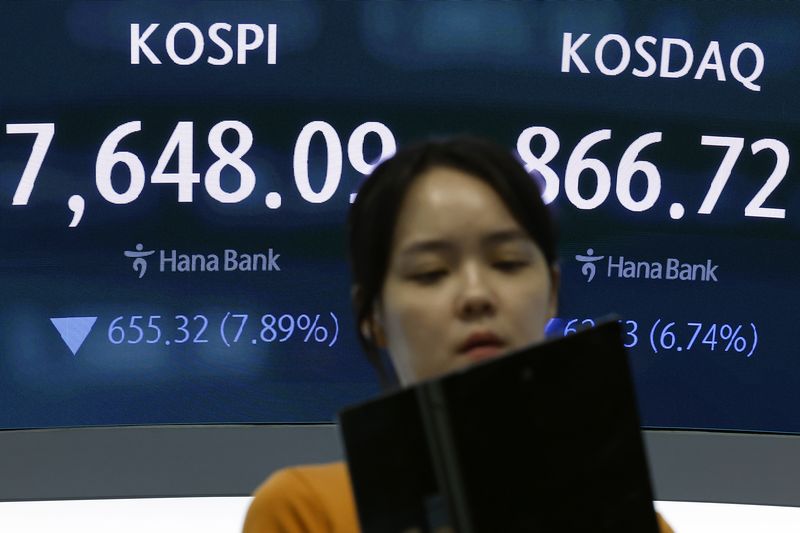
[Financial News] South Korean stocks plunged sharply as the market was hit by a wave of concerns that investment in Artificial Intelligence (AI) infrastructure may have already peaked. On the 2nd, the KOSPI closed at 7,648.09, down 655.32 points, or 7.89%, from the previous trading day. It was the first time in about two weeks, since the 11th of last month, that the index had fallen back into the 7,000 range at the close.
The trigger for the day’s selloff was Meta Platforms' announcement that it would enter the cloud infrastructure business. The market interpreted the move as a sign that computing capacity at AI data centers built by big tech companies may already be oversupplied. Meta, which has led aggressive AI infrastructure investment, said it would lease out its own resources, shaking the long-standing narrative of an 'AI chip shortage' that had driven growth in the semiconductor market.
Amid those concerns, Samsung Electronics and SK hynix, the two pillars of the domestic market, posted record declines. Samsung Electronics fell 9.06% from the previous session to close at 286,000 won, losing the 300,000-won level. SK hynix tumbled 14.57% to 2,187,000 won, marking its steepest drop in about 17 years since November 2008, during the Global Financial Crisis (GFC).
Foreign investors drove the index lower by dumping more than 100 billion won each in Samsung Electronics and SK hynix alone during the day.
Program trading amplified the market’s volatility. As KOSPI 200 Index Futures plunged early in the session, a sell-side circuit breaker was triggered on the Korea Exchange Main Board. In the afternoon, a similar measure was activated in the KOSDAQ market, underscoring the panic across the broader market. Analysts said the decline was worsened by rebalancing demand, as asset management companies and liquidity providers rushed to sell large amounts of spot shares and futures to avoid risk, especially with investors heavily concentrated in Single-Stock Leveraged ETFs tied to Samsung Electronics and SK hynix.
In the financial investment industry, some said the recent extreme concentration in semiconductor stocks has pushed market volatility above even that of risk assets such as Bitcoin. In fact, the KOSPI's annualized volatility has recently reached 57%, while the volatility of Single-Stock Leveraged ETFs linked to Samsung Electronics and SK hynix has exceeded 150%.
Some experts say the current crash is driven by excessive fear. Heo Jae-hwan, a research analyst at Eugene Investment & Securities, explained, "The infrastructure Meta said it would lease is likely to be older equipment, and that does not necessarily mean demand for AI semiconductors as a whole is slowing."
The market is now turning its attention to Samsung Electronics' preliminary second-quarter earnings, due to be released on the 7th. Market participants are expected to use the report to gauge whether medium- to long-term demand and profitability in the semiconductor sector remain solid.
[email protected] Moon Young-jin Reporter