[Editorial] Even after the war ends, soaring prices can leave growth hollow
- Input
- 2026-07-02 18:34:12
- Updated
- 2026-07-02 18:34:12
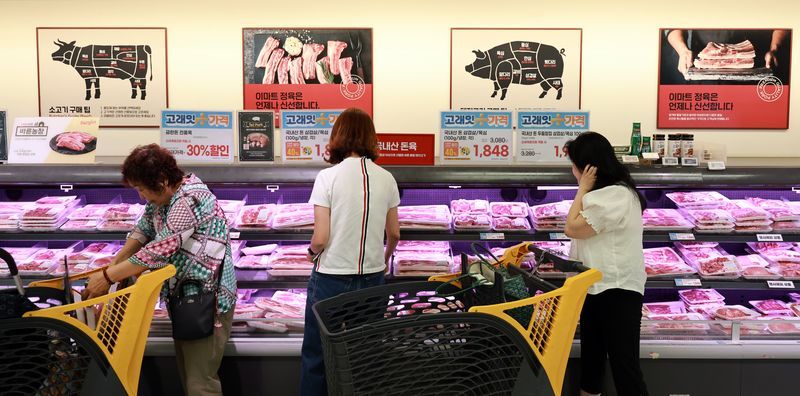
The Ministry of Data and Statistics announced on the 2nd that the consumer price index for June rose 3.2% from a year earlier. That is the highest level in 2 years and 6 months. After inflation stood at 2% in January and February, it rose to 2.2% in March and 2.6% in April amid geopolitical shocks from the Middle East, then reached 3.1% in May and 3.2% in June, staying above 3% for two consecutive months.
The decisive factor was the surge in petroleum prices following the jump in global oil prices. Petroleum prices rose 24.7% from a year earlier, lifting overall consumer prices by 0.93 percentage points. It was the steepest increase since July 2022, when the impact of the Russo-Ukrainian War was at its peak. Higher fuel costs feed into food transportation, delivery fees, and store operating expenses, eventually pushing up restaurant prices as well. Still, the government's cap on petroleum product prices was estimated to have reduced overall consumer inflation by 0.4 percentage points.
The cost-of-living index, which people feel most directly, also rose further from 3.3% in May to 3.4% in June. Food prices climbed 2.3%, while non-food items rose 4.1%. At a famous noodle restaurant in Seoul, a bowl of naengmyeon now costs close to 20,000 won, and samgyetang is not much cheaper. Everyday dishes such as jajangmyeon, gimbap, and kalguksu have also gone up one after another. For office workers and students, lunch has become a daily burden.
Oil prices have eased somewhat thanks to the major positive development of a ceasefire agreement between the United States and Iran, but it is still too early to be optimistic about inflation. In a report released last month on the review of the inflation-targeting framework, the Bank of Korea projected that consumer price inflation would remain around 3% in the second half of this year. That is because oil shocks are reflected in goods and services prices with a time lag. At an inflation situation review meeting on the 2nd, officials also said prices are likely to stay elevated for the time being as demand pressure from the economic recovery grows. Wage increases tied to semiconductor bonuses are stimulating consumption, while a weak won that has exceeded 1,500 per dollar and rising money supply are adding to the pressure, leading many to believe high inflation will not ease easily.
Inflationary pressure is not a problem unique to South Korea. Central banks in major economies, including Europe and Japan, have been raising benchmark interest rates one after another to bring prices under control. The Federal Reserve System has also tightened policy, contrary to President Donald Trump's expectations, and the Bank of Korea has repeatedly said it is willing to raise rates if necessary to rein in inflation.
The problem is that vulnerable groups bear the shock of high prices more heavily. If interest rates also rise, the burden on ordinary households, small self-employed workers, and microbusiness owners living with debt will only grow. The supplementary budget under review by the government must also be approached cautiously. There are growing concerns that expanded fiscal spending could reignite high inflation and a weak won. The government and the Bank of Korea must strengthen policy coordination with greater precision, balancing price stability and economic support. They must not forget that taming inflation is the top priority for people's livelihoods.