[Editorial] Don’t assume the Honam semiconductor project has no problems; assess the conditions carefully
- Input
- 2026-07-02 18:34:10
- Updated
- 2026-07-02 18:34:10
Climate, Energy and Environment Minister Kim Seong-hwan addressed the infrastructure issue for the Honam semiconductor complex on a broadcast on the 2nd and said there was no major problem. He explained that the Yeongsan River and Seomjin River together hold about 1.5 billion tons of water in seven dams, which would be enough.
On power supply, Kim said, "Honam is rich in carbon-free energy sources such as six Hanbit nuclear reactors and renewable energy," adding, "It needs 6.3 gigawatts (GW), and there is currently about 3 to 5 GW of spare power."
If things really were as Kim described, there would be little to worry about. But in reality, the situation is not as problem-free as he suggests. Even if water seems sufficient now, conditions change during droughts. In a climate crisis where floods and droughts alternate, blind optimism is not a good approach. During the severe drought in the southwest in 2022 and 2023, the water levels at Dongbok Dam and Juam Dam fell to just the teens. The Seomjin River project was also canceled after opposition to the Four Major Rivers project. Semiconductor plants must operate 24 hours a day. If water cannot be supplied, serious damage could follow.
The same applies to electricity. Although Hanbit Nuclear Power Plant exists, the source of the claimed surplus power is renewable energy. Wind and solar generation can fluctuate sharply depending on the weather, so they cannot serve as stable supply sources. In the end, what is needed is a power source that can be supplied continuously over the long term, and for now that means nuclear power. Beyond water and electricity, there are many other key infrastructure needs for building and operating a factory. Transmission facilities are one of them.
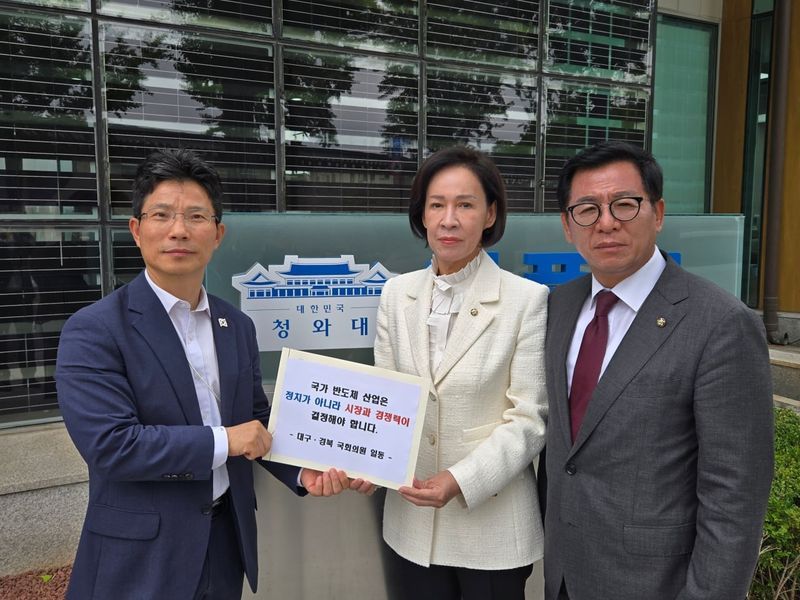
Now that a semiconductor plant is to be built in the Honam region, pointless political wrangling should stop. The process may not have been very transparent, but since the site has now been decided, both ruling and opposition parties should support efforts to complete the complex within the timeframe promised by the president and to secure the necessary infrastructure.
Of course, the government should think carefully about how to secure the conditions needed to build and operate the complex. It must also conduct thorough simulations and prepare without leaving even the slightest gap. If necessary, it should actively consider building additional nuclear power plants in the Honam region, even if that takes time.
The reason construction of the Yongin semiconductor complex is delayed is precisely because of shortages of power and water. The Honam complex could easily run into similar problems. This is no time to boast that there will be no issues. Above all, the government must communicate closely with the companies directly involved in the project, listen carefully to their views, and reflect them in the plan. Even if that was not the case when the site was selected, their arguments and demands should now come first.
Not only power and water, but also related regulations must be revised and restrictions eased if needed for the complex to be built. There have been reports that a "white-collar exemption" to relax working-hour rules may be introduced. Even if that is only possible in this region, all available support measures should be mobilized for the project to get off the ground successfully. The opposition party must also cooperate now. Continuing to drag its feet will only harm the national interest.