'First Indictment by the Special Counsel Team' Trial Begins Over Budget Diversion for Presidential Residence Relocation... Ruling Expected in November
- Input
- 2026-07-02 14:00:50
- Updated
- 2026-07-02 14:00:50
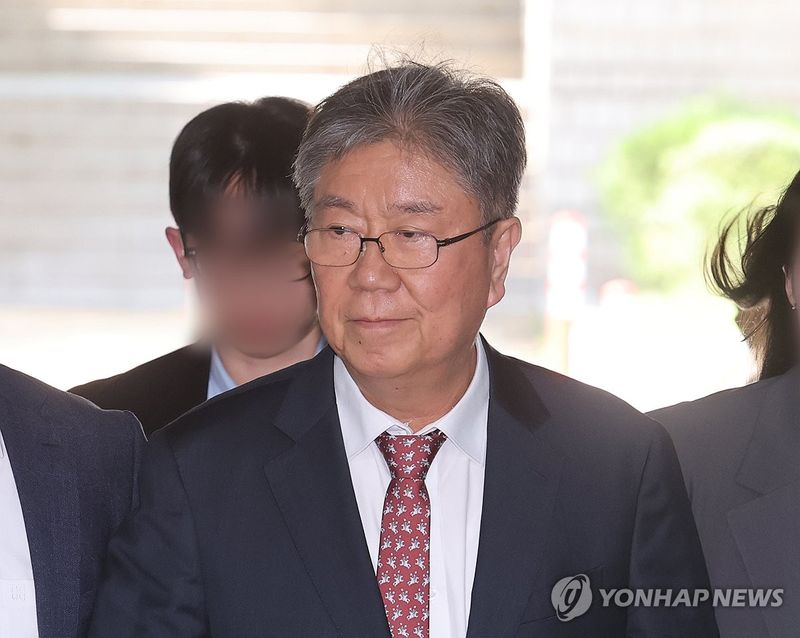
[Financial News] The trial over the 'budget diversion for the relocation of the Office of the President of the Republic of Korea,' the first indictment by the special counsel team led by Kwon Chang-young, is now moving into full swing.
The Seoul Central District Court's Criminal Division 36, presided over by Judge Lee Jung-yeop, held a hearing on the 2nd for former Chief of Staff Kim Dae-ki, former presidential office general affairs secretary Yoon Jae-soon, former presidential office management secretary Kim Oh-jin, and former Interior and Safety Minister Lee Sang-min, all of whom are charged with abuse of authority and obstruction of the exercise of rights.
Considering that the two sides have not yet finalized their positions on the evidence, the court decided to hold one more preparatory hearing on the 15th and set the first trial date for the 22nd. It also said it would proceed with the case with a goal of handing down a ruling by the end of November.
The court identified the key issue in the case as the legal interpretation of who had management authority. It explained, "The central issue is who was in charge from the construction stage after the former Foreign Minister's residence was repurposed as the presidential residence," adding, "Depending on that answer, the legality of using the Ministry of the Interior and Safety budget and whether abuse of authority occurred could change." The court also noted, "This is not a matter to be resolved through witness questioning, but one that must be decided by interpreting the relevant laws."
Meanwhile, a bail hearing for Kim Dae-ki was also held that day. Only Kim appeared in court for the hearing, while the other defendants did not attend. Kim was detained in May in connection with the case.
His lawyer argued that Kim poses no risk of flight or evidence destruction and asked the court to take into account his health after recent surgery for a cerebral hemorrhage. The defense also requested that he be allowed to prepare his case while not in custody.
The special counsel team countered, "Even the evidence opinion statement submitted by the defense shows that it disputes every witness testimony," adding, "If the allegations are not admitted, it is questionable whether there has been any change in circumstances sufficient to justify bail after detention."
It also asked the court to keep Kim in custody, saying there is still a risk that he could destroy evidence and that his status and influence were among the reasons the detention warrant was issued.
Given a chance to speak, Kim said, "I don't know the law well, but in my lifetime I have seen many cases, and I wonder whether this case really needs to go as far as detention." He added, "The special counsel says there is a risk of evidence destruction, but the Yoon Suk Yeol government has collapsed. I have no influence anywhere." He also said he had never contacted Yoon Jae-soon or any other people involved in the case.
The special counsel says the defendants pushed ahead with the budget diversion despite opposition from officials at the Government Buildings Management Headquarters and the Ministry of Economy and Finance, even though the move did not meet legal requirements. As a result, 2.09 billion won in state funds was diverted, and the budget and accounting authority of officials at the relevant agencies was infringed, it said.
Kim, the former management secretary, was also charged with falsely drafting and using a cooperation request letter in the name of the Office of the President of the Republic of Korea, as if a separate office-building remodeling project were being pursued to secure additional funding.
During the investigation, the special counsel said it confirmed signs that the defendants ordered the budget diversion while ignoring objections from the relevant agencies, but tried to make it appear as though each agency had diverted the funds on its own judgment in order to avoid responsibility.
It also said they publicly explained that the work would be completed "within the scope of reserve funds," while in fact carrying out an illegal budget diversion. The special counsel added that it also confirmed a personnel disadvantage was imposed on the section chief in charge at the Government Buildings Management Headquarters after he objected.
[email protected] Jung Kyung-soo Reporter