"Bought OOO, OOO stocks in the U.S. and made dozens of times the return" — the investment secret turns out to be...[In Chi-beom's Stock Investment Boot Camp]
- Input
- 2026-07-04 09:00:00
- Updated
- 2026-07-04 09:00:00
Peter Lynch, who invested in Dunkin' Donuts and Walmart
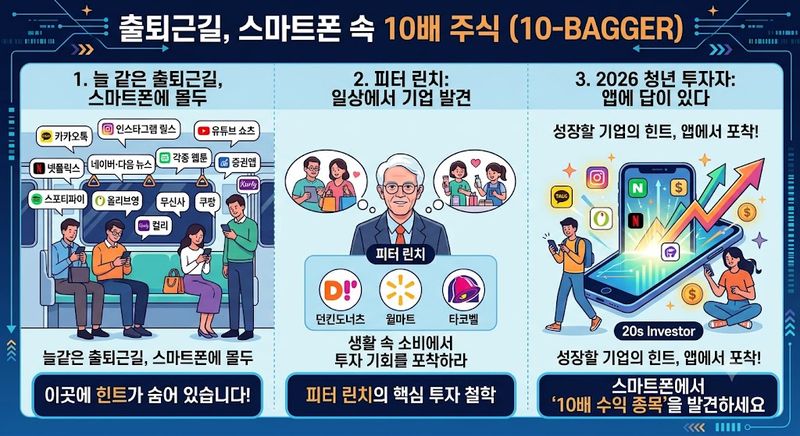
"The advantage of individual investors is spotting changes in companies in everyday life before anyone else."Those are the words of legendary fund manager Peter Lynch.He reportedly found investment opportunities in things such as brands his wife liked at the mall and products his daughter used often. As a result, he invested in Dunkin' Donuts, Taco Bell, and Walmart, and achieved major success.In the past, the starting point for investment ideas was often to look at products or brands that sold well in offline stores.Where can investors in their 20s get ideas in 2026? The answer is probably in your smartphone. Much of the consumption that once took place offline now happens inside smartphone apps. So isn't there also an opportunity to discover stocks there?

From the eyes of a consumer to the eyes of an investor: Instagram
Instagram spread very quickly among people in their 20s in the United States soon after its launch. At first, most people saw it simply as an app for posting photos nicely. Even so, in April 2012, Facebook, now Meta Platforms, acquired Instagram, which had only about 20 employees, for roughly $1 billion, or about 1.1 trillion won at the time. At the time of the acquisition, there was plenty of criticism that it was too expensive. ButFacebook, now Meta Platforms, did not simply buy a photo-sharing app. It bought the trend of social media users shifting from text-heavy use to image- and video-heavy use."Why would the world's largest SNS company pay $1 billion for just a photo app?" If a young Instagram user in the U.S. had asked, "There must be a reason," they would have taken one step further from being a consumer to being an investor.From the news of Instagram's acquisition, they could have read Meta Platforms' growth strategy. For reference, Instagram's advertising revenue recently accounted for about 40% to 50% of Facebook's, now Meta Platforms', total ad revenue, according to eMarketer's 2024 estimate.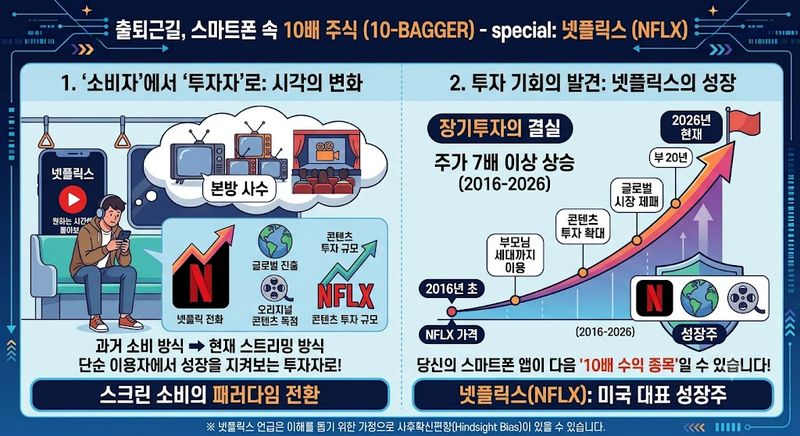
From the eyes of a consumer to the eyes of an investor: Netflix
Let's look at Netflix as well. Even in 2016, many people saw Netflix as little more than a service for watching dramas. But people in their 20s were the first to start watching video on smartphones. They then became a generation that spent more time on OTT than on TV. The culture of watching dramas live as they aired gave way to binge-watching content whenever people wanted. Screen consumption shifted from terrestrial TV, cable, and movie theaters to an on-demand model."This will probably be used by my parents' generation too." Somewhere in the world, there must have been a 20-something Netflix superfan who turned into an investor. They would have watched Netflix's growth through streaming services, exclusive original-content strategies, larger content investments, and expanded global reach. If they had invested for the long term, they would have made substantial gains. Compared with early 2016, Netflix's stock price has risen by more than sevenfold as of 2026. As you know, Netflix has become one of the leading U.S. growth stocks over the past decade.
Why people in their 20s have an edge in Peter Lynch-style investing: I am the trendsetter!
This approach involves sensing signs of megatrends inside smartphone apps and reflecting them in investments. You might ask whether anyone, not just people in their 20s, could do this simply by paying attention. That is true. Still, people in their 20s have a relative advantage. In the early stage of a new consumer trend, they often play the role of trendsetters. Because they lead the trend, they notice changes faster than anyone else. That is different from being an early adopter, who is simply among the first to try a new product or service.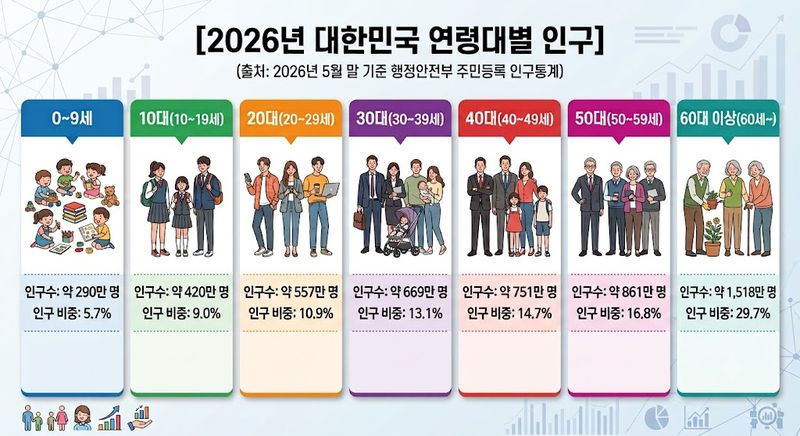
Many companies watch the consumption patterns of people in their 20s
In fact, many companies closely monitor the consumption patterns of people in their 20s. When a new cosmetic product becomes popular, the rankings in the Olive Young app change first. A rising fashion brand appears first on Musinsa. When food culture shifts, Kurly's popular products change. When everyday spending habits change, Coupang's best-selling items also change quickly. For most people, it is just ordinary consumption. But companies and investors read it as an important early signal of future trends.If a generation is a trendsetter, it will lead such changes and detect the movement toward a larger cross-generational trend first. This is exactly what 20-something investors should pay attention to. What if you built the habit of stepping back, objectifying yourself and those around you, and observing calmly? Your chances of reading change before the market would rise. Even if not every time, you could spot the warning signs of a megatrend before analysts on Yeouido or fund managers do. In other words, you could get ahead of the companies driving the megatrend.
Develop the power of observation
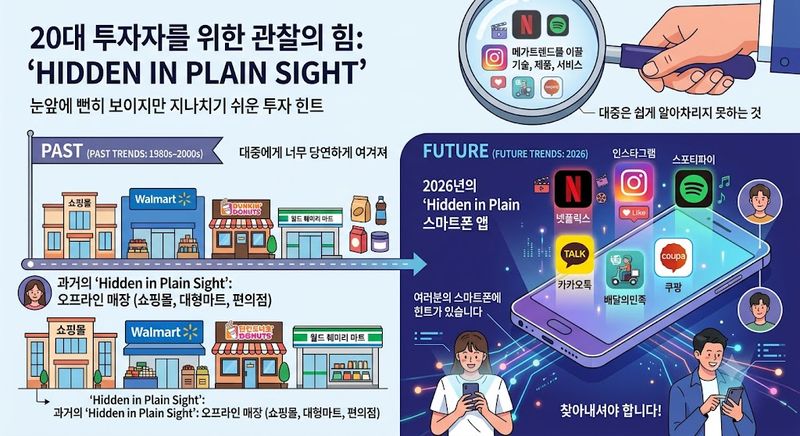
From now on, investors in their 20s should remember the word "observation." There is a book called The Power of Observation. Its original title is Hidden in Plain Sight. It means something hidden in full view. It carries a similar meaning to the Korean saying that the darkest place is under the lamp. Individual investors in their 20s need to develop the ability to find it.The technologies, products, and services that drive megatrends are not hidden somewhere far away. Rather, they are in plain sight, where anyone can see them. They are simply so obvious to the public that no one notices them easily. Like air or water. There will surely be companies that 20-something investors should consider as investment targets, just as Instagram and Netflix once were. You have to find them. The clue is already in your smartphone. From the 1980s through the 2000s, Hidden in Plain Sight meant shopping malls, big-box stores, convenience stores, and supermarkets. In 2026, it could be smartphone apps.
However, observation is only the starting point of investing, not the destination. Good investors do not stop at observation; they move from observation to verification. Once you get an idea through observation, you must test your investment thesis, gain conviction, and then go through the process of making a long-term investment in the company. The stock market is a place where numbers move. But what moves those numbers is always human behavior. The moment you take off the glasses of the consumer and put on the glasses of the investor, your ordinary daily life becomes your own investment lab.
[About the Author]
Senior Managing Director In Chi-beom worked for 30 years in corporate communications roles, consistently serving as the person in charge of PR, IR, ESG, and CSR across finance at Samsung Life Insurance, IT at AhnLab, Hancom, and SK Communications, and retail at Samsung Tesco. He is currently focused on writing books about investing and corporate communications at KPI Investment Advisory. He believes that stock market success begins above all with the process of automating the right habits for handling money.

[email protected] Kim Seong-hwan Reporter