"Foreign Funds Rush Into Japan Stocks..." Net Buying in First Half Tops 10 Trillion Yen, a Record High
- Input
- 2026-07-02 13:53:47
- Updated
- 2026-07-02 13:53:47
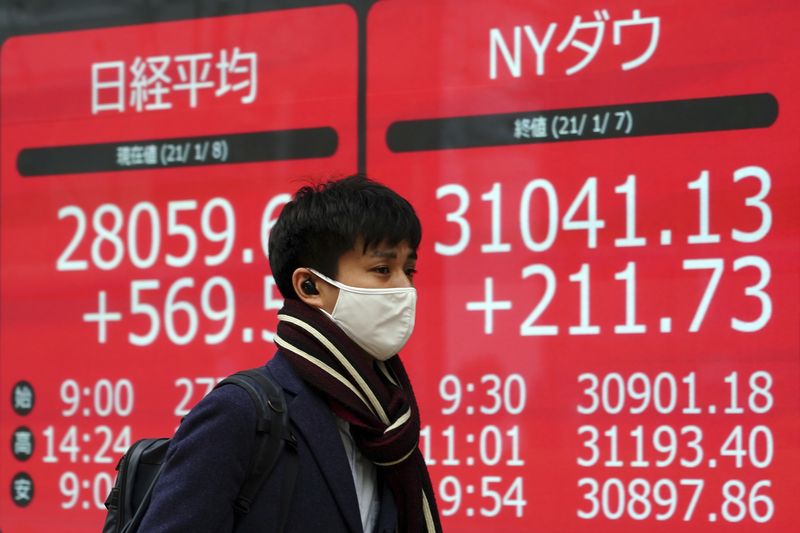
[Financial News Tokyo = Correspondent Seo Hye-jin] Nikkei, Inc. reported on the 2nd that foreign investors' net buying of Japanese stocks in the first half of this year is expected to reach 10.9391 trillion yen, or about 104.592 trillion won, marking a record high for any half-year period. The rally is being driven not only by improved corporate profitability and capital efficiency, but also by a reassessment of Japan's semiconductor supply chain, which supports the artificial intelligence (AI) industry.
According to the Tokyo Stock Exchange (TSE), foreign investors were net buyers of 10.9391 trillion yen in spot stocks from the start of this year through the third week of June (June 15-19). That is about five times the amount seen in the same period last year and roughly twice last year's full-year net buying total of about 5.4 trillion yen.
The figure also exceeds the 8.3 trillion yen recorded in the first half of 2013, when Abenomics was in full swing. On a half-year basis, it is likely to become the largest amount on record.
The Nikkei 225 Average broke above 60,000 in April and then topped 70,000 in less than two months. As of the end of June, the Nikkei Stock Average had risen 39% this year, far outpacing Europe's STOXX 600 Index, which gained 8%, and the Standard & Poor's 500 Index (S&P 500 Index), which rose 10%.
The area attracting the most foreign capital is AI-related stocks.
Companies that make up the AI ecosystem, including semiconductor equipment maker Tokyo Electron, Fujikura, which has grown rapidly on the back of fiber-optic products for data centers, and Ajinomoto, which has strong competitiveness in semiconductor insulation materials, are being seen as increasingly attractive investments.
Masatsugu Akutsu, chief Japan equity strategist at BofA Securities, said, "Japan has world-class technology in AI hardware, and the range of beneficiaries is very broad." He added, "Foreign investors are looking for a wide variety of investment opportunities."
An analysis of securities reports filed by March-year-end companies included in the Nikkei 225 showed that foreign ownership rose from a year earlier at about 40 companies.
The company with the largest increase was Furukawa Electric, whose foreign ownership ratio rose by 19.6 percentage points. AI- and semiconductor-related firms such as Mitsui Kinzoku and Kioxia Holdings also saw notable gains in foreign shareholding.
Beyond AI, some analysts say Japanese companies are also being revalued for their competitiveness.
Christian Heck, deputy head of the global value team at First Eagle Investments, said, "Japan has many niche companies that lead the global market, so investment opportunities are abundant." He added, "We are focusing on software companies whose stock prices have corrected on concerns about AI diffusion, as well as companies with high global market share."
Although volatility has increased recently after the Nikkei Stock Average broke above 70,000, the downside has been limited, analysts said. A trader at a major securities firm said, "Even when hedge funds take profits, long-term institutional investors are quickly stepping in to buy the dip when stock prices correct."
Market watchers also point to policy expectations as a factor supporting foreign inflows. Foreign investors' buying of Japanese stocks accelerated around the launch of the Takaichi Cabinet in October last year.
Hart Alexander, a product specialist at Sumitomo Mitsui DS Asset Management, said, "European investors have repeatedly asked about the Takaichi government's approval ratings and growth strategy." He added, "Expectations for the new government's growth policies are very high."
However, some warn that foreign funds could leave quickly if policy momentum weakens. During the Abenomics era, foreign investors were net buyers of 20 trillion yen, or about 191.226 trillion won, worth of Japanese stocks, but they later turned to selling as growth strategies lost steam.
Rick Friedman, portfolio strategist at GMO, said, "If the Japanese government and companies stop their efforts to improve corporate governance, there is a risk that the foreign funds that have recently flowed in could flow back out." He added, "Continuing reforms is the key condition for sustaining the rally in Japan's stock market."
[email protected] Seo Hye-jin Reporter