"Ask him to stay for just one more year, even though he earns less than half of Hong Myung-bo's 3.8 billion won?"... Japan's early World Cup exit is ruthless too [2026 World Cup]
- Input
- 2026-07-02 08:56:31
- Updated
- 2026-07-02 08:56:31
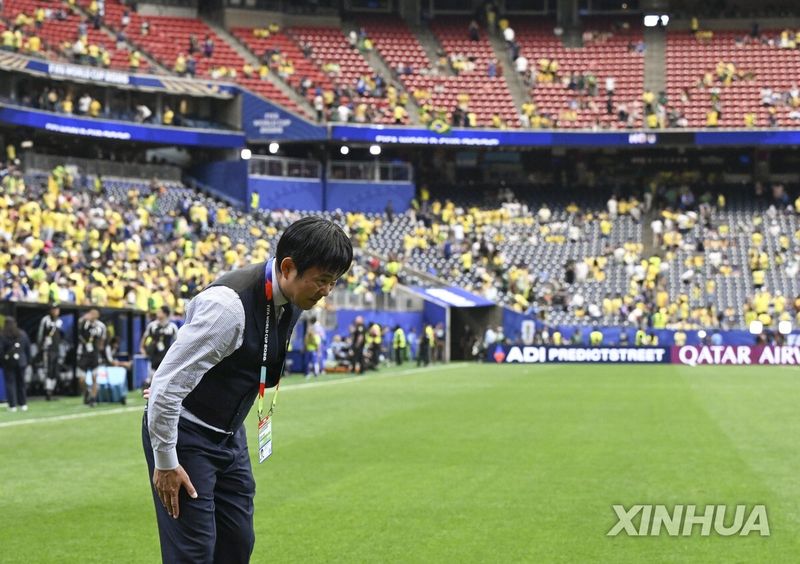
[Financial News] The sense of emptiness felt by Japan's football community is just as deep and painful as it is in Korea.
After four years of relentless preparation and repeated claims that "this time is different," the final result was no better than at the last Qatar tournament. It was a stagnant finish, and the price of that brutal outcome came back as a merciless, time-limited notice to a coach who had devoted eight years to the team.
On the 2nd, major Japanese media outlets including The Asahi Shimbun reported that the Japan Football Association (JFA) plans to ask Hajime Moriyasu, whose team was eliminated in the round of 32 at the North and Central America World Cup, to continue in the job. However, contrary to market expectations, the contract is said to be only a one-year short-term deal, not a four-year extension through the next World Cup. Hopes for the first-ever 12-year reign in Japanese football quickly cooled after the round-of-32 exit.
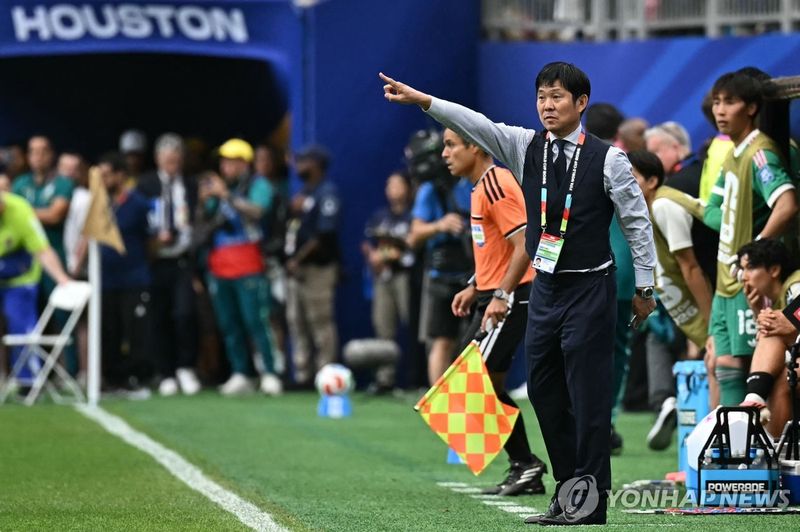
The reason Japanese football has turned so coldly against him lies in a painful history of knockout-stage failures. Led by Moriyasu, Japan showed its strength by drawing 2-2 with the Netherlands in the so-called group of death and advancing to the knockout rounds. In the round of 32, they even struck first against title favorite Brazil and battled evenly until the end. But they were undone by a heartbreaking late winner in the closing minutes of the second half, falling 2-1 and once again missing out on their dream of reaching the quarterfinals for the first time.
A sense of emptiness now hangs over the entire country. Critics have mocked the idea that it matters little if Japan boosts its reputation by beating global powers such as Germany, England, and Brazil in friendlies or other full internationals. The pattern keeps repeating: when the biggest stage arrives, especially in one-off knockout matches, they collapse without fail. However impressive the process may have been, Japanese fans are now expressing deep despair at the reality of a round-of-32 exit, a step backward from the round of 16 at the Qatar tournament.
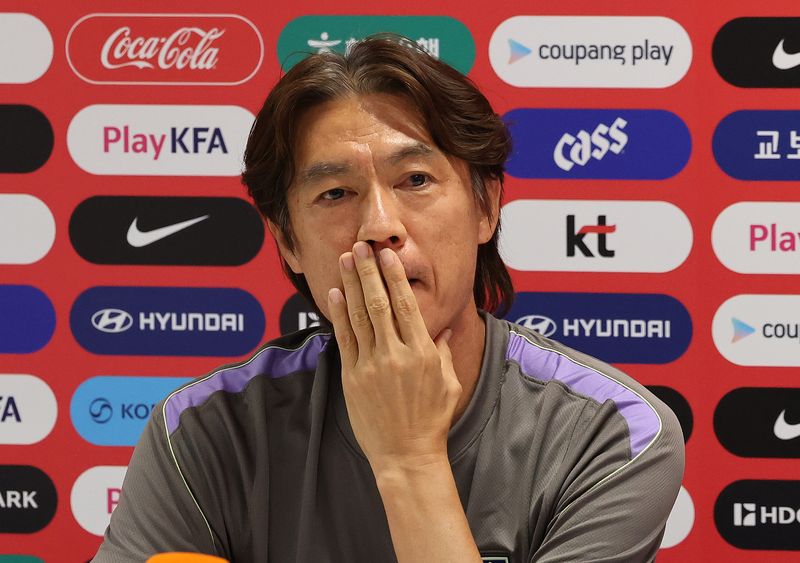
What is even more astonishing is Moriyasu's treatment. The exact terms of coaches' compensation have not been made public.
But according to global salary analysis firm Salary Leaks, his annual pay is about 820,000 euros, or roughly 1.455 billion won. That is less than half of former South Korea coach Hong Myung-bo's annual salary, which is about 3.8 billion won.
There is no factor that would justify a raise, so his salary is unlikely to increase. In other words, the JFA has made a stingy offer: a one-year extension with no pay raise.
The reason is purely strategic. To put it bluntly, with little time left before the 2027 AFC Asian Cup in Saudi Arabia next January, the JFA appears to be planning to keep Moriyasu for one more year as a shield to preserve the current World Cup squad.
No matter how much a team is upgraded to world-class level, failure at the World Cup knockout stage can be this cold and cruel. A one-year contract offered to an eight-year veteran coach is a merciless reality. Just as painful as Korea's football collapse, Japan's summer of frustration — after falling at the threshold of success and receiving a time-limited verdict — is equally empty.
jsi@fnnews.com Jeon Sang-il Reporter