Back Then It Was, "I Should Have Bought It Sooner"; Now It Is, "I Should Have Sold It Then"... Gold Posts Its Worst Quarterly Loss in 13 Years
- Input
- 2026-07-02 07:46:54
- Updated
- 2026-07-02 07:46:54
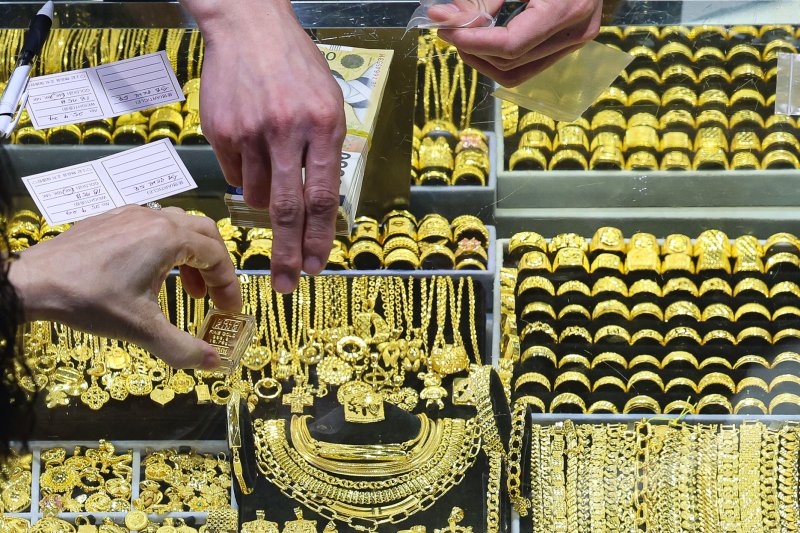
[Financial News] Gold, long regarded as a classic safe-haven asset and a strong performer earlier this year, is plunging. Analysts also say it is on track to post its worst quarterly loss in about 13 years.
According to Newsis on the 1st, CNBC reported that "gold prices fell on a quarterly basis for the first time since 2024 and recorded their steepest drop since the second quarter of 2013." The Financial Times also said prices have fallen about 14% over the past three months.
As of 11:20 a.m. that day, the international gold spot price stood at $3,983.66, down 0.59% from the previous session. Gold prices have fallen more than 11% so far this year, while August gold futures were trading at $3,993.10 per ounce, down 1.12% from the previous session.
Gold surged to an all-time high of $5,595 per ounce in January, driven by a buying frenzy among retail investors. Since then, however, prices have kept falling as inflation concerns stemming from the Middle East and expectations of tighter policy have intensified.
Gold is a representative non-yielding asset, so its relative appeal declines when interest rates rise.
According to CME FedWatch, a tool that tracks Federal Reserve rate expectations, the market is pricing in three rate hikes by the Federal Reserve this year. As a result, more than 60% of the probability of a September rate hike is already reflected in prices, raising concerns that the decline could deepen further.
Tom Price, an analyst at Panmure Liberum, told the Financial Times that "Federal Reserve Chair Kevin Warsh has made price stability his top priority, and the market's pricing in of rate-hike expectations is the key backdrop behind the decline in gold prices."
Nikki Shields, an analyst at MKS PAMP, also said that "interest is shifting toward Artificial Intelligence (AI) and SpaceX, and inflation data is not favorable for gold."
Higher gold purchase costs due to a stronger dollar, outflows from gold Exchange-Traded Funds (ETFs), and uncertainty over Federal Reserve policy have also weighed on the market. Still, central banks around the world increasing their gold holdings amid geopolitical concerns could become a variable.
[email protected] Kim Hee-sun Reporter