Japan to Shift to Active Fiscal Policy from 2027... Aiming for 3% Nominal Growth Era
- Input
- 2026-07-01 11:26:10
- Updated
- 2026-07-01 11:26:10
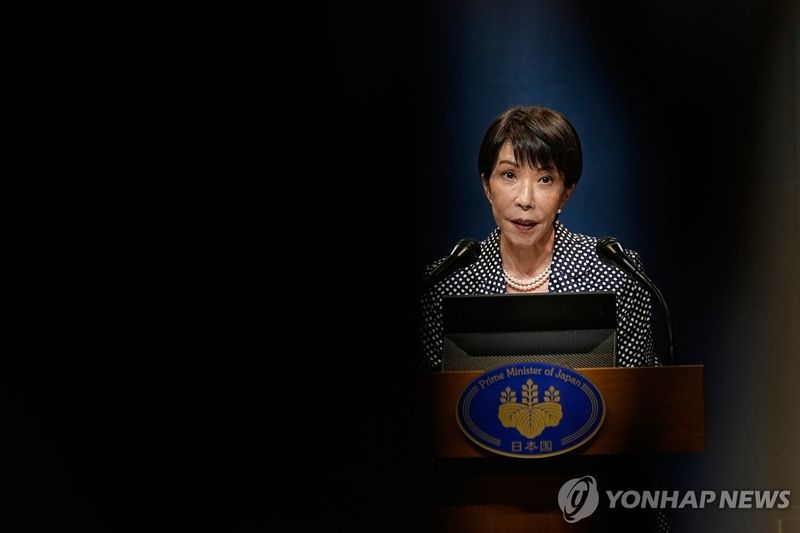
Source: Yonhap News [Financial News Tokyo = Correspondent Seo Hye-jin] The Japanese government is set to fully implement a "responsible active fiscal policy" stance starting from the 2027 fiscal year, expanding fiscal spending centered on growth sectors. With the goal of establishing a nominal GDP growth rate of over 3% and a real growth rate of over 1% early on, the plan is to shift the weight of policy from the existing focus on fiscal soundness to a focus on growth investment.
According to the Nihon Keizai Shimbun and the Yomiuri Shimbun on the 1st, the Japanese government presented a draft of the "Basic Policy on Economic and Fiscal Management and Reform" (Honebuto Policy) containing these details at the Economic and Fiscal Advisory Council meeting the previous day. The government plans to finalize the plan through a Cabinet meeting this month.
The draft specifies that the economic management goal is to stably achieve and establish a nominal growth rate of at least 3% per year and a real growth rate of at least 1% per year as early as possible. At the meeting, Prime Minister Sanae Takaichi stated, "We will push for a fundamental shift toward new economic and fiscal management that is not merely an extension of the existing system," adding that she would "fundamentally change the method of budget formulation.
" The core of this policy is the expansion of investment for growth. The government has decided to create a new budget item called "Investment for a Strong and Prosperous Japan" separate from general fiscal spending, and to effectively place no cap on the budget for growth sectors. Furthermore, the plan is to support long-term investment by moving away from the existing single-year budget formulation method and introducing a multi-year budget management system.
The Japanese government envisions inducing public and private investment of over 370 trillion yen (approximately 3,478 trillion won) over the next 14 years in 17 strategic sectors, including artificial intelligence (AI), semiconductors, physical AI, drones, and shipbuilding. The government projected that if the plan yields results, annual private facility investment will reach 230 trillion yen (approximately 2,162 trillion won) and nominal GDP will approach 1,100 trillion yen (approximately 10,340 trillion won) by 2040.
The standards for fiscal management are also changing. The goal of achieving a single-year surplus in the primary fiscal balance for both the national and local governments, which had been a core objective of fiscal soundness until now, has been effectively abandoned. Instead, the government plans to adopt the stable reduction of the national debt-to-GDP ratio as the new key indicator and establish a mid-to-long-term economic and fiscal plan covering the period 2027–2040 to comprehensively manage national debt, the scale of government bond issuance, and interest burdens.
The government is also overhauling fund management methods to support growth investments. For projects spanning multiple years, the government has decided to review budget management regulations that currently limit the duration to within three years in principle, and to improve the system so that public investment is not overly constrained by cost-benefit ratios.
In the social security sector, the government is considering setting new targets for social security contribution rates to reduce the insurance premium burden on the working generation. However, sensitive policies such as increasing out-of-pocket medical expenses for the elderly, lowering the food consumption tax, and benefit-type tax credits will be reflected in the final policy later, as consultations between the ruling and opposition parties are still ongoing.
The minimum wage target has also been adjusted. Previously, the goal was to achieve a "national average hourly wage of 1,500 yen (approximately 14,100 won) by the 2020s," but the draft effectively pushed back the timeline to "as early as possible, by the first half of the 2030s at the latest.
" Japanese media interpreted this policy shift by the Japanese government as reflecting a determination to actively utilize fiscal resources to escape the prolonged phase of deflation and low growth. However, concerns are also being raised that the expansion of growth investment and the introduction of multi-year budgets could loosen fiscal discipline, potentially leading to a further increase in national debt, which is already at the highest level in the world.
[email protected] Seo Hye-jin Reporter