[Exclusive] Samsung pushes HBM lead as HBM4E yield tops 70%
- Input
- 2026-07-01 13:00:00
- Updated
- 2026-07-01 13:00:00
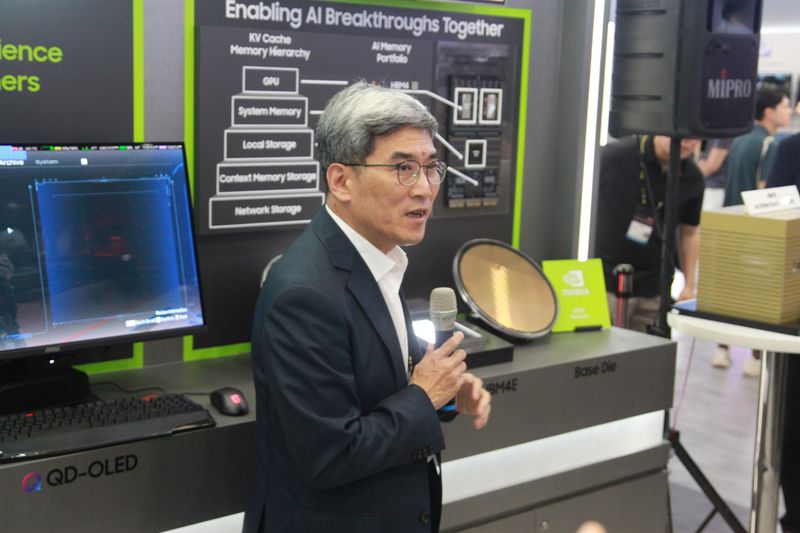
[Financial News] Samsung Electronics is posting visible progress not only in the mass production of HBM4, the world's first sixth-generation high-bandwidth memory, but also in the development of HBM4E and next-generation DRAM. Jae-hyuk Song, CTO and head of the Semiconductor Research Center at Samsung Electronics, said at a recent internal business update that the yield in HBM4E reliability tests had risen to more than 70%, and that the company had also secured an edge over rivals in its next-generation 10-nanometer-class seventh-generation DRAM process, known as D1d. Based on these gains, Samsung Electronics is expected to accelerate efforts to strengthen its competitiveness in next-generation AI memory.
According to the semiconductor industry on the 1st, Song said at an internal business update for the Device Solutions Division on June 30 that the HBM4E reliability test yield had climbed to above 70%. In the industry, a yield of 80% or higher is generally considered a 'mature yield' stage, meaning the process has stabilized. Since HBM4E is still in the reliability test phase, the 70% level is seen as a sign that development is entering a stable range.
Samsung Electronics already began mass shipments of HBM4 in February, becoming the first in the industry to do so. On May 29, it also unveiled detailed technical specifications for its 12-stack HBM4E product and shipped samples to major customers. HBM4E is the successor to HBM4, which will be used in NVIDIA's 'Vera Rubin' AI accelerator set for release in the second half of the year. HBM4E is expected to be installed in NVIDIA's next-generation AI accelerator, 'NVIDIA Vera Rubin Ultra,' which is scheduled for release next year. Industry watchers say sample evaluations are now under way with major customers, suggesting that development for mass production is also progressing smoothly.
Development of the next-generation DRAM process is also said to be moving ahead smoothly. Song reportedly assessed the D1d process as having a technological edge over competitors and said development is proceeding with the goal of obtaining Production Readiness Approval in November. PRA is the company's final internal quality review stage before product shipment. It is a process that comprehensively checks yield, performance and productivity to determine whether mass production is feasible. Once passed, the company can move into full-scale mass production.
In particular, D1d is the core DRAM process Samsung Electronics plans to apply starting with next-generation HBM5, its eighth-generation product. Industry observers say that if D1d development proceeds as planned, it could have a positive impact not only on next-generation DRAM but also on the competitiveness of products after HBM5. With the progress in HBM4E development and the stabilization of the D1d process moving in tandem, Samsung Electronics is expected to further strengthen its technological edge in the race for next-generation AI memory.
Meanwhile, after the briefing, some dissatisfaction has also surfaced within the research and development organization over the role and compensation system for R&D staff. Members are said to have argued that the contribution of the R&D organization should be recognized more actively. Earlier, Samsung Electronics management and labor agreed to establish a 'Special management performance bonus' for the Device Solutions Division, funded by 10.5% of operating profit. However, even within the same division, the gap in bonuses between memory and other units, including the research center, as well as the non-memory businesses of System LSI and foundry, has widened, prompting growing calls for improvements to the compensation system.
[email protected] Im Subin, Jeong Won-il Reporter