"The Key to Canada’s Submarine Deal Is 'Training Personnel'"... Can Hanwha Ocean Gain the Upper Hand?
- Input
- 2026-07-01 08:29:03
- Updated
- 2026-07-01 08:29:03
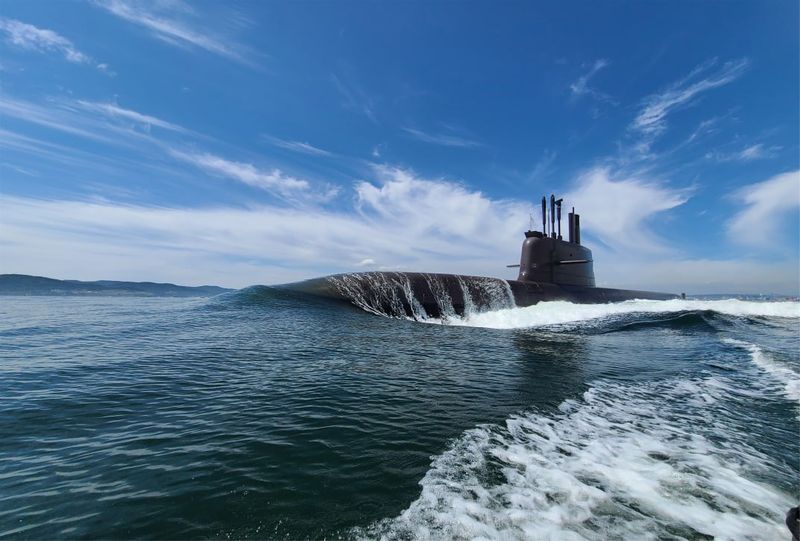
[Financial News] As the bidding war between South Korea’s Hanwha Ocean and Germany’s Thyssenkrupp Marine Systems (TKMS) for Canada’s Canadian Patrol Submarine Project (CPSP) enters its final stretch, the contest is shifting beyond simple platform selection. Training local personnel and building an industrial ecosystem have emerged as the decisive factors. While TKMS is pressing ahead with NATO compatibility as its main advantage, Hanwha Ocean has made a bold move with a tailored package aimed at Canada’s navy’s biggest weakness: a shortage of personnel.
Canada’s Navy Faces a Personnel Shortage
According to the defense industry and local foreign media on the 1st, Paul T. Mitchell, a professor at the Royal Military College of Canada, stressed in a June 30 article for the Canadian Institute for Defence and Security Studies that "the biggest challenge facing the Canadian Navy right now is not the submarine hardware itself, but its internal structural infrastructure and personnel shortage."Mitchell identified a lack of maintenance personnel and limits in the management system as the main reasons the Canadian Navy’s existing Victoria-class submarines suffered severe operational downtime. He warned that unless Canada significantly expands the number of engineers overseeing the submarine program and specialized port workers, the 12 new submarines it plans to acquire could also become "white elephants" stranded in port. The Canadian Navy is now in an urgent position, needing to more than quadruple its submarine crew and technical staff within the next 10 years.
As these concerns from local experts have surfaced, Hanwha Ocean’s strategy of customized industrial cooperation is drawing strong attention in Canada.
According to South Korea’s defense industry, Hanwha Ocean has secured a delivery schedule advantage over its German rival TKMS, promising a lead submarine in 2032 and completion of all 12 submarines by 2043, compared with TKMS’s target of 2036. Analysts say Hanwha Ocean’s aggressive localization strategy is also winning over the Canadian government.
Hanwha Ocean has also offered a concrete solution to the personnel shortage Mitchell highlighted. In addition to promoting broad industrial cooperation in hydrogen, liquefied natural gas (LNG), and aerospace at the group level, it has partnered directly with Canadian universities to begin training talent in the maritime and defense sectors. The plan is to help build Canada’s own industrial ecosystem and secure a stable local supply of highly skilled workers needed for submarine maintenance, repair and overhaul (MRO) over the coming decades.
"Hanwha Ocean Has an Advantage in Size and Crew Habitability"
Competition over platform specifications is also heating up. Mitchell said Hanwha Ocean’s KSS-III has an advantage because of its larger size, which gives it better range and crew habitability, and makes it well suited for patrols in the Arctic Ocean, where strict environmental regulations apply. He added that South Korea is making far more effort than Germany to win Canada’s business.By contrast, TKMS’s Type 212CD benefits from a logistics network built through decades of submarine exports around the world and from its NATO compatibility. Its command room layout and command-and-control systems are fully integrated into NATO operational environments, making deployment easier.
In the end, the final winner is expected to be decided by which side can more effectively solve Canada’s core challenges of securing personnel and building infrastructure.
South Korea’s diplomatic support is also adding momentum. In a recent summit with Canadian Prime Minister Mark Carney, President Lee Jae-myung said that South Korea, a defense powerhouse, is ready to actively contribute to strengthening Canada’s security capabilities on the basis of trust, offering full support for the CPSP bid.
Meanwhile, local Canadian media reported that Prime Minister Mark Carney is expected to formally announce the preferred bidder for the CPSP before leaving for the NATO summit in Istanbul, Turkey, on the 7th, drawing intense attention from the global defense industry.
[email protected] Kim Dong-ho Reporter