Move Toward Tolling the Strait of Hormuz Gains Momentum: 'Voluntary Contributions and Service Fees'
- Input
- 2026-07-01 07:44:13
- Updated
- 2026-07-01 07:44:13
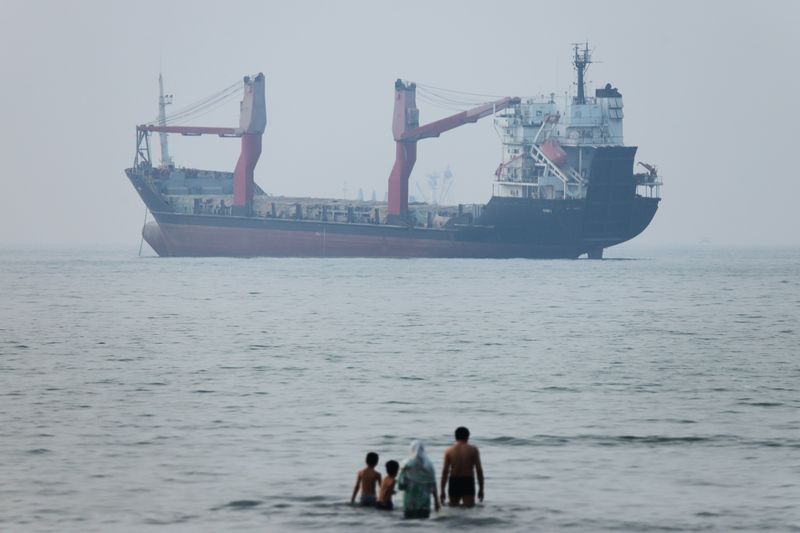
[Financial News] The international community has begun discussing a compromise in response to Iran's persistent demand to collect tolls for passage through the Strait of Hormuz. The alternatives now under discussion are voluntary funding from the shipping industry or the imposition of 'service fees.'
Arsenio Dominguez, secretary-general of the International Maritime Organization (IMO) under the United Nations, addressed Iran's demand in an interview with Al Jazeera, a pan-Arab broadcaster in Qatar, on June 30 local time. He said that "mandatory tolls or any similar system that infringes on free navigation through the Strait of Hormuz are not permitted under international law in any form."
The Strait of Hormuz, which carries 20% to 25% of the world's maritime oil shipments, is shared by Iran and Oman. After Iran was attacked by the United States in February, it blocked the strait and later continued to insist on collecting tolls while holding ceasefire talks with the United States. In a ceasefire memorandum signed on June 17, the two sides agreed not to collect money in the strait during the next 60 days, the final period for ceasefire negotiations.
However, Mohammad Bagher Ghalibaf, speaker of Iran's parliament and the country's chief ceasefire negotiator, said through local media on June 30 that "free passage through the Strait of Hormuz will be allowed for only 60 days." He stressed that "sovereignty over the Strait of Hormuz belongs to Iran and Oman, and although consultations will be held with the coastal states of the Persian Gulf, transit through the strait must proceed entirely according to the methods and procedures decided by Iran."
Under Articles 26 and 44 of UNCLOS, all ships are guaranteed the right of passage through straits used for international navigation. Individual states cannot impose tolls simply for passage, even in their own territorial waters. Countries that have joined the convention may charge only for specific services provided to foreign vessels. Iran, the United States and Israel have not ratified the convention.
Dominguez said he had discussed management of the Strait of Hormuz with Omani officials. He added that the system already in place for the Strait of Malacca and Singapore Strait was mentioned during the talks. Indonesia, Malaysia and Singapore launched the Straits of Malacca and Singapore Cooperation Mechanism in 2007. The mechanism uses voluntary contributions from countries and shipping companies that use the straits to support navigation safety and environmental protection projects.
Dominguez said, "We are trying to learn from a system that already exists and has proven effective," adding, "The goal is to find a practical solution to a crisis that has emerged from regional conflict." He also said, "We plan to present multiple options to IMO member states to gauge which approach is feasible."
Oman has shown some support for Iran's plan to collect tolls. A U.S. government official told CNN on June 30 that Oman had recently shared proposals on how the Strait of Hormuz could be managed with the United States and other allies. The official said the proposal includes a plan for shipping companies to pay service fees to use the strait, though it would not be described as a toll.
The official added that Oman continues to maintain its position against imposing tolls, and that the proposal does not include mandatory tolls.
[email protected] Park Jong-won Reporter