[Editorial] Look Beyond the Semiconductor Boom to the Broader Corporate Struggles
- Input
- 2026-06-30 18:05:56
- Updated
- 2026-06-30 18:05:56
It is no exaggeration to say that the Korean economy is currently being propped up by semiconductors. As demand for semiconductors has surged on the back of advances in artificial intelligence, Korea is reaping the benefits as a semiconductor powerhouse. Korea's quarterly growth rate ranked first among major countries despite unfavorable conditions such as high oil prices, thanks largely to the semiconductor effect. Compared with Europe, where economies are struggling because the semiconductor industry is underdeveloped, Korea's position looks all the more fortunate.
However, the broader industrial sector remains in recession as external conditions worsen. That reality is simply being obscured by the illusion of a semiconductor super-boom. Of course, it is worth being grateful that the semiconductor industry is performing well, but the government and the public also need to pay attention to and support the many industries and companies now in distress.
That is because semiconductor cycles inevitably turn, and there is no guarantee that the AI industry will continue to expand indefinitely. The moment the semiconductor cycle weakens, the true state of the Korean economy will be exposed, and short-term growth could plunge sharply. No one or two industries can carry the entire economy. A balanced development and growth across the industrial sector must form the foundation of a resilient economy that does not easily falter.
Large-scale investment in the semiconductor industry is certainly necessary, but the government must also look at the economy and industry as a whole, support traditional manufacturing sectors hit by the downturn, and distinguish between the viable and the unviable. Marginal companies with no future should be swiftly restructured, while firms worth saving should be kept alive and guided so they can fulfill their role.
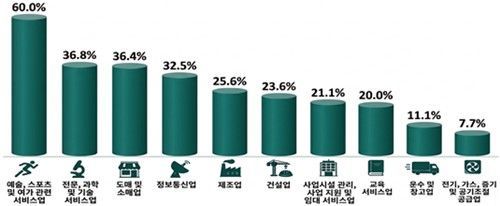
As FKI explained, the external environment facing companies is so severe that calling it the worst in history would not be an exaggeration. High oil prices, a strong won, and high interest rates, combined with rising labor costs and weak domestic demand, are weighing heavily on businesses. With costs so high, profit margins cannot improve. The government should mobilize available policy and financial support to ease corporate difficulties so companies can get back on their feet.
The slump in the self-employed and small business sector is even worse. In the first quarter of this year, the outstanding bank loans of the self-employed came close to 1,100 trillion won, reaching an all-time high, while delinquency rates also climbed into the 2% range, the highest in more than a decade. Self-employment is one of the pillars supporting the economy. Korea ranks among the top four major countries in terms of the share of self-employed workers. If self-employment collapses, the entire economy will gradually suffer a significant shock.
The boom in some large companies, including semiconductors, and the payment of huge bonuses could also affect the minimum wage. If the minimum wage is raised too much, it is effectively the same as telling the self-employed and small business owners to shut down immediately. More self-employed workers will actually be forced to close their businesses because they cannot afford to pay wages. Employment will inevitably decline, and the damage will ultimately fall on ordinary people who live on the minimum wage.
As such, the true picture of our economy is not so bright. Even so, preparing for crises that may come one day when conditions are favorable is the prudent approach.