Traffic Through the Strait of Hormuz Falls Again, Down to One-Third in Four Days
- Input
- 2026-06-30 14:48:00
- Updated
- 2026-06-30 14:48:00
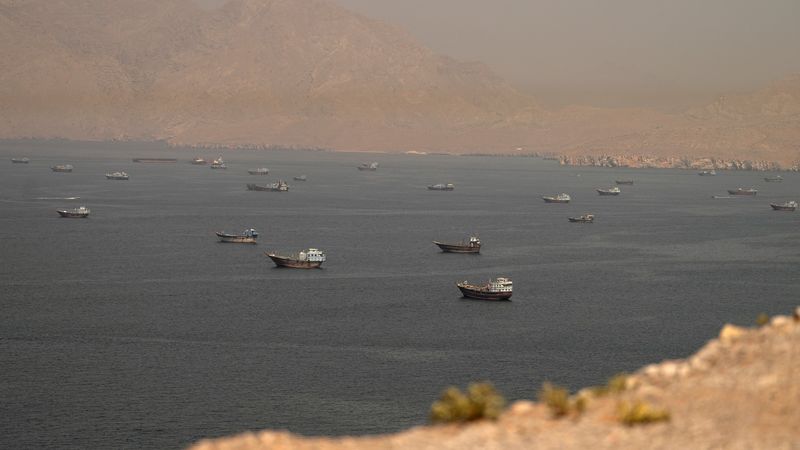
[Financial News] The number of ships passing through the Strait of Hormuz has fallen sharply again after the recent clash between the United States and Iran. The two sides are expected to resume talks within the week.
The New York Times reported on the 29th local time, citing the U.S. maritime intelligence platform Kepler. The number of ships transiting the Strait of Hormuz stood at 74 on the 24th, fell to 38 on the 27th, and dropped further to 22 on the 28th.
Earlier, the United States and Iran agreed on the 17th, along with a memorandum of understanding on ending hostilities, to guarantee free passage through the Strait of Hormuz during the 60-day period leading up to final peace talks. However, Iran attacked the Singapore-flagged cargo ship Ever Lovely with a drone on the 25th as it passed through the strait. In response, the United States carried out airstrikes on Iran's missile, drone and radar facilities on the 26th. On the 27th, a tanker in the Strait of Hormuz was also hit by an unidentified projectile.
Iran, which shares the Strait of Hormuz with Oman, plans to collect money from ships passing through the strait together with Oman once the 60-day deadline expires. Kazem Gharibabadi, Iran's deputy foreign minister, said on state television on the 29th, "If Oman is unwilling to cooperate in building a management system for the Strait of Hormuz, Iran will move forward with this work." He also warned strongly, "We oppose ships using routes in the Strait of Hormuz that Iran has not designated, and we will block them."
The previous day, Omani Foreign Minister Badr Albusaidi told Le Monde in an interview that "we are a party to the United Nations Convention on the Law of the Sea (UNCLOS)," while saying that ships passing through the strait could be asked to make voluntary contributions. He added, "This is actually provided for under maritime law. Additional services may be offered to the shipping sector to ensure safety, secure proper navigation and prevent pollution," referring to contributions based on "voluntariness."
Under Articles 26 and 44 of UNCLOS, all ships are guaranteed the right of passage through straits used for international navigation. Individual states cannot impose transit fees simply for passage, even within their territorial waters. States that are party to the convention may charge only for specific services provided to foreign vessels. Iran, the United States and Israel have not ratified the convention.
Meanwhile, U.S. President Donald Trump said on social media on the 29th that representatives from the United States and Iran would meet in Doha, Qatar, on the 30th. On the same day, White House press secretary Karoline Leavitt also told Fox News that Jared Kushner, Trump's eldest son-in-law, and Steve Witkoff, the U.S. special envoy to the Middle East, were heading to Qatar for high-level talks with Iran. However, Gharibabadi said on the 29th that there were no plans for working-level talks with the United States this week.
[email protected] Park Jong-won Reporter