President Lee: "Review Converting Tens of Trillions of Won in Hidden Points into Local Currency"
- Input
- 2026-06-30 10:46:20
- Updated
- 2026-06-30 10:46:20
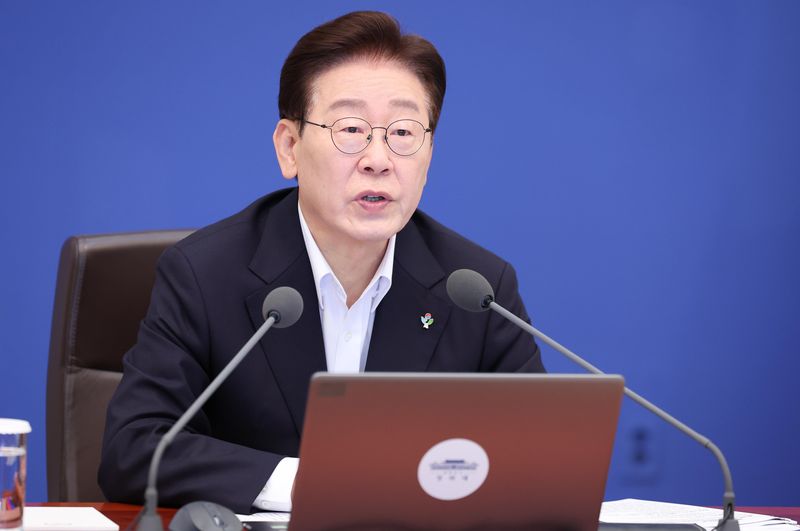
[Financial News] On the 30th, President Lee Jae-myung instructed officials to review a plan to convert unused "hidden points" accumulated through card payments and shopping memberships into local currency.
Presiding over the State Council of South Korea at the Blue House that day, Lee said, "Another foundation for creating sustainable growth momentum is to strengthen real consumer spending power and consumer vitality." He added, "Private consumption showed signs of recovery in the first quarter, but to accelerate that trend further, we need additional measures to stimulate spending."
He particularly stressed, "It is essential to make greater use of local currency, which is highly effective in revitalizing traditional markets and neighborhood businesses."
He then referred to points accumulated through card payments and shopping memberships. Lee said, "Many of these points are not being used," adding, "It is said that tens of trillions of won in hidden points remain unused because people did not know about them or because they could not be used."
He continued, "I hope we can push ahead with a plan to convert these tens of trillions of won in various points into local currency." He also urged, "I ask the relevant ministries to actively review how to make use of these dormant, hidden points."
Regarding the Middle East situation, Lee ordered stronger emergency response measures centered on the Cabinet. He said, "Although the end of the Middle East war is going through twists and turns, South Korea has been weathering this unprecedented, complex crisis wisely and without major disruption."
He added, "Many people are suffering in this crisis," but noted, "Our efforts to minimize that hardship have had some effect, so we have been able to endure it without facing even greater pain. That is all thanks to the cooperation of the people."
He also commented on the situation of South Korean vessels in the Strait of Hormuz. Lee explained, "Except for two ships that could not leave because of their circumstances, all of our vessels exited the strait faster than those of any other country." He added, "One ship is still leaving now, but it is said to have almost cleared the danger zone."
Lee said, "This is all thanks to the people who trusted the government and came together, as well as the efforts of public officials at the Ministry of Oceans and Fisheries (MOF), the Ministry of Foreign Affairs, the National Intelligence Service (NIS), and other relevant ministries." He added, "I thank you once again."
However, Lee cautioned, "The crisis is not over yet," and said, "Even if the war ends, I believe it will take a considerable amount of time for the global economy to fully normalize."
He went on to say, "We now need not only short-term responses, but also more efficient and focused crisis management on a medium- to long-term basis." He added, "For a constant and systematic response, I ask that the emergency response system be further strengthened under the Cabinet going forward."
Lee also said, "Please move quickly on the measures needed at each stage, and continue steadily with long-term tasks such as diversifying energy and raw material supply chains."
[email protected] Seong Seok-woo Reporter