Yen-Dollar Exchange Rate Breaks Below 162 for the First Time in 39 and a Half Years... Market Says It Could Reach 165 Yen
- Input
- 2026-06-30 10:22:09
- Updated
- 2026-06-30 10:22:09
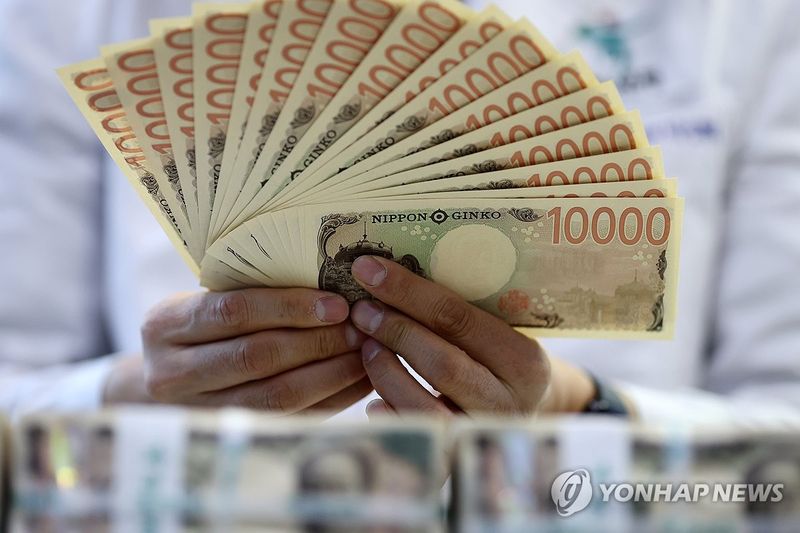
[Financial News Tokyo = Correspondent Seo Hye-jin] The yen-dollar exchange rate briefly broke above 162 yen per dollar during trading on the 30th, falling to its weakest level in about 39 years and six months. In the market, expectations of further U.S. rate hikes, Japan’s expansionary fiscal stance, and the Bank of Japan’s cautious approach to raising rates are fueling forecasts that the exchange rate could move as far as 165 yen per dollar.
In Tokyo foreign exchange trading that day, the yen-dollar exchange rate at one point rose to 162.41 yen per dollar, meaning the Japanese yen weakened further. It was the first time the yen had traded in the 162-yen range since December 1986, or about 39 and a half years ago. After hitting 161.98 yen in the New York market overnight and setting a new low, yen weakness continued in Tokyo as well.■ U.S. rate-hike expectations and Japan’s fiscal expansion add pressure on the yenThe biggest factor is the shift in U.S. monetary policy. The Federal Reserve has moved away from earlier expectations of rate cuts and signaled the possibility of additional rate hikes this year, sharply boosting demand for dollars.
The Nikkei reported that Kevin Warsh’s hawkish stance, which puts top priority on curbing inflation, has further strengthened the dollar. It added that the U.S. economy’s resilience and high interest rates are supporting dollar strength.
By contrast, expectations are spreading that Japan has limited room for further rate hikes.
Sanae Takaichi’s cabinet is also being cited as a factor behind yen weakness, as it places top priority on economic recovery and is pushing an aggressive fiscal expansion policy. The basic policy on economic and fiscal management to be announced next month is expected to include the phrase, "Appropriate monetary policy management is very important for economic growth." The market is taking this as a de facto signal to restrain further rate hikes by the Bank of Japan (BOJ).
Tsuyoshi Kataoka, chief economist at PwC Consulting and a member of the Council for Japan's Growth Strategy chaired by Prime Minister Takaichi, said, "What matters is entering a path toward strong economic growth," adding, "It is appropriate to keep policy rates unchanged for now." He explained that policymakers must also consider the risk that premature rate hikes could undermine the economic recovery.■ Experts say "165 yen is still in play"In the market, there is still a view that the BOJ has been slow to respond, even though it raised its benchmark rate to 1% this month.
Ryu Shota, a foreign exchange strategist at Mitsubishi UFJ Morgan Stanley Securities, said, "Along with expectations of further tightening by the Federal Reserve, the perception has grown that the BOJ is behind the curve in responding to the market." He added, "Concerns over Japan’s deteriorating fiscal position are also making weakness in the yen itself stand out more clearly."
He added, "There may be short-term volatility because of the government’s possible intervention in the foreign exchange market, but the medium- to long-term trend of yen weakness is still likely to remain."
The market also believes that additional U.S. economic data could further weaken the Japanese yen.
Ryu said, "If dollar strength intensifies further depending on this week’s remarks by Federal Reserve Chair Warsh and the U.S. employment data, there is a possibility of additional yen weakness beyond 162 yen."
Hideki Shibata, chief strategist at Tokai Tokyo Intelligence Lab, said, "There are a certain amount of dollar sell orders around the 162-yen level, but if that level is clearly broken, stop-loss orders will pile in and yen selling will accelerate further." He added, "The next target could be 165 yen."■ "Intervention effects are limited"; real purchasing power at its weakest since 1980Skepticism is growing over the effectiveness of foreign exchange intervention by the Japanese government and the currency authorities.
The Japanese government and the BOJ carried out yen-buying intervention worth more than 11 trillion yen in April and May, but the stabilizing effect on the exchange rate did not last long.
Shibata said, "If Japan intervenes by selling U.S. Treasuries while the United States is pushing ahead with rate hikes, it could stimulate higher U.S. interest rates, making it harder to gain Washington’s understanding." He assessed that the effectiveness of additional intervention is lower than before.
Stephen Englander, head of global research at Standard Chartered Bank, also said, "The current yen weakness is mainly driven by the dollar’s own strength, so the market is becoming increasingly skeptical about the effectiveness of intervention by Japanese authorities." He added, "Instead, there are signs that the market is trying to test the level at which intervention will actually take place."
Meanwhile, according to the BOJ, the Real Effective Exchange Rate (REER), which shows the yen’s real purchasing power, fell in April to its lowest level since 1980. A weaker yen can improve the price competitiveness of exporters, but analysts say the effect on export growth is no longer as large as it once was because of expanded overseas production and changes in industrial structure.
At the same time, higher import prices are increasing the burden on companies and households, and concerns are growing in the market that the negative impact of yen weakness on the Japanese economy as a whole is widening.
[email protected] Seo Hye-jin Reporter