U.S. and Iran Agree to 'De-escalation,' but Differ on Whether Doha Talks Will Take Place
- Input
- 2026-06-30 06:19:43
- Updated
- 2026-06-30 06:19:43
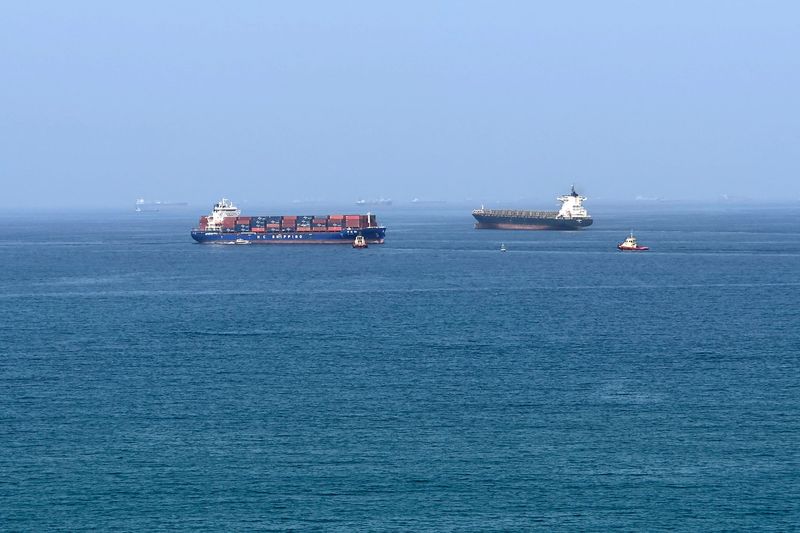
[Financial News] The United States and Iran, which had seen tensions rise after exchanging retaliatory airstrikes over the past few days, have agreed to refrain from further military action and to "de-escalate," the BBC reported on the 29th local time.
A U.S. government official said through the media that the agreement was reached shortly after clashes broke out between the two countries inside and outside the Strait of Hormuz, with each side accusing the other of violating the ceasefire.
The official said ships passing through the Strait of Hormuz would once again be able to move "freely," and that negotiations to permanently end the war would continue.
Amid signs of easing tensions between the two countries, confusion has also emerged over whether a high-level meeting will be held.
Kazem Gharibabadi, Iran's deputy foreign minister, denied that there were any plans to hold working-level talks this week. However, U.S. President Donald Trump immediately countered that a meeting would be held in Doha, the capital of Qatar, at Iran's request.
Through his social media account on Truth Social, Trump posted, without giving specific details, "Iran requested the meeting. It will be held tomorrow in Doha!"
White House press secretary Karoline Leavitt also confirmed in an interview with Fox News that "U.S. special envoy Steve Witkoff and Jared Kushner, President Trump's son-in-law, will fly to Doha for high-level talks this week," adding that they would "continue discussions on a memorandum of understanding (MOU) between the two countries."
Earlier, the United States and Iran signed a 14-point memorandum of understanding (MOU) on the 17th, centered on the immediate and permanent suspension of military operations on all fronts. The agreement included a commitment by Iran to do its utmost to ensure the safe passage of commercial vessels for 60 days.
However, less than two weeks after the deal, armed clashes resumed, leaving the ceasefire on the brink of collapse.
Meanwhile, Gharibabadi said Iran would block vessels that attempt to pass through the Strait of Hormuz outside the designated route, and that it would pursue its own plan to manage the strait even if Oman, another coastal state on the Strait of Hormuz, did not cooperate.
Speaking on Iranian state television, he said, "If Oman is unwilling to cooperate in establishing a management framework for the Strait of Hormuz, Iran will move forward with this work."
He added, "Today, we confirmed that the Omani side is prepared."
[email protected] Yoon Jae-joon Reporter