[Editorial] Build a semiconductor complex in Honam and devote all-out efforts to creating an ecosystem
- Input
- 2026-06-29 18:09:24
- Updated
- 2026-06-29 18:09:24
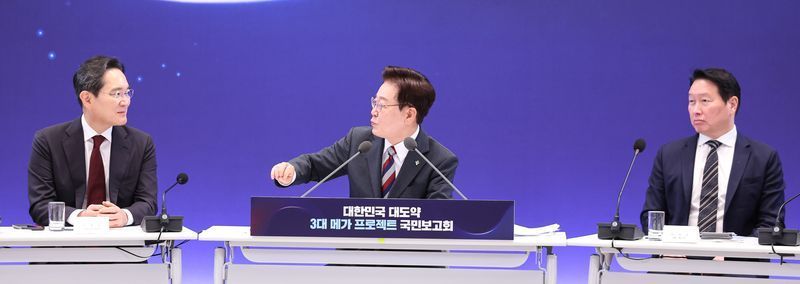
In terms of scale alone, this is an unprecedented industrial project. The government also said it would double semiconductor production capacity in the Seoul metropolitan area within five years and shorten the time needed to build semiconductor fabs by as much as 12 years.
Semiconductors, AI, and robotics are strategic industries that will determine the nation's survival. The importance of high-performance memory, advanced packaging, data centers, robotics, and smart manufacturing hardly needs to be emphasized. It is also worth noting that companies have decided to make record investments outside the capital region despite difficult domestic and external conditions.
It is regrettable, however, that such a critical project is already being dragged into regional conflict and political disputes before it has even begun. The government bears considerable responsibility for this as well. Rumors suddenly emerged that the Yongin semiconductor mega cluster would be moved to Honam, and when backlash followed, the flow shifted abruptly as if Honam had been chosen as the new investment destination.
Given the explosive demand for semiconductors in the AI era, securing additional production bases is an unavoidable task for companies. But this is a project of astronomical scale involving hundreds of trillions of won, and it is directly tied to the country's future. If the process is opaque and the basis for choosing investment sites is weak, even the most urgent investment will struggle to avoid suspicions of political regional favoritism. President Lee Jae-myung chaired the public briefing that day and stressed that "balanced development and corporate demand were aligned," adding that companies were not being forced to bear losses and risks. Yet the details of the discussions remain unknown. That is why the opposition's criticism — "a forced decision through state intervention" from the People Power Party and "a pre-decided prescription for national industry" from the Reform Party — has emerged.
From here on, the key issue will be how quickly and properly the water, electricity, and skilled labor shortages are resolved. For the semiconductor cluster to become a truly competitive industrial base, the three major challenges of water, power, and people must be addressed without fail. Whether the Yeongsan River and Seomjin River basins can reliably supply industrial water for a large-scale cluster, and whether supply can be maintained even during droughts, must be examined again and again with utmost rigor.
The power issue cannot be solved simply by saying renewable energy is abundant. A comprehensive infrastructure network must be built, including the power grid, transmission lines, backup power, and water reuse facilities. More important than the slogan of balanced regional development is an industrial ecosystem that can actually keep factories running. The talent issue also cannot be taken lightly. Advanced semiconductors and the AI industry ultimately depend on people.
Once again, corporate competitiveness must not become the opportunity cost of balanced development and support for neglected regions. This is an era of global hyper-competition, where the future is decided by speed down to the last second. Supporting companies so they face no obstacles in management is the state's duty. If companies that receive sufficient government support rise as leaders in the global market and, as a result, balanced development is achieved, that would be a true win-win outcome. The government must give everything it has to ensure this time it does not end as empty rhetoric.