[Editorial] Repeated Major Earthquakes Around the World Call for a Thorough Review of Emergency Response Measures
- Input
- 2026-06-28 19:14:57
- Updated
- 2026-06-28 19:14:57
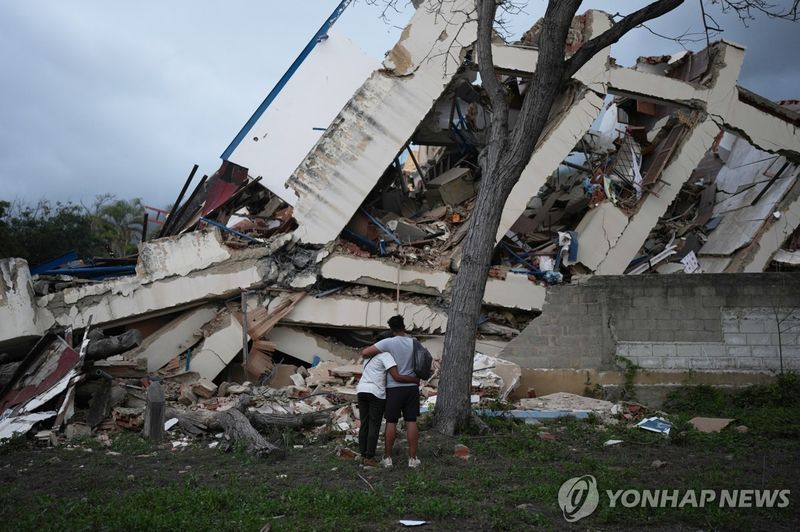
The United States has stepped in with search-and-rescue operations and air transport support, while also deciding to provide $150 million in emergency aid. France, the Netherlands, Switzerland and Spain have also pledged rescue personnel, equipment and relief funds. Pope Leo XIV has contributed 100,000 euros in relief money, underscoring the continued humanitarian support from the international community. The South Korean government has also decided to provide $5 million in emergency assistance, and private donations are following.
Strong earthquakes are also continuing in other parts of the world. In Japan, which is close to the Korean Peninsula, earthquakes measuring 7.2 and 6.1 struck waters near Iwate Prefecture on the 25th and 28th, while a 5.6-magnitude quake hit Yamanashi Prefecture near Mount Fuji on the 27th. Major quakes were also reported in the Philippines, Afghanistan and northern California in the United States. The message is clear: no part of the world can be considered a safe zone from earthquakes anymore.
The Korean Peninsula is no exception. In 2024, a 4.8-magnitude earthquake struck Buan County, North Jeolla Province, and there were 87 earthquakes of magnitude 2.0 or higher in total. Last year, 79 earthquakes were recorded, including a 3.3-magnitude quake in Yeoncheon County, the largest ever in the Capital Region's inland area. Major earthquakes could strike in South Korea at any time.
Last year, the Japanese government projected that the probability of a major Nankai Trough earthquake occurring within the next 30 years was about 80 percent. Analysts have also warned that if a quake comparable to the Great East Japan Earthquake were to hit, it could affect high-rise buildings and bridges in Busan and Gyeongsangnam-do. The possibility of a tsunami reaching the East Coast must also be closely watched.
The government has also begun preparing. The Ministry of the Interior and Safety recently reviewed the domestic earthquake response system with relevant agencies and private experts, and reexamined preparedness measures such as seismic retrofitting and fault surveys. It has decided to raise the seismic resilience rate of public facilities from the current 82.7 percent to 100 percent by 2035, while also expanding cost support and tax incentives for private facilities.
In addition, safety inspections of key national infrastructure must be strengthened. In particular, South Korea operates 25 nuclear reactors along the East and West coasts, so there must be no gaps in ensuring nuclear safety against earthquakes and tsunamis.
Taiwan's experience is also worth recalling. Located in the Pacific Ring of Fire, Taiwan suffered a tragedy in 1999 when a 7.3-magnitude earthquake killed more than 2,400 people. Since then, it has steadily prepared by significantly strengthening seismic design standards. As a result, when a 7.2-magnitude earthquake struck in 2024, Taiwan was able to greatly reduce the damage and astonish the world. That outcome came from remembering the lessons of tragedy and preparing accordingly. No amount of earthquake preparedness is too much.