U.S. and Iran Trade Blame as Renewed Clashes Shake Ceasefire Talks
- Input
- 2026-06-28 18:26:21
- Updated
- 2026-06-28 18:26:21
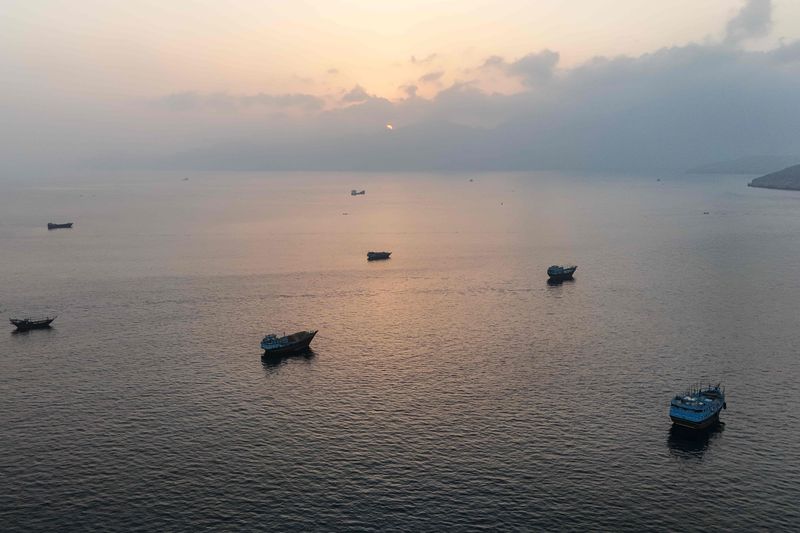
U.S. President Donald Trump raised the level of his threats, saying that if Iran does not show restraint, he will launch a major military operation. As both sides blame each other for the clashes, a follow-up working-level meeting, which had been expected as early as the 29th, has become uncertain. The ceasefire negotiations themselves are being shaken.
USCENTCOM said on the 27th local time that it had carried out airstrikes on Iran in response to Iran's continued attacks on commercial vessels. It added that U.S. aircraft struck 10 military targets, including reconnaissance infrastructure, communications systems, air defense bases, and drone storage facilities. USCENTCOM said the strikes were carried out under the direction of the commander in chief.
USCENTCOM explained that after carrying out airstrikes in retaliation for Iran's attack on the merchant ship Ever Given yesterday, Iran launched a one-way attack drone at the Kikuhō at 4:30 a.m. today, U.S. time. The Kikuhō is a Panamanian-flagged tanker carrying more than 2 million barrels of crude oil and was passing near the Strait of Hormuz.
Shortly after USCENTCOM's announcement, President Trump confirmed it on Truth Social and warned, "There may come a time when we have to finish militarily what we started so successfully. If that happens, Iran will no longer exist." He sharply escalated his threats.
■ IRGC: "We will respond whenever the agreement is violated"
Despite the warning, Iran immediately fired missiles and drones at Gulf countries hosting U.S. bases. The Islamic Revolutionary Guard Corps (IRGC) announced that it had attacked eight U.S. bases in Kuwait and Bahrain with missiles and drones in response to additional U.S. airstrikes that day. In effect, Iran ignored Trump's call for restraint and responded with a counterattack. The IRGC also threatened to suspend talks with the United States if the violations continue.
Iran's Foreign Ministry also strongly condemned the United States on the 28th, accusing it of failing to honor the ceasefire memorandum of understanding (MOU). The ministry said, "Breaking promises is the nature of the U.S. government."
Kuwait's military said on X that its air defenses intercepted hostile missiles and drones. Bahrain's Interior Ministry also sounded air raid sirens and urged residents to evacuate.
■ Israel also attacks southern Lebanon
Meanwhile, cracks in the ceasefire also appeared on the Lebanon front. Just one day after signing the framework agreement for peace with Lebanon, Israel attacked southern Lebanon, Hezbollah's stronghold, on the 27th. Israeli Minister of Defense Katz justified the strike, saying, "The principle of this agreement is that Israel will not withdraw its forces from southern Lebanon unless Hezbollah disarms across Lebanon."
As clashes continue in the Strait of Hormuz and on the Lebanon front even after the ceasefire MOU was signed, analysts say the 'imperfect' ceasefire regime is showing its limits because the core disputes have not been resolved. The New York Times (NYT) noted that the MOU's 'ambiguous' wording with Iran is boomeranging back in less than two weeks. H.A. Heller, a researcher at the Royal United Services Institute (RUSI) in London, told AFP that Iran is likely to continue deliberate, low-intensity coercive activity in and around the Strait of Hormuz to keep pressure on international shipping without triggering a larger conflict.
[email protected] Reporter Hong Chaewan Reporter