The Question Raised by 'Not_found'... The 'Loopholes in the Law' That Broke Schools Have Begun to Be Fixed
- Input
- 2026-06-29 08:00:00
- Updated
- 2026-06-29 08:00:00
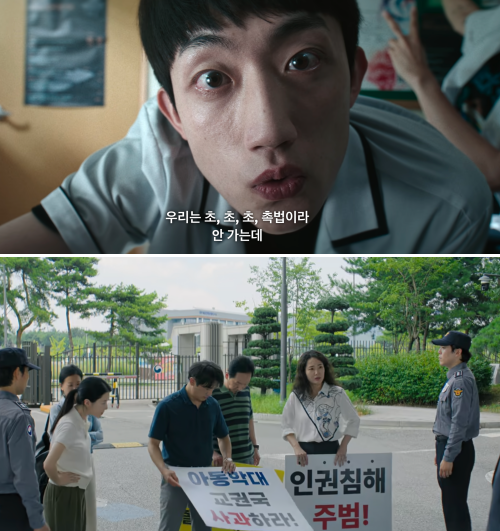
[Financial News]#1. A child who drove a stolen car without a license was caught by police, but was released without any special measures because he was a juvenile offender. Back at school, the children were caught by the Korean Educational Rights Protection Bureau for distributing drugs on campus and were sent to juvenile detention. Their parents then protested in front of the education ministry, holding signs that read "Human rights abuse" and "Child protection."#2. A mother with an elementary school son repeatedly filed abusive complaints against his first-year homeroom teacher, telling her not to slash through wrong answers and to refrain from negative remarks. Dissatisfied with the teacher's response, the mother filed a child abuse complaint against her and then posted the teacher's personal information on mom cafes and social networking services (SNS).The Netflix drama 'Not_found,' which ranked No. 1 in 44 countries, is an omnibus series made up of 10 episodes. It covers a wide range of themes, from MZ gangsters and drug distribution in schools to a new form of school violence known as Wi-Fi shuttle, but three keywords run through the entire series.
They are the age threshold for criminal minors (juvenile offenders), the Child Welfare Act and the Act on Special Cases Concerning the Punishment, etc. of Child Abuse Crimes, as well as the Personal Information Protection Act and the Act on Promotion of Information and Communications Network Utilization and Information Protection, etc.
The drama argues that these laws, which are not tightly designed, have unintentionally allowed regulatory blind spots and encouraged illegal behavior. It has also prompted calls to close the loopholes in regulation through the drama 'Not_found.'
At a recent public forum in the National Assembly on the creation of a Korean Educational Rights Protection Bureau, Ahn Duk-geun, the superintendent-elect of the Gyeonggido Office of Education, told Financial News on the 28th, "We can no longer leave problems in schools to individual teachers. Under the current system alone, there are limits to protecting both teachers' legitimate educational activities and students' right to learn."
Current law that fails to stop abuse
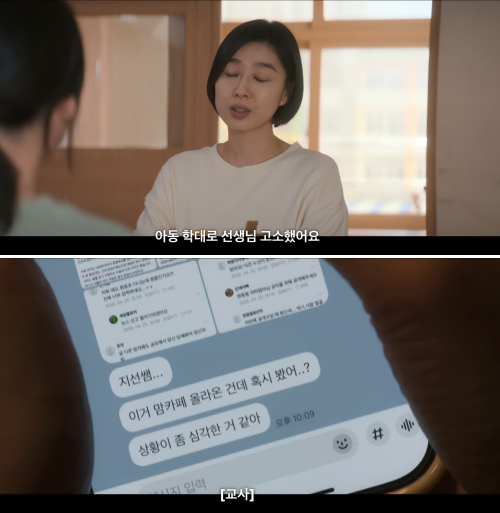
Legal experts point first to Article 17, Paragraph 5 of the Child Welfare Act as a "loophole in the law" that has been used to harass teachers. It bans "emotional abuse that harms a child's mental health and development."
The problem here is the vagueness of the standard. In episode 5 of the drama 'Not_found,' a parent makes a baseless claim that the teacher gaslighted his son and files a complaint against the homeroom teacher for "emotional child abuse."
After the death of a Seoi Elementary School teacher in 2023, which inspired the episode, the so-called Teacher Rights 5 Act was revised and a clause was added to the Act on Special Cases Concerning the Punishment, etc. of Child Abuse Crimes stating that "legitimate guidance by teachers in daily school life shall not be regarded as child abuse." However, because the standards remain unclear, the number of teachers booked on child abuse charges last year reached 369, the highest in the past five years.
Na Hyun-kyung, a lawyer at Jinsu Law Firm and a former elementary school teacher, said, "Parents exploit the ambiguity of emotional child abuse to file lawsuits against teachers, and more than 90% of those cases end in no charges. We need a control mechanism that can protect teachers when they are reported for child abuse."
Social debate over the age threshold for juvenile offenders has also failed to reach a conclusion. At present, juvenile offenders are defined as those aged 10 or older but under 14. Even if they commit crimes, they are subject to protective measures under the Juvenile Act rather than criminal punishment. Because they receive only measures such as placement in a juvenile detention center or probation, no criminal record is left behind.
As a result, age has become a tool for children who fall under the juvenile offender category. Crimes by juvenile offenders have also increased. According to National Police Agency data, the number of juvenile offenders apprehended rose more than threefold in nine years, from 6,493 in 2016 to 21,095 in 2025.
There are also criticisms that the Act on Promotion of Information and Communications Network Utilization and Information Protection, etc. does not function properly inside schools.
According to the 2025 Cyber Violence Survey jointly conducted from September to November last year by the Broadcasting, Media and Communications Commission and NIA, among 9,000 students from fourth grade elementary school to third year high school and about 4,000 adults aged 19 or older nationwide, 42.3% of teenagers experienced cyber violence over the past year.
The share of those who experienced only victimization stood at 23.3%, up 3.0 percentage points from the previous year, while 14.2% experienced both victimization and perpetration.
By type of harm, cyber verbal abuse ranked first by a wide margin at 32.0%, followed by cyber defamation at 15.8%, cyber stalking at 6.8%, and cyber sexual violence at 5.4%.
In the drama 'Not_found,' cyber violence spares no one. Students as well as teachers can become victims. Some are falsely accused of crimes through manipulated videos, while others have their personal information exposed online.
Facing the limits of the law
As the limits of these laws are laid bare through the drama, calls for change are growing.
In the case of juvenile offenders, debate over the minimum age has continued for years.
Since the Criminal Act was enacted in 1953, the standard of "criminal responsibility under the age of 14" has never changed. Those who support lowering the age say the juvenile offender system is being abused. They also point out that even when juvenile offenders commit crimes, police cannot conduct searches, seizures, or phone forensics against them, making investigations extremely difficult.
Opposition is also strong. Critics argue that even if the age is lowered, prison sentences are rarely imposed, making it little more than "symbolic legislation." They also say infrastructure problems, such as a shortage of probation officers, must be addressed first.
Kim Hye-mi, a legislative researcher at NARS, has said, "It is difficult at this point to determine how much lowering the age would affect the crime rate. The criminal policy validity and effectiveness require separate empirical review."
As the controversy continued, President Lee Jae-myung instructed public discussion at a Cabinet meeting in February, saying, "An overwhelming majority of the public thinks the minimum age should be lowered by at least one year." However, at its final plenary meeting on April 30, the social dialogue council on the juvenile offender age issue adopted a recommendation to keep the current standard of under 14.
There have also been complaints from the field that sentences for juvenile offenders are too lenient.
On the 24th, Criminal Division 2 of the Busan High Court, presided over by Judge Park Woon-sam, partially accepted the prosecutor's appeal in the appellate ruling for five juvenile offenders indicted for violating the Act on the Protection of Children and Youth Against Sex Offenses and other charges, and increased the sentences of the main offenders, A and B.
A's sentence was increased from a maximum of four years and a minimum of three years in prison at first instance to a maximum of five years and a minimum of four years. B's sentence was raised from a maximum of two years and a minimum of one year and six months to a maximum of three years and a minimum of two years. The other three defendants kept their original sentences.
The court also noted that there were limits to how much the sentences could be increased.
Judge Park said, "We accepted the prosecutor's appeal, but we did not raise the sentences by a very large margin." He added, "The fact that the defendants are juveniles prevented us from increasing the punishment dramatically."
Signs of change emerge
Changes to address the weaknesses in the law have also begun.
According to Yonhap News on the 28th, the Ministry of Gender Equality and Family and the Ministry of Justice have reached a consensus on lowering the juvenile offender age threshold from under 14 to 13 only in cases involving "serious crimes." This appears to be a decision to lower the age conditionally.
As a result of the public discussion process on adjusting the juvenile offender age, the original option of keeping the current standard of under 14 was considered, but the plan shifted to a conditional reduction as concerns over violent juvenile crime persisted.
The Ministry of Gender Equality and Family plans to report a recommendation on the juvenile offender age threshold, including these revisions, to the State Council of South Korea as early as the 30th. The content is expected to be revised depending on the outcome of the meeting.
The Ministry of Justice is expected to set the detailed standards for what constitutes a serious crime.
Superintendents elected in the June 3 local elections, who will begin their terms on July 1, are also expected to take action.
Ahn, who has experience in legislative work in the National Assembly, said, "We plan to work with the National Assembly to revise the Child Welfare Act and the Act on Special Cases Concerning the Punishment, etc. of Child Abuse Crimes, and to push for legislation that exempts educational activities from liability when there is no intent or gross negligence."
[email protected] Seo Yoon-kyung Reporter