Gold, silver, and Bitcoin that hurt investors in the first half of the year — will they rise again in the second half?
- Input
- 2026-06-29 06:00:00
- Updated
- 2026-06-29 06:00:00
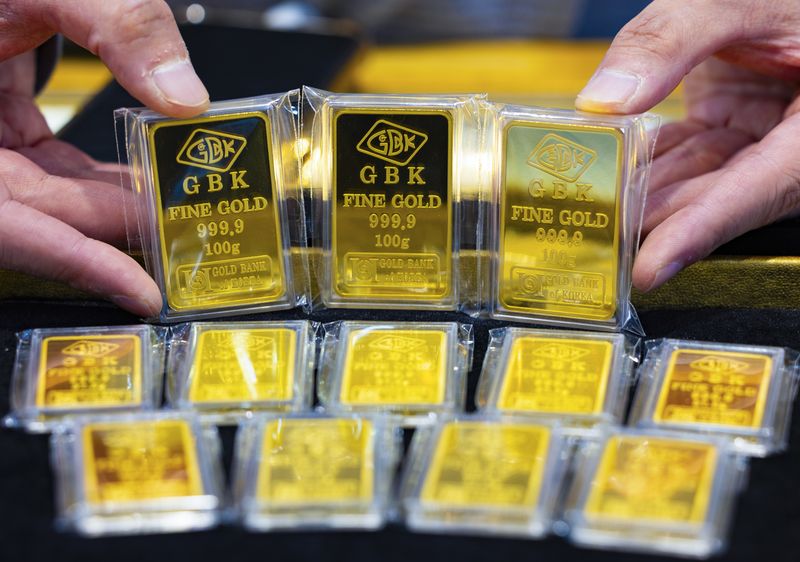
[Financial News] In the first half of this year, prices of major assets such as gold and Bitcoin fell sharply across the board, raising concerns about a global liquidity squeeze. However, analysts in the securities industry said the decline was only a temporary correction driven by worries over tightening and a stronger dollar. They expect disinflation in the second half of the year to revive momentum in asset markets. According to Investing.com on the 29th, international gold prices closed at around $4,089 on the 26th local time. Gold had surged to as high as $5,400 on January 28, setting a record rally, but the uptrend later reversed, leaving it down 24.2% in five months.
Bitcoin also trended downward this year. On CoinMarketCap, the cryptocurrency was trading at $60,095 as of 9:30 a.m. the previous day. It also fell to as low as $58,189 on the 25th.
Analysts say the sharp drop in major asset prices, including gold, silver, and Bitcoin, has heightened concerns about liquidity tightening, but they believe a rebound in prices will gain strength in the second half of the year.
iM Securities said the biggest reason for the broad decline in major asset and commodity prices in the first half was fears of tightening. At the start of the year, expectations were widespread that the Federal Reserve System (the Fed) would cut rates further this year. More recently, however, concerns have grown that major central banks may maintain a tightening stance, which has weighed on asset and commodity prices. Commodities such as gold do not generate interest, so when benchmark rates rise, the opportunity cost of holding them increases and their investment appeal falls. The Fed also signaled after its June Federal Open Market Committee (FOMC) meeting that a rate hike could still be possible this year, adding further pressure on asset prices.
A stronger dollar was also cited as a factor behind the decline in asset prices. Analysts said the Fed's rate-hike risk pushed up the dollar's value, while Europe's recession risks and the euro's weakness also added to the dollar's strength.
The explanation is that speculative funds that had bet on rallies in commodities such as gold and silver pulled out amid tightening concerns and dollar strength, turning asset prices downward this year. In addition, global liquidity was drawn more toward major U.S. Artificial Intelligence (AI) companies than toward asset markets, as seen in SpaceX's planned listing and large-scale fundraising by hyperscaler companies.
Some have raised concerns that this year's sharp decline may signal a sudden contraction in the liquidity that has supported asset markets, but others say that view is excessive. It is true that tightening risks have intensified at some central banks, including the Fed, but the prevailing view is that a tightening stance will not be sustained or strengthened in the second half of the year.
Park Sang-hyun, a researcher at iM Securities, explained, "International oil prices, which had triggered tightening concerns, are stabilizing quickly on the downside, and some commodity price corrections are increasingly likely to ease inflationary pressure."
He added that in the United States, the base effect from last year's tariff hikes could have a positive impact on inflation in the second half, increasing the likelihood of a shift into a disinflation phase.
Park said, "In a situation where concerns about an AI bubble have recently emerged, the sharp falls in gold, silver, and Bitcoin prices may fuel worries about volatility in asset markets. But in the end, the contraction in liquidity is expected to be only temporary." He added, "With a shift into a disinflation phase in the second half of the year, momentum in asset markets, especially equities, is expected to strengthen again."
[email protected] Park Ji-yeon Reporter