[Middle East Tensions Reignite] Strait of Hormuz Remains Unstable
- Input
- 2026-06-28 03:14:41
- Updated
- 2026-06-28 03:14:41
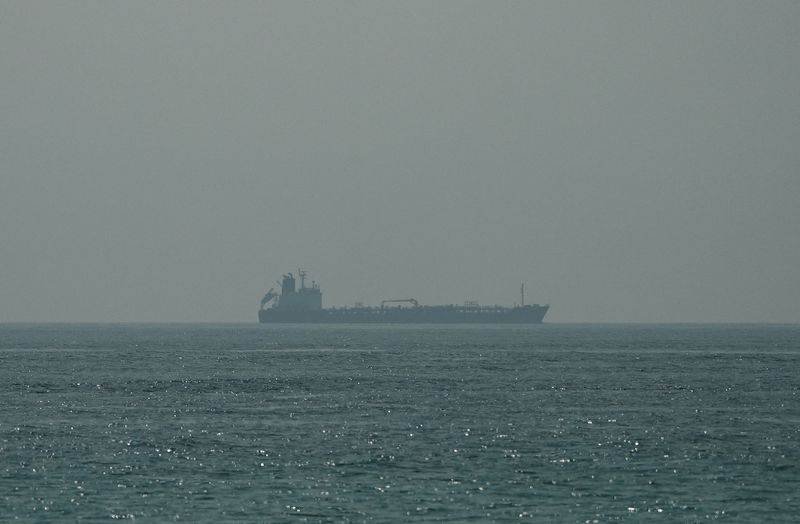
The United States and Iran have signed a Memorandum of Understanding (MOU) to end the war and are continuing follow-up talks, but tensions in the Strait of Hormuz, a key global oil shipping route, have not eased.
CNN reported on the 27th local time that although an MOU declaring the normalization of the strait was signed, Iran has continued its provocations by insisting on control of the waterway, limiting the free passage of ships.
Repeated attacks
It began with a warning issued by the Islamic Revolutionary Guard Corps (IRGC) on the 25th.
In a statement, the IRGC warned, "Any vessel that tries to move without our permission... or outside the designated route will have to bear responsibility for any consequences."
Hours later, a U.S. government official told CNN that the Singapore-flagged container ship Everably had been hit by an Iranian drone.
The attack was the first against a vessel since the MOU was signed. U.S. President Donald Trump condemned it as "a foolish violation of our ceasefire agreement."
In retaliation, the U.S. military struck Iranian military facilities around the Strait of Hormuz on the 26th.
A day later, Iran attacked a U.S. military base in the Middle East.
A U.S. government official told CNN that Iranian drones were detected but did not reach their targets, suggesting they were intercepted.
Earlier that day, maritime authorities said a tanker in the Strait of Hormuz had been struck by an "unidentified projectile." Although the MOU promised free passage without tolls for 60 days upon signing, the Strait of Hormuz remains tense, with no respite even for a single day.
Iran refuses to give up control
Under the MOU, Iran must make "best efforts" to ensure that merchant ships can safely pass through the Strait of Hormuz. Unimpeded passage is one of the key concessions Iran made to the United States.
But Iran has no intention of giving up the control over the strait it secured through the war.
The vague MOU language calls on Iran and Oman to work together to define a "future governance body" for the waterway. That has led to claims that the provision effectively allows Iran to formally manage the Strait of Hormuz.
Iran’s attack on the container ship on the 25th suggests that it intends to decide where and when ships may pass through the strait. The IRGC said routes not approved by Iran are "unacceptable, completely dangerous, and prohibited." It is forcing all vessels to cooperate with the IRGC Navy to ensure safe passage.
Meanwhile, Iran’s newly established Persian Gulf Strait Authority (PGSA) has informed ships to comply with new rules. To receive a "safe passage guarantee," including insurance coverage, vessels must complete an email authorization from the PGSA.
Three competing routes in a narrow strait
In the narrow Strait of Hormuz, which is only about 34 kilometers wide, three separate shipping lanes are now operating under different controls, leaving shipping companies confused.
The southern route, which passes through Omani territorial waters, is drawing ships trying to avoid U.S. sanctions. As vessels crowd into the narrow lane, the risk of collisions is rising.
The second is the central route used before the war, and the third is the northern route controlled by Iran.
Dimitris Maniatis, CEO of maritime risk consulting firm Marisks, said, "All of this is very confusing," adding that shipping companies are struggling to determine which route is safe to use. Maniatis added, "The current environment is extremely dangerous."
A lose-lose situation
Shipping companies are caught in a lose-lose situation, facing both physical danger and the risk of political and economic sanctions.
Choosing a route outside Iran’s control exposes them to retaliatory attacks by Iranian IRGC drones, mines, and patrol boats, as happened with Everably.
But choosing the Iranian route is no easier. If the MOU between the United States and Iran collapses, tolls or service fees paid to Iran could fall under U.S. financial sanctions.
Iran has said it will not collect tolls for now, but it has announced that it will impose "maritime service fees" and a "new environmental tax," drawing criticism from Arab oil-producing states and the United States.
Rising risks
After the attack on Everably, the International Maritime Organization (IMO), under the United Nations (UN), temporarily suspended an evacuation operation aimed at safely removing more than 500 merchant ships and over 11,000 seafarers stranded in the Gulf region.
Matt Wright, an analyst at global shipping analytics firm Kpler, said, "We are not back to square one, but the clear reopening of the Strait of Hormuz is still tied to the 60-day ceasefire period." He warned, "If differences are not resolved by mid-August, the three routes could be used in a more chaotic and dangerous way."
As a result, war-risk insurance premiums for very large crude carriers (VLCCs), which exceed $1 million per ship, have not yet fallen.
As the confusion continues, cargo volumes through the Strait of Hormuz have still not returned to prewar levels.
[email protected] Song Kyung-jae Reporter