The Secret Behind Spain's Fourth-Busiest Airport... A Bet on Maximizing Commercial Space and Direct Connectivity [On-Site Report]
- Input
- 2026-06-28 11:00:00
- Updated
- 2026-06-28 11:00:00
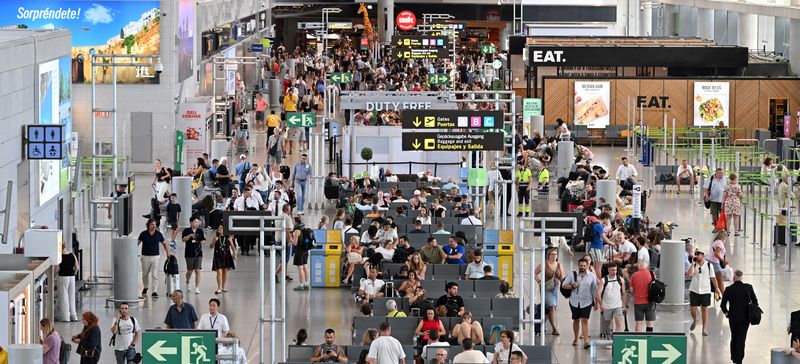
【Madrid, Spain = Reporter Kim Dong-ho】 At Málaga Airport in Andalusia, Spain, a passageway resembling the entrance to a department store appeared on the right after passing through security. It was the airport's duty-free zone. Travelers must pass through this area to reach their boarding gates. The carefully designed commercial flow offered a glimpse of how Málaga Airport rose to become Spain's fourth-busiest airport. It is a notable benchmark for Korea Airports Corporation (KAC), which has recently made revitalizing regional airports a top priority and is expanding passenger infrastructure and direct routes.
Juan Manuel Cordobes, head of airport operations planning at Málaga Airport, said during a meeting on the 26th local time that the airport was designed so domestic and international passengers pass through a single security checkpoint and can enjoy shopping in the duty-free area. He added that after passing through duty-free, the flow splits at the main plaza into the A, B and C concourses for international flights, and the Delta concourse for domestic flights and routes to the European Union (EU).
Maximizing commercial revenue through a single passenger flow... A lesson for Korean terminal expansions
Málaga Airport's passenger flow has been designed entirely around commercial efficiency and convenience. Passengers linger in the main plaza, the first space they encounter after passing through duty-free, and spend money there. The airport has also brought in two restaurants by Dani Garcia, one of Spain's top celebrity chefs, to offer a high-end dining experience.This commercial-space-centered approach to passenger flow offers an important benchmark for KAC's infrastructure expansion strategy. Since last year, KAC has been investing about 360 billion won to expand terminals at Gimhae International Airport and Cheongju Airport, while also adding supporting facilities such as parking lots. As non-aeronautical revenue becomes increasingly important for regional airports, spatial design that organically links open waiting areas maximizing natural light with key commercial facilities, as seen at Málaga Airport, could provide a solution for regional airports in Korea.
A thorough point-to-point route strategy, similar to that of the airport operator
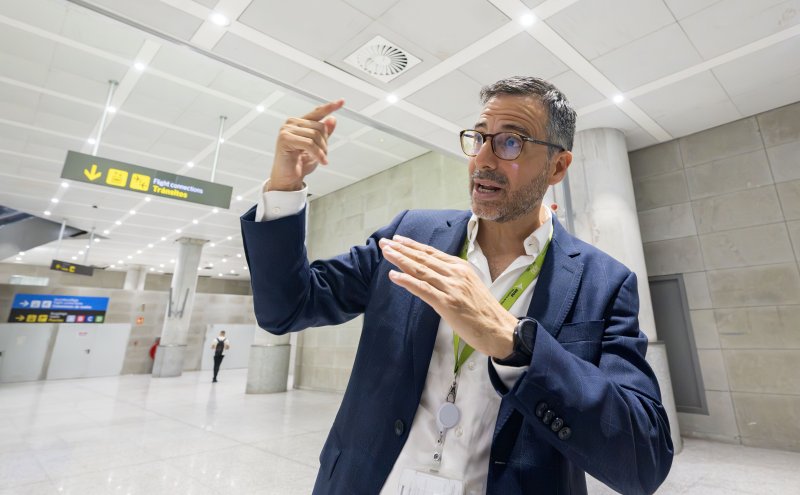
Málaga Airport has firmly established itself as the fourth-largest airport in the Aena network, posting record annual figures for 2025 of 26.8 million passengers and 187,000 flights. Last year, 58 airlines operated there, and international routes accounted for a dominant 83% of the total. The main driver of growth has been its refusal to chase the hub-airport model and its strict adherence to a point-to-point operating strategy.Cordobes explained that the United Kingdom accounts for the largest share of passengers. He added that during the summer, as many as 70 direct flights a day operate between Málaga and all airports in London, effectively serving as a massive air bridge.
This closely mirrors the strategy being pursued by KAC. Since last year, the corporation has sharply expanded direct routes at regional airports by introducing aggressive incentive programs, including fee reductions for airlines launching new international routes. As a result, direct international flights to China, Japan and Mongolia have become more frequent, turning regional airports into key hubs for inbound tourism in their respective regions.
Overcoming the off-season with business demand... Moving ahead with preemptive large-scale expansion
Málaga Airport is also quickly moving beyond the limits of being merely a leisure destination airport. While 65% of all passengers travel for vacation, the share of business travelers, now at 12%, has been rising every year as major global tech companies such as Google and Vodafone have established a strong presence nearby. As a result, the airport handled 1.7 million passengers even in the slowest months, steadily narrowing the seasonal gap with peak periods. It offers a lesson for regional airports in Korea, where passenger traffic tends to concentrate during specific holiday seasons, on how to create off-season demand in cooperation with local governments and companies.As rapid growth has pushed the airport close to its spatial limits, the authorities plan to begin a full-scale large expansion project in about four to five years. They intend to increase the current 80,000-square-meter area to 140,000 square meters and build a new concourse, completing an H-shaped terminal layout with two runways.
Cordobes said that once the expansion is completed, the passport control area in the departure hall will be 515% larger, while the overall commercial space and VIP lounge area will also increase by more than 40%. He said the airport aims to boost both passenger capacity and commercial profitability.
[email protected] Kim Dong-ho Reporter