Has the semiconductor rally run its course? Brokerage firms say a July rotation will be difficult
- Input
- 2026-06-27 10:00:00
- Updated
- 2026-06-27 10:00:00
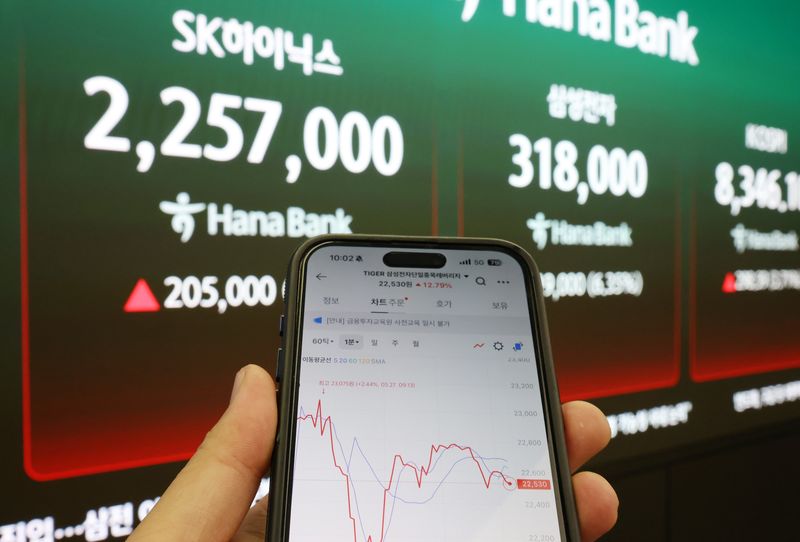
[Financial News] Expectations are growing that the domestic stock market will continue to be led by semiconductors in July. Although the recent rally has raised hopes for rotation among sectors, analysts say the market is likely to remain semiconductor-driven for now because earnings improvements in other industries are not keeping pace with Samsung Electronics and SK hynix.
According to the financial investment industry on the 27th, brokerage houses have recently argued that for sector rotation to take hold, the gap in profit growth rates between industries must narrow. In the U.S. stock market, the earnings growth of non-Magnificent Seven stocks has been improving faster than that of the Magnificent Seven, helping the rally broaden. In Korea, however, the earnings gap between semiconductors and other sectors remains pronounced.
■ Semiconductor earnings dominate, but "conditions for rotation are still insufficient"
The prevailing view in brokerage circles is that, for the time being, capital flows will likely continue to favor semiconductors, where earnings visibility is strongest. Sector rotation ultimately depends on a narrowing of earnings gaps, but the momentum difference between semiconductors and other industries is still large, analysts said.
Hana Securities projected that Samsung Electronics and SK hynix will post net profit growth of 570% and 410%, respectively, this year. By contrast, the combined net profit growth rate for KOSPI companies excluding the two firms is expected to reach only 64%. For next year, net profit growth is forecast at 33% for Samsung Electronics and 38% for SK hynix, far above the 18% expected for companies outside the semiconductor sector.
The recent market concentration also supports that outlook. Samsung Electronics and SK hynix account for 72% of total net profit in the KOSPI and 55% of its market capitalization. In particular, SK hynix overtaking Samsung Electronics in market value has become a symbolic example of the semiconductor-heavy market. Some analysts, however, note that a market-cap reversal before an earnings-share reversal can also be interpreted as a sign of short-term overheating.
One brokerage official said, "As KOSPI volatility has increased recently, expectations for sector rotation have also risen, but actual fund flows are likely to concentrate on sectors where earnings improvement is confirmed." The official added, "Until a replacement earnings driver for semiconductors emerges, changes in the leading stocks will likely remain limited."
■ Oil prices have fallen, but interest rates remain a burden
In the second half of the year, the market is also likely to move toward stock-by-stock differentiation rather than broad sector rotation. Lower oil prices are positive for some industries, but with the high-rate environment expected to continue, companies with strong earnings and cash generation are likely to have the edge.
An investment industry official said, "The possibility of rotation has not disappeared completely," adding that "as international oil prices have fallen to around $70 per barrel amid ceasefire negotiations between the U.S. and Iran, expectations for improved profitability in some sectors are rising." However, the official stressed that "with the U.S. 10-year Treasury yield still at a high level, stock selection based on company-specific earnings differentiation is likely to drive the market more than sector-wide moves for now."
Lee Jae-man, a research analyst at Hana Securities, said, "In a high-interest-rate environment, stock selection is crucial." He added that an effective strategy is to focus on companies with strong Free Cash Flow growth, sustained earnings momentum, and steadily improving operating margins.
[email protected] Choi Du-seon Reporter