Japan Stocks Also Panic After Korea's Circuit Breaker, Plunging 3,700 Points in a Day
- Input
- 2026-06-26 13:25:08
- Updated
- 2026-06-26 13:25:08
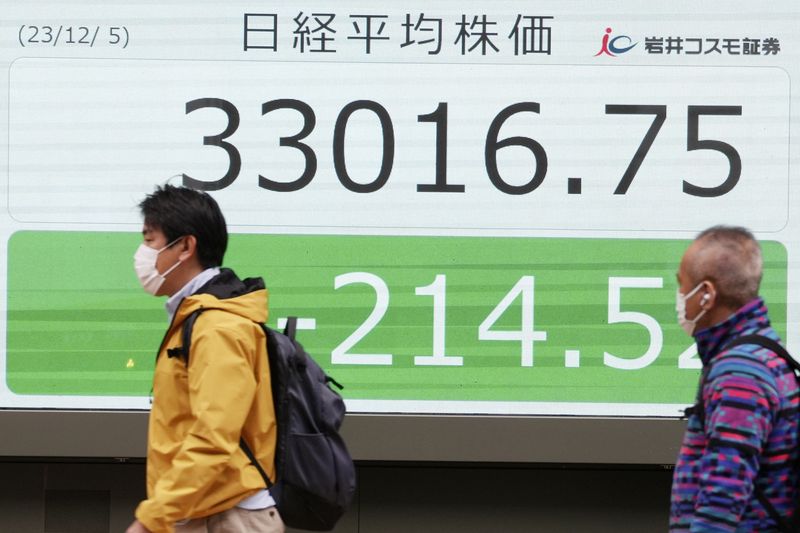
[Financial News, Tokyo = Reporter Seo Hye-jin] Japan's stock market, which had been hitting record highs, reversed course and plunged the very next day. The Nikkei Stock Average (Nikkei 225) fell by more than 3,700 points intraday on the 26th, losing the 69,000 level as well. The sell-off accelerated as fear spread across Asian stock markets after the KOSPI in South Korea dropped more than 8% and triggered the circuit breaker mechanism.
As of 1:08 p.m. in Tokyo, the Nikkei Stock Average stood at 69,321.48, down 3,044.87 points, or 4.21%, from the previous session. At one point during the session, it fell to the 68,600 range, more than 3,700 points below the previous close.
Profit-taking and concerns about a slowdown in global artificial intelligence investment weighed on the index at the same time. In particular, once the KOSPI in South Korea plunged more than 8% and the circuit breaker mechanism was triggered, investor sentiment quickly soured. Major Asian stock markets, including the Hang Seng Index, also fell together, further intensifying selling in Japan.
Weakness in U.S. technology stocks also dealt a direct blow. Concerns grew that soaring memory prices would hurt the profitability of major Big Tech companies such as Apple and Microsoft, fueling caution that enthusiasm for AI investment could cool.
On the 25th local time, the NASDAQ Composite Index, which is centered on technology stocks, closed at 25,358.60, down 118.03 points, or 0.46%, marking a fourth straight session of losses. As a result, overseas hedge funds and others continued to sell futures in an effort to reduce risk assets.
Reports that OpenAI's Initial Public Offering (IPO) could be delayed from the second half of this year to next year also dampened AI-related stocks. SoftBank Group, which had recently surged on expectations of a higher OpenAI valuation, fell by nearly 13% intraday.
The market estimated that just four stocks — SoftBank Group, Advantest Corporation, Tokyo Electron, and Kioxia Holdings Corporation — had dragged the Nikkei Stock Average down by more than 1,900 points. Stocks tied to the AI and semiconductor supply chain, including Ibiden Co., Ltd., Taiyo Yuden, Fujikura Ltd., Furukawa Electric, and Yaskawa Electric, also fell across the board.
By contrast, Kao Corporation, which is seen as a defensive stock, and medical device maker Terumo rose, while Toyota Motor Corporation and Marubeni Corporation also showed relatively firm performance.
Some in the market said the recent overheating in AI-related stocks is simply undergoing a correction. Hiroshi Matsumoto, chief researcher at Pictet Japan, told Nikkei, Inc. that "in the short term, there is a possibility of a rotation in which money moves from AI growth stocks to relatively undervalued value stocks."
As of the previous day, the Nikkei Stock Average's price-earnings ratio (PER) had risen above 26 times, adding to valuation concerns. Market participants expect that if earnings growth is confirmed in the 4-6 month results reports from major Japanese companies starting next month, buying could return, especially in AI and semiconductor stocks.
However, Nikkei, Inc. added that the prevailing view is that volatility is likely to remain high for the time being as profit-taking and a reassessment of AI investment expectations continue to overlap.
sjmary@fnnews.com Seo Hye-jin Reporter