"If We Keep Expanding Housing Supply, It Could Turn Into a Ghost Town"... Let’s Change Outdated Zoning Rules [Real Estate Walk]
- Input
- 2026-06-27 09:00:00
- Updated
- 2026-06-27 09:00:00
The Ministry of Land, Infrastructure and Transport recently conducted an emergency survey of privately owned, unused land in the Seoul metropolitan area. According to the ministry, development has been stalled for various reasons, including restrictions on changing land use under district unit plans, insufficient infrastructure capacity, and complaints from residents. The government is now pushing to convert non-residential facilities into housing in order to expand the housing supply.
Emergency survey of private land, non-residential → residential conversion,
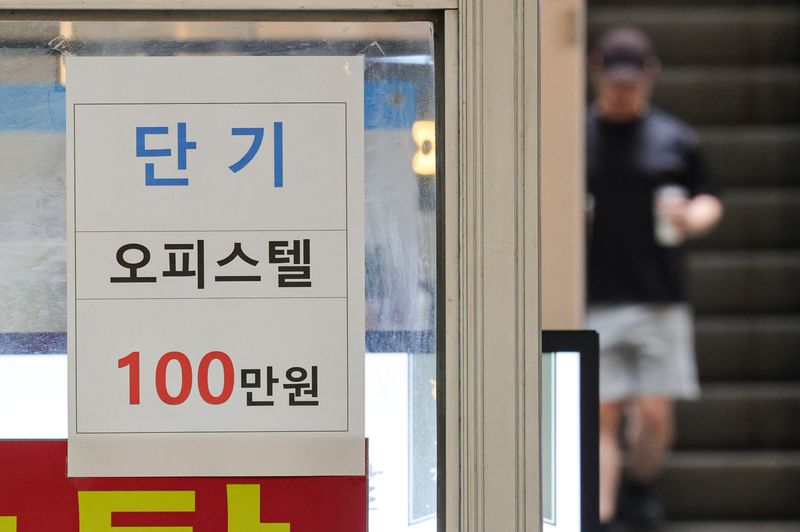
In fact, even in Third New Towns, lots designated for commercial or business use are not easy to sell. Projects on business land have focused on residential officetels or knowledge industry centers, while commercial land has been used for living-accommodation facilities and similar developments. But the market for these income-generating properties is no longer functioning. In the end, the government says it will rezone such sites so apartments can be built there. Even so, it is expected to take quite some time before people can move in.
Changing land use is not easy. The government announced that it would make it easier to convert living-accommodation facilities into residential officetels, but many such properties still have not been converted. Some units that were converted into residential officetels are now treated as second homes, leading some buyers to cancel their contracts. Converting knowledge industry centers for residential use is also difficult in practice because of additional costs and other hurdles.
Would simply converting living-accommodation facilities, knowledge industry centers, shopping spaces, and offices into residential use quickly increase the supply of rental housing? The government says it can supply housing this way, but issues such as remodeling costs and the operation of rental businesses could arise.
"A system for necessary land-use conversion must be built"
One thing to consider is that each area needs different types of land use. For example, around Seongsu-dong, Seoul, Hongik University, Yeonnam-dong, Myeong-dong, and Gangnam Station, there is a shortage of lodging facilities. In these areas, projects to convert shopping spaces or officetels into tourist hotels, family hotels, or hostels are drawing interest instead.
In advanced countries, rental businesses are thriving under the concept of a "studio," a single space that can be used for residential, lodging, commercial, or office purposes.
What about our reality? Because of rigid zoning and floor-area regulations, it is very difficult to change land use even when real estate functions are shifting rapidly. And when use changes are approved, they are often seen as special favors, leading to demands for various forms of public contribution.
What matters most is either changing a property to the use needed in that area or creating entirely new spaces that can serve all purposes, freeing them from a wide range of regulations.
In advanced countries, policies are being improved so that vacant offices can be converted into whatever use is needed. It is time for us to redefine mixed-use spaces and create a system that allows them to be used for any purpose./Choi Won-cheol, Chief Professor, Yonsei University Future Real Estate Development Executive Program※This article reflects the author's personal views and may differ from the editorial direction of this newspaper.
[email protected] Lee Jong-bae Reporter