[Editorial] The First-Half 10 Million K-tourism Mark Should Be Expanded Further Through a Korea-Japan Version of the Schengen Agreement
- Input
- 2026-06-25 18:30:24
- Updated
- 2026-06-25 18:30:24
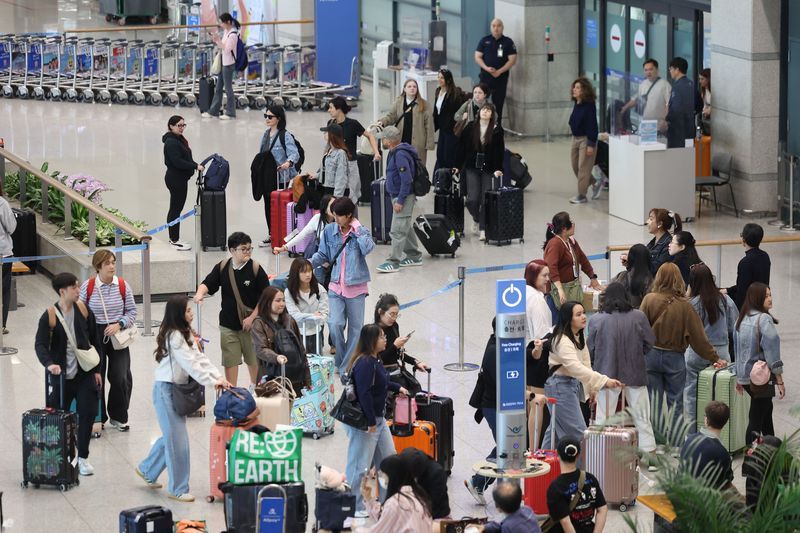
It is also encouraging that the rise in tourist numbers has led to higher spending. According to the Ministry of Culture, Sports and Tourism, foreign tourists' domestic credit card spending exceeded 2 trillion won in a single month for the first time last month. Arrivals through regional airports also increased, with the number of foreign visitors entering through local airports rising more than 30% from a year earlier. The tourism boom must not remain limited to parts of the Seoul metropolitan area; it should help revitalize provincial cities and regional economies. The immediate task is to develop K-tourism into a sustainable growth industry for the Korean economy, not just a temporary boom.
In that respect, the Korea Chamber of Commerce and Industry's proposal for a Korea-Japan version of the Schengen Agreement, raised at a tourism cooperation forum on the 25th, deserves attention. The tourism industry suggested measures such as travel using national ID cards instead of passports, expanding each country's simple payment infrastructure, launching a Korea-Japan Eurail Pass, and introducing a single tourism visa. Korea-Japan tourism cooperation is one of the areas in broader bilateral economic ties with the lowest barriers and the fastest visible benefits for the public. Tourism cooperation should be treated not merely as private exchange or travel convenience, but as a strategic task that opens a new growth platform for both economies.
The economic ripple effects would also be significant. According to an analysis by the Korea Culture & Tourism Institute, a Korea-Japan version of the Schengen Agreement could generate up to 6.7 trillion won in output and create 27,000 jobs. It could also bring in an additional 1.9 million tourists. The improvement in the tourism balance is estimated at as much as $1.9 billion. If such results can be achieved through institutional reform alone, there is no reason for the government not to actively consider it.
Of course, full-scale implementation would not be easy. There are many issues that would need to be resolved over time, including security, illegal overstays, and the linkage of immigration control systems. But the discussion itself should not be postponed. Pilot programs could begin with specific routes such as Gimpo-Haneda Airport, Busan-Fukuoka, and Jeju-Osaka, or with short-term tourists.
The effect will be greater if the inconvenience tourists actually feel in payment, transportation, interpretation, and local mobility is reduced at the same time. Linking each country's simple payment systems could become an important way to improve convenience and encourage higher spending. Introducing a Korea-Japan Eurail Pass that combines Korea Train eXpress (KTX), Shinkansen, and passenger ferries between the two countries is also worth serious consideration.
Korea-Japan tourism cooperation goes beyond economic benefits and broadens the foundation of bilateral relations. Even when ties are shaken by historical issues and diplomatic disputes, strong people-to-people exchanges make cooperation more resilient. It is time to develop tourism into a new growth engine for the Korean economy and a practical platform for Korea-Japan cooperation.