After U.S.-Iran MOU, 35 Million Barrels of Oil Move Through the Strait of Hormuz
- Input
- 2026-06-25 09:48:12
- Updated
- 2026-06-25 09:48:12
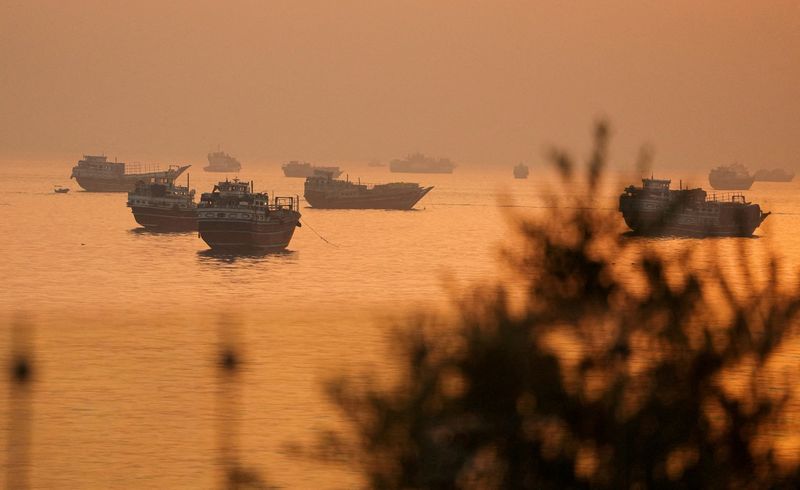
[Financial News] After the United States and Iran abruptly agreed to open sea lanes in the Strait of Hormuz, at least 20 oil tankers that had been stranded in the Persian Gulf were finally confirmed to have passed through the strait.
About 35 million barrels of crude oil were carried out on those tankers.
On the 24th local time, CNBC reported, citing a report from Kpler, a global trade flow tracking advisory firm, that the tankers were not Iranian-flagged and had been stranded in the Persian Gulf for the past three months before leaving.
Kpler analysts expected the vessels to reach their final destinations, mostly in Asia, by early August.
Official crude oil shipments through the Strait of Hormuz have risen to an average of about 4.8 million barrels per day since the U.S.-Iran agreement.
June oil shipments are at their highest level since the conflict began in late February, but they remain far below the prewar level of 15 million barrels a day that passed through the strait.
Meanwhile, Iranian-flagged tankers carrying about 21 million barrels of crude oil were also found to have left the Strait of Hormuz this month. Earlier, the U.S. Navy lifted its maritime blockade on Iran on June 18, and the U.S. Department of the Treasury temporarily suspended sanctions on Iranian oil sales until August this week.
Kpler also said that non-Iranian tankers that began loading crude oil from late April passed through the strait this month alone with 51 million barrels of oil. Because these vessels operated with their transponders turned off to avoid detection, the actual volume of crude that passed through is believed to be even larger.
The surge in oil exports is being driven by improved maritime security. The U.S.-led Joint Maritime Information Center (JMIC), based in Bahrain and coordinating operations between allied navies and merchant ships, lowered the threat level for vessels passing through the Strait of Hormuz from the highest level of "severe" to "moderate."
On the 23rd, the International Maritime Organization (IMO), a UN agency, announced that it would implement an evacuation plan for more than 11,000 seafarers still stranded in the Persian Gulf. The rescue plan is receiving active support from Iran, Oman, the United States, and other Gulf states.
Arsenio Dominguez, secretary-general of the IMO, emphasized in a statement, "We secured the safety guarantees needed to support this evacuation operation and thoroughly verified safe navigation conditions."
[email protected] Yoon Jae-jun Reporter