"Sell While You Can"... Investors Forced to Liquidate 42.4 Billion Won in Debt-Fueled Trades Cry Foul
- Input
- 2026-06-25 06:44:23
- Updated
- 2026-06-25 06:44:23
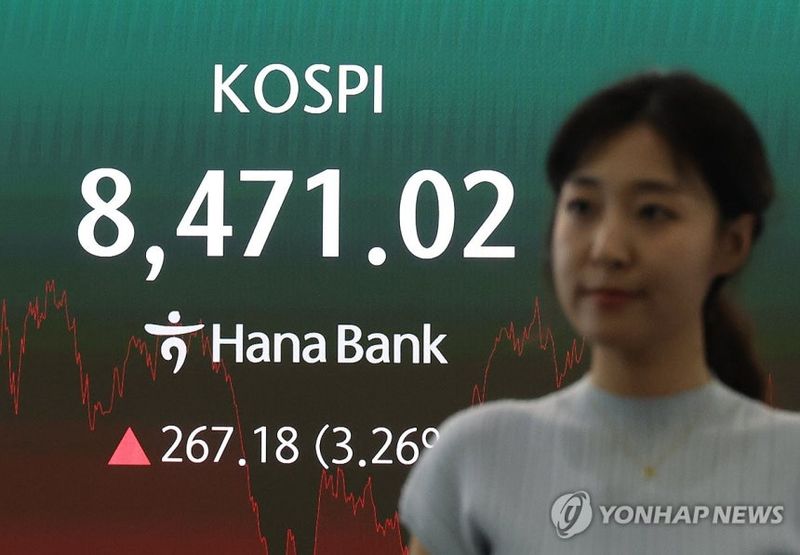
[Financial News] More than 40 billion won worth of stocks were forcibly sold through margin calls in a single day on the 23rd, when KOSPI plunged nearly 10% from the previous session.
Forced liquidation from margin calls reached 42.4 billion won on 'Bloody Tuesday,' more than double the previous trading day.
According to the Korea Financial Investment Association on the 24th, unsettled margin trading balances stood at 1.4792 trillion won as of the 23rd. That was up 181.6 billion won from the previous day’s 1.2976 trillion won, and the highest level since the 1.6917 trillion won recorded on the 10th.
Unsettled margin trading balances refer to the amount owed when an investor borrows money from a brokerage to buy stocks but fails to pay the settlement amount within the required period. It is often called ultra-short-term debt-fueled investing.
In margin trading, investors must repay the purchase amount within two trading days. If they fail to do so, the brokerage forcibly sells the held shares on the third trading day.
In fact, the scale of forced liquidation on the 23rd came to 42.4 billion won. That was more than twice the previous day’s 19.8 billion won and the largest amount since the 47.6 billion won recorded on the 12th.
In a volatile market, forced liquidation rose to 3.3% of unsettled balances.
The ratio of forced liquidation to unsettled balances also jumped to 3.3%, more than double the previous day’s 1.6%. It was the highest level since the 4.0% recorded on the 12th.
Forced liquidation tends to increase as market volatility rises, and in a declining market, the additional selling pressure can fuel further losses, making stock market swings even more severe.
Indeed, KOSPI closed on the 23rd at 8,203.84, down 910.71 points, or 9.99%, from the previous session. KOSDAQ also fell 7.94%, posting a sharp decline alongside the main bourse.
The balance of credit loans, a gauge of debt-fueled stock investing, also turned downward. As of the 23rd, credit loan balances stood at 38.0936 trillion won, down 437.5 billion won from the previous day’s 38.5311 trillion won.
After hitting an all-time high of 38.4786 trillion won on the 19th, credit loan balances fell for two consecutive trading days. Credit loans refer to the amount investors have borrowed from brokerages to buy stocks and have not yet repaid.
Seo Jae-wan, Deputy Governor of the Financial Supervisory Service, said, "Credit loan balances have continued to rise recently, expanding potential risks across the market," and urged firms to "operate a flexible and preemptive risk management system, rather than limiting themselves to a formal credit extension cap."
[email protected] An Ga-eul Reporter