Rubio Says Iran Deal Will Not Undermine Gulf Security
- Input
- 2026-06-25 03:16:20
- Updated
- 2026-06-25 03:16:20
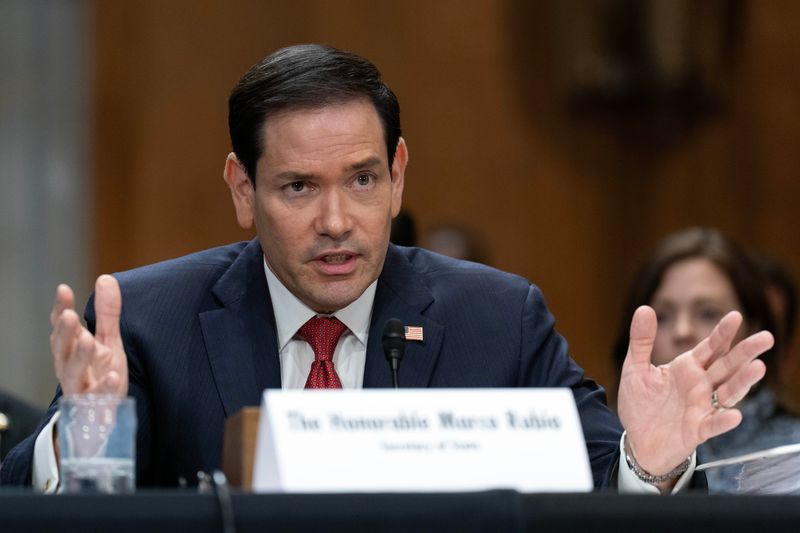
On the 24th local time, Rubio met with the leaders of the United Arab Emirates (UAE) and Kuwait in succession to explain the U.S.-Iran ceasefire agreement. The 14-point memorandum of understanding (MOU) signed by the two countries last week is the first formal agreement between their leaders since the 1979 Iranian Revolution.
The agreement includes the creation of a $300 billion Iran reconstruction fund, partial sanctions relief, and the normalization of the Strait of Hormuz.
Speaking to reporters in Kuwait, Rubio said, "We will not take any action that weakens the security of our long-standing allies in this region." He added, "The security commitments to the Gulf states remain unchanged."
This trip is Rubio's first high-level diplomatic mission since the ceasefire agreement. Until now, Vice President JD Vance had been at the forefront of the negotiations, leaving Rubio's presence relatively muted. But as the effort to persuade allies has entered a new phase, he has returned to the center of the stage.
The biggest concern among Gulf states is the $300 billion reconstruction fund promised by the United States.
The UAE, Saudi Arabia, and Kuwait are wary that the funds could be used not only to revive Iran's economy but also to strengthen its military capabilities. Moreover, the provisional agreement does not include limits on Iran's ballistic missile program or any plan to reduce medium- and long-range missiles.
During the war, these countries directly experienced Iranian missile and drone attacks. The UAE, Kuwait, and Bahrain are all strategic hubs that host U.S. military bases, and civilian casualties were reported in some areas.
The U.S. Department of State said Rubio met with UAE leaders to focus on safe passage through the Strait of Hormuz and regional security issues. Rubio also reaffirmed the United States' commitment to UAE security.
[email protected] Reporter Lee Byung-chul Reporter