The More Luxury Goods Consumers Spend, the More Satisfied They Are with Fine Dining Experiences... The Reason Behind the 'Gourmet War' [Luxury Price Story]
- Input
- 2026-06-28 08:00:00
- Updated
- 2026-06-28 08:00:00
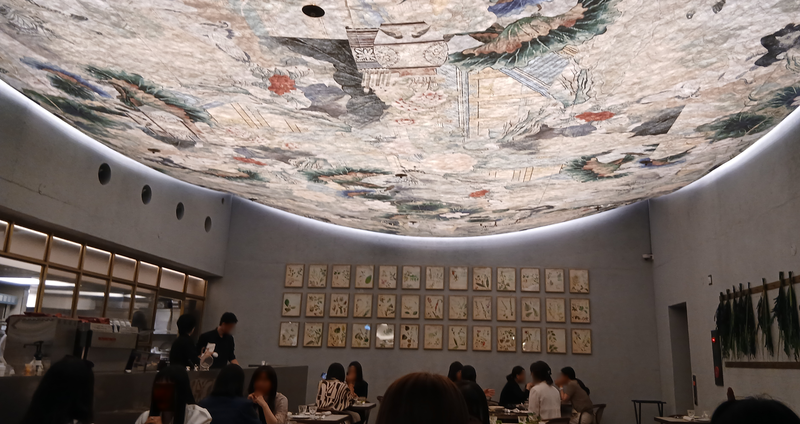
[Financial News] As luxury brands increasingly move into the restaurant business, a clear trend is emerging: they are using spaces and experiences, not just products, as marketing tools.
WOOYOUNGMI x Chef Alain Ducasse Opens Sapid Seoul in Itaewon
According to the luxury industry on the 25th, fashion brand WOOYOUNGMI recently opened the restaurant Sapid Seoul at its Itaewon flagship store in Yongsan District, Seoul, through a collaboration with chef Alain Ducasse.
Designer WOOYOUNGMI, who views fashion as a lifestyle rather than simply clothing, used food and space as a way to express the brand’s philosophy. The goal was to complete a brand universe that brings together space, fashion, and gastronomy around the Itaewon flagship store.
WOOYOUNGMI has long emphasized a restrained aesthetic centered on essence and balance. That approach aligns with Alain Ducasse’s values of preserving the natural flavor of ingredients, craftsmanship, and understated expression, which became the foundation of this collaboration.
Food Made by Craftsmen with Good Ingredients... A Space Where You Eat the Experience
Sapid Seoul pursues plant-forward dining, focusing on vegetables, grains, herbs, and fermentation while balancing seafood, dairy, and eggs. Rather than flashy technique, it emphasizes the natural flavor of ingredients. Another hallmark is its reinterpretation of Korean ingredients such as kimchi through a French sensibility.
Its main customers are women in their 40s and older, but younger diners are also visiting out of interest in the food itself. The most popular dishes are spelt whole wheat, shrimp and radish, while the starter sea bream, carrot, lecher de tigre, and kimchi is also receiving a strong response.
What stands out is that the restaurant space itself allows visitors to experience the brand.
At Sapid Seoul, a large ceiling fabric featuring graphics from the WOOYOUNGMI 25FW collection blurs the line between fashion and space. Upcycled lighting made with 1970s Murano vintage lamps and antique glass creates a sense of depth and time. Landscaping and dried flowers by Design Alle, the studio run by WOOYOUNGMI’s sisters, bring the brand’s naturalist philosophy into the space. Even the staff uniforms were designed with inspiration from the archive, turning the entire venue into a single experience that combines fashion and gastronomy.
WOOYOUNGMI said, "We are presenting a model of a 'lifestyle brand experience' in which fashion, gastronomy, space, and culture are connected as one worldview." The brand added, "Just as Alain Ducasse has continued collaborating across culture and fashion with Chanel and Dior, Sapid Seoul will grow beyond a simple restaurant into a crossover platform that connects the cultural sensibilities of Paris and Seoul."
Gucci in Cheongdam, Louis Vuitton in Myeong-dong
This trend among luxury brands is not limited to WOOYOUNGMI.
Italian luxury brand Gucci opened the Italian contemporary restaurant Gucci Osteria da Massimo Bottura Seoul at its Cheongdam flagship store in Seoul in September 2025. It is a newly redesigned version of Gucci Osteria Seoul, which first opened in Itaewon in 2022 and was relocated to Cheongdam.
French luxury brand Louis Vuitton introduced Louis Vuitton Visionary Journeys Seoul in November of the same year, along with a store and cultural experience space spanning six floors inside LV The Place Seoul, Shinsegae The Reserve in Jung District, Seoul.
On the sixth floor is JP at Louis Vuitton, a restaurant shaped by Chef Park Jung-hyun’s culinary philosophy. The fourth floor houses Le Café Louis Vuitton, where visitors can enjoy drinks and desserts, as well as Le Chocolat Maxime Frédéric at Louis Vuitton, a chocolate shop.
A Space to Experience Brand Heritage... A New Point of Contact with Loyal Customers
As luxury brands use spaces and experiences as marketing assets beyond product sales, their move into the restaurant business is becoming a trend. Analysts say restaurants now function as places where brand heritage can be experienced directly, creating a new point of contact for building loyal customers.
Regarding this trend, Choi Cheol, a professor in the Department of Consumer Economics at Sookmyung Women's University, said that luxury brands are entering the fine dining business because their customer bases overlap significantly.
He explained, "The more people consume luxury goods, the greater their demand and need for fine dining can be. Although the businesses may seem unrelated on the surface, they can create synergy when diversified because their target customers overlap."
He added, "Fine dining is a good medium for showing both spatial elegance and menu quality. It aligns with the values of luxury brands, which emphasize fine ingredients and craftsmanship."
He also noted, "Fashion and food are both essential consumer items in people’s lives and important fields that shape each country’s cultural code. Their combination may seem unfamiliar, but it can actually become a harmonious business."
Finally, Professor Choi said, "Consumers who are satisfied with these services tend to make repeat purchases or continue spending. Since both fashion and dining are areas that will continue to exist as long as people live, this is a promising business combination from a sustainability perspective."
[email protected] Kim Soo-yeon Reporter