"Starbucks Removed the Apology Notice and Rolled Out Promotions"... Chung Yong-jin's Sincerity Comes After 'History Education' [Article ASMR]
- Input
- 2026-06-24 15:40:00
- Updated
- 2026-06-24 15:40:00
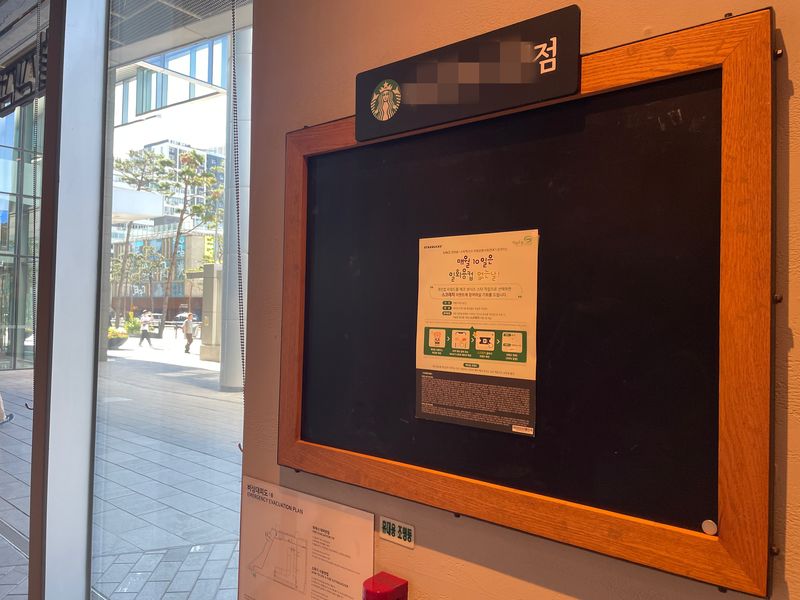
[Financial News] In the wake of the so-called 'Tank Day' controversy at Starbucks Korea on the anniversary of the May 18 pro-democracy movement, I found myself paying special attention to one place: the bulletin board at a Starbucks store. It was usually covered with notices about new products, events, and seasonal promotions.
That changed on May 19.
All the colorful advertisements disappeared, leaving just two notices in their place. One was Starbucks Korea's apology, which began with the line, "We offer our deepest apologies." The other was a small request note that read, 'We sincerely ask for your understanding.'
The notices that had stayed in place for more than a month disappeared again on the 23rd.
What disappeared, and what appeared
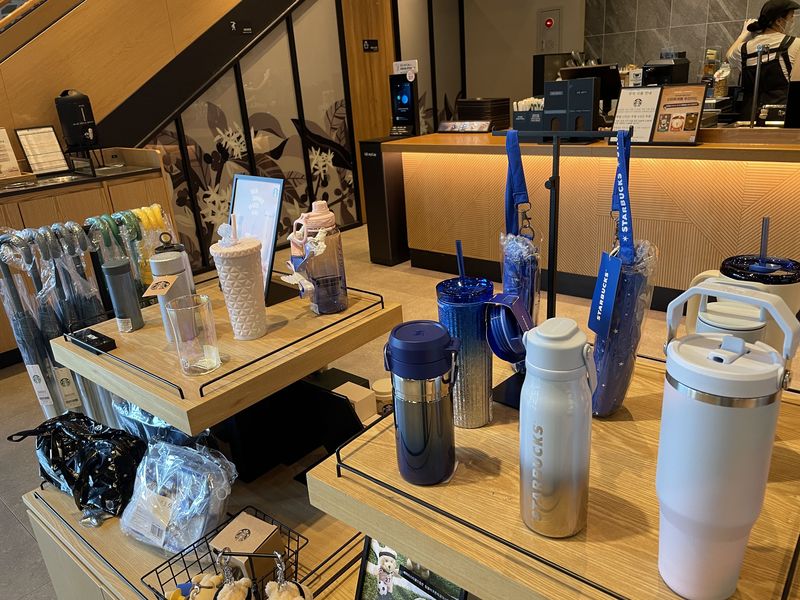
This was the scene the day after Starbucks completed history education for all employees. The apology notice was gone, and summer promotions had taken its place.
Starting that day, Starbucks launched its summer seasonal event, 'Summer 1,' and resumed sales of new beverages, food items, and merchandise. It had been about a month since the product launches and marketing schedule planned for last month were completely halted after the controversy.
Around the stores, notices for new menu items such as the Pineapple Blue Coco Frappuccino and Sea Salt Caramel Cold Brew were posted, while the merchandise display shelves were stocked with summer-only tumblers, umbrellas, and beach bags.
The Starbucks application also changed. The apology banner and pop-up that had appeared first on the main screen were no longer visible.
After bowing its head over the 'Tank Day' controversy, Starbucks Korea seemed to return to normal the day after completing history education for all employees.
I asked a Starbucks official.
"The apology notice was removed from stores, but it remains posted on the app and website bulletin boards. We plan to continue carrying out responsible follow-up measures," the official explained.
A phrase comes to mind.
"An apology must continue until the victim accepts it." The Tank Day incident sparked outrage after Starbucks used the slogan 'Bang on the desk!' in a promotional campaign, which was seen as mocking the May 18 pro-democracy movement and the torture death of Park Jong-chul in 1987.
I began to wonder whether Starbucks Korea, and its parent company Shinsegae Group, had ever offered a sincere apology to the 'real' victims of the Tank Day controversy. I also wanted to know whether those victims had accepted the apology.
An apology 'wrapped up' with history education
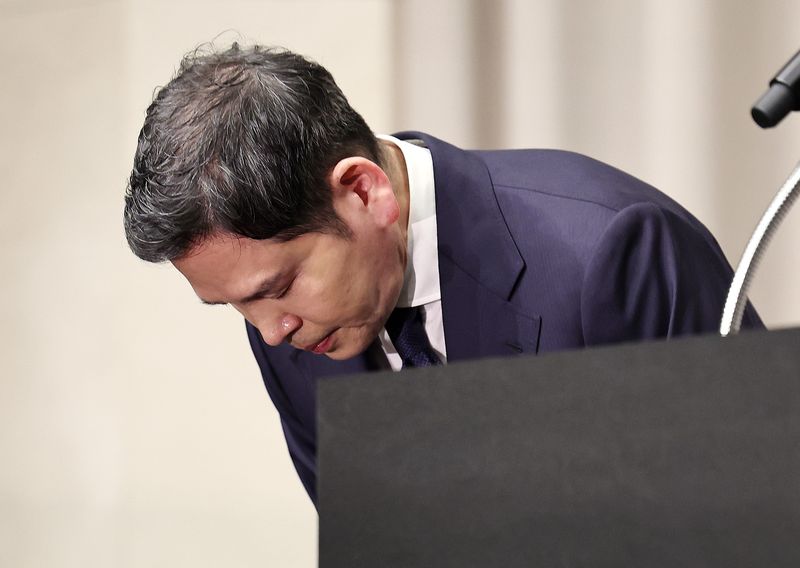
Right after the Tank Day controversy erupted, Shinsegae Group moved quickly. On May 18, it dismissed the head of Starbucks Korea and posted an apology.
The next day, Vice Chairman Kim Soo-wan from Shinsegae Group visited Gwangju to offer an apology and hold talks related to the damage done to the spirit of May at the May Memory Storage meeting room on the first floor of the Gwangju May 18 Memorial Culture Center.
But public sentiment worsened, and the backlash spread into a boycott movement. In the end, a week later, on May 26, Chairman Chung Yong-jin personally issued a public apology. He said he would work to uncover the facts and would fully cooperate with the police investigation.
Immediately after the public apology was announced, Executive Vice Chairman Jeon Sang-jin, who oversees management at Shinsegae Group, responded to reporters' questions about Chung's planned visit to Gwangju by saying, "The priority now is to determine the facts, but at the appropriate time, a visit to Gwangju or a public statement may also be possible."
Then, on the 22nd, Starbucks shortened business hours at its roughly 2,160 stores nationwide and conducted training for all employees on historical awareness and social sensitivity. Closing early was the first such move in 27 years, since the company entered Korea in 1999.
The training video included lectures by Je-Yeon Oh, a professor in the Department of History at SKKU, on 'the proper historical awareness companies should have,' and by Gu Jeong-woo, a professor in the Department of Sociology at SKKU, on 'social sensitivity and ethical standards.'
That was the end of it.
When asked by a reporter why the apology notice had been removed, a Shinsegae Group official stressed, "We did not know the apology notice had been taken down. Still, we kept the apology posted for a month and have been steadily carrying out the promises we said we would fulfill."
The official added, "In Chairman Chung's public apology, he said that once the police investigation is reviewed and the details are organized, there would be an opportunity to discuss additional steps at that time. We do believe we need to go down and apologize, but we think the timing and method should be considered more carefully over time."
Was that apology actually accepted?
Did the May 18 groups and bereaved families, who were the direct recipients of the apology, accept Starbucks' apology?
The answer from an official at the May 18 Memorial Foundation was clear.
He said, "Since the incident occurred, we have never received an official apology from Starbucks Korea or Shinsegae Group."
He also explained why the group rejected Starbucks' visit to Gwangju on May 19. It was because the move seemed like a formal gesture to escape a crisis rather than a sincere apology.
The foundation also expressed disappointment with the apology issued by Chairman Chung Yong-jin. It said the statement lacked a specific explanation of what had been wrong and what measures would be taken to prevent a repeat, and that it gave the impression the company was treating the incident as nothing more than an employee mistake.
The official said, "There is concern that this may be a structural problem reflecting management's awareness and the organization's culture, rather than simply an employee's mistake. We need an objective investigation into why this happened, as well as a sincere apology from those responsible."
There was also disappointment over the employee training.
The foundation official said, "We learned about the training content through media reports. At the very least, they should have made an effort to disclose what was covered." He added, "Suspending business and training all employees may have meaning, but it is still difficult to tell whether this is a cosmetic measure or the beginning of real change."
At 3 p.m. on the 24th, Chairman Chung will watch the history education video that Starbucks employees had already viewed first during the meeting with company presidents.
An official from the May 18 Memorial Foundation said, "The one good thing is that this incident has prompted companies to think again about the importance of historical awareness. It would be meaningful if it becomes an opportunity to raise awareness so that a second Starbucks incident does not happen."
After watching the training video, what will Chung think? And could that lead to another apology and real change?
Attention is now focused on whether Starbucks' 'return to normal' will be an ending, or the beginning of something new.
Have you ever finished reading an article and felt like something was left behind, or that the aftertaste was not quite clean?[Article ASMR]is a space for sharing stories that changed 'after publication' or 'thanks to coverage,' much like mixed reality (MR), where real readers and articles on a screen interact. If you'd like to receive [Article ASMR] comfortably, please subscribe to the reporter page.
[email protected] Seo Yoon-kyung Reporter