Tesla Optimus mass production countdown sparks humanoid robot supply chain buzz [Theme+]
- Input
- 2026-06-25 07:30:00
- Updated
- 2026-06-25 07:30:00
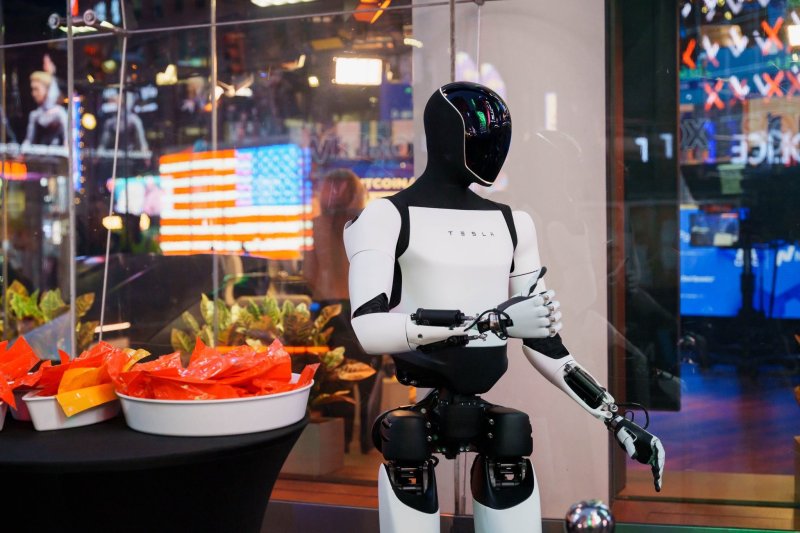
[Financial News] As Tesla begins early mass production of its humanoid robot Optimus, investor interest in related supply chain companies is rising. As the global humanoid industry moves beyond the research and development (R&D) stage and into a full-scale production race, some say it could become the next major growth engine, after artificial intelligence (AI) and electric vehicles (EV), reshaping the industrial landscape over the next decade.
■Humanoid robots enter commercialization stage...robot market grows rapidly
According to the financial investment industry on the 25th, Tesla, China's Unitree, and Boston Dynamics under Hyundai Motor Group have recently accelerated their competition to develop humanoid robots.
Tesla plans to begin early mass production of Optimus from July to August this year and deploy it directly on its vehicle production lines. The company aims to use data accumulated during the manufacturing process to improve efficiency and price competitiveness, allowing it to secure the general-purpose market first. Tesla is targeting a price of less than $20,000 for Optimus, or about 30 million won, and plans to shift to full-scale mass production starting next year.
Goldman Sachs projected that the global humanoid robot market will reach $38 billion, or about 59 trillion won, by 2035. Markets and Markets estimated the market at $15.2 billion, or about 24 trillion won, in 2030. While estimates vary by institution, there is broad agreement that the market is expected to grow rapidly, with a compound annual growth rate (CAGR) of more than 30%.
■"Without robots, companies will fall behind"...a growth path similar to AI infrastructure investment
An investment industry source said, "Humanoids could emerge as a new growth engine for the global industrial sector, following AI, data centers, and EVs," adding, "As major companies begin building mass production systems this year, it will likely become the first year of full-scale commercialization for the humanoid industry."
The securities industry also believes the humanoid sector may follow a growth path similar to the AI data center investment cycle. Choi Seung-hwan, a researcher at Shinhan Investment Corp., said in a recent report, "Just as concerns that companies could fall behind without adopting Agentic AI drove greater data center investment, competition to adopt humanoids in response to labor shortages and rising labor costs could spread quickly."
Experts say the competitiveness of the humanoid industry depends not only on robot manufacturing technology, but also on whether companies can secure a supply chain for key components. As global companies such as Tesla, Unitree, and Boston Dynamics enter the mass production race, the importance of key component makers for reducers, actuators, sensors, and organic light-emitting diodes (OLED) is also increasing.
■Humanoid key component supply chain gains attention...SPG, PIMS, and Samhyun in focus
Among domestic humanoid supply chain companies, reducer specialist SPG is drawing attention. SPG has built a production system capable of mass-producing all three types of robot reducers in South Korea: harmonic, cycloidal, and planetary reducers. It supplies reducers to Rainbow Robotics and is reportedly conducting sample tests to enter Tesla Optimus's supply chain.
PIMS is also being mentioned as a beneficiary of the expanding humanoid market. The company has competitiveness in the Open Metal Mask (OMM) segment, a key component in OLED deposition processes. It has also secured customers among South Korea's two major OLED panel makers by entering LG Display's supply chain this year, following Samsung Display Co., Ltd.
Lee Jun-seok, a researcher at Hanyang Securities, analyzed that "PIMS's growth potential could expand if OLED panels are applied to the face and interface of future humanoid robots." PIMS has secured technological competitiveness through its independently developed S-Mask and F-mask.
In the actuator segment, a core humanoid drive system, Samhyun is drawing attention. Based on its technology for integrated drive systems that combine motors, reducers, and controllers, the company is raising expectations that it could join the Optimus supply chain. Amogreentech is also being mentioned as a related stock, based on its supply history with Tesla EVs and energy storage systems (ESS). With high-performance magnetic material technology, the company is expected to benefit from the expansion of the humanoid motor market.
[email protected] Choi Du-seon Reporter