Oman and Iran Discuss Charging Transit Fees in the Strait of Hormuz
- Input
- 2026-06-24 11:42:41
- Updated
- 2026-06-24 11:42:41
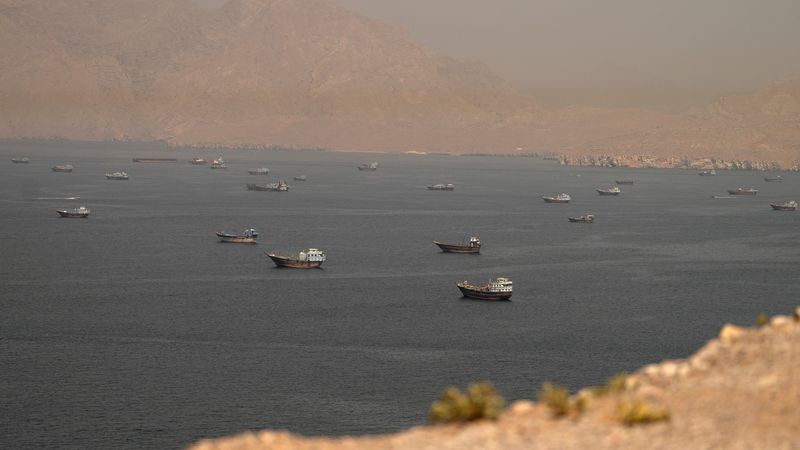
[Financial News] Oman appears to be leaning toward jointly collecting transit fees from ships passing through the Strait of Hormuz with Iran.
On the 23rd local time, Yahoo Finance reported that friction with the United States is inevitable as Iran moves to work with Oman to impose fees on ships transiting the Strait of Hormuz.
After talks in Muscat, Oman and Iran issued a joint statement emphasizing sovereignty and sovereign rights over the territorial waters of the Strait of Hormuz. They said the two countries discussed "the services to be provided in this regard and the related costs in line with international standards."
The two countries agreed to form a joint working group to reach an agreement on managing navigation through the strait in the future. Oman, which controls the opposite side of the Strait of Hormuz, has long played an important mediating role between the United States and Middle Eastern countries. Recently, however, it has moved closer to Iran, straining ties with Washington. Oman's foreign minister described the talks as "an example of friendship with a neighbor."
This move directly contradicts repeated promises by President Donald Trump that there would be no transit fees, even after a 60-day ceasefire period. Trump reiterated the point on social media the same day, saying that he had agreed to keep the Strait of Hormuz "open."
At present, the White House and the Iranian government are making completely opposing claims on nearly every major issue, including control of the Strait of Hormuz, whether to accept UN nuclear inspections, and when frozen Iranian funds will be released.
As oil tankers and liquefied natural gas carriers have recently begun leaving for the Arabian Sea, international energy prices temporarily fell, and the Trump administration is promoting the trend as an "oil gush."
Energy experts, however, say it is unclear whether the current stability will last, as shipping companies are becoming increasingly reluctant to send vessels into the Persian Gulf ahead of the Aug. 21 deadline for extending the peace talks.
[email protected] Yoon Jae-jun Reporter