‘Samsung Electronics and SK hynix leveraged ETF’ plunges 25% ... retail investors say, "Today is even scarier"
- Input
- 2026-06-24 07:25:37
- Updated
- 2026-06-24 07:25:37
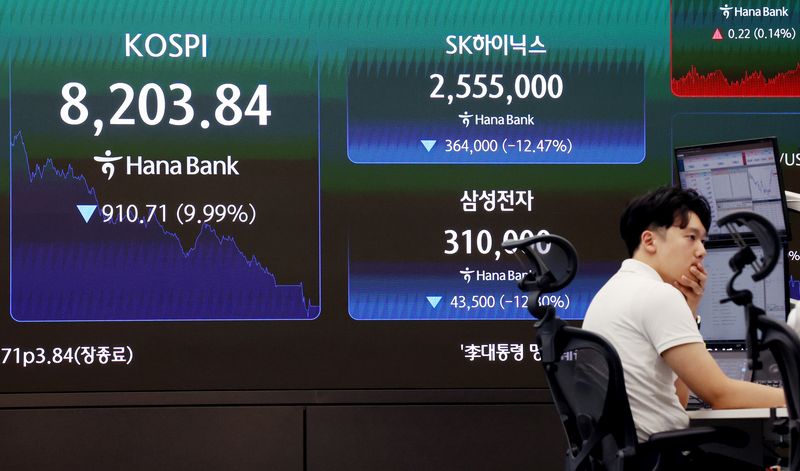
[Financial News] A single-stock leveraged exchange-traded fund (ETF) that tracks Samsung Electronics and SK hynix at twice the daily return fell 25% in one day, hit by the sharp drop in its underlying assets. Regulators are also criticizing the product’s excessive turnover and high fee structure, which had been pointed out even at the time of launch.
On the 23rd, Samsung Electronics (-12.31%) and SK hynix (-12.47%) posted their steepest declines since the 2008 financial crisis. As a result, the share prices of 16 single-stock leveraged ETFs that track the two stocks at twice their daily returns fell by an average of 25.05% from the previous trading day. The KOSPI also suffered its biggest-ever drop, falling 9.99% to close at 8,203.84.
The ETFs were listed on the 27th of last month to attract domestic demand from individual investors who had been buying overseas stocks. But as concerns over a prolonged war in the Middle East and the possibility of U.S. interest rate hikes added to external headwinds, spot stock prices tumbled and losses for investors who chose leveraged products widened even further.
Market participants say the product is one factor increasing stock market volatility. They argue that its high turnover has fueled ultra-short-term trading aimed at quick profits, deepening the shock from the market rout.
According to the Financial Supervisory Service, the ETF’s average daily turnover rate reached 122.5% from its listing through the 22nd of this month. Turnover rate is an indicator of how often shares change hands over a certain period. If 100 shares are traded in a day for a stock with 100 shares outstanding, the turnover rate is 100%.
The turnover rate of the crashed leveraged ETF, at 122.5%, far exceeded that of the underlying Samsung Electronics and SK hynix shares, which was below 1%, as well as that of existing index-based leveraged ETFs, which stood at 30.2%. In other words, more shares were bought and sold in a single day than the total number of shares outstanding.
Cumulative trading value over the first month after launch reached 190.4839 trillion won, accounting for 19.1% of total KOSPI trading value during the same period. Some critics say the launch of a high-risk product during a period of elevated external uncertainty only added to market volatility.
While investors are bearing heavier losses, the securities companies and asset management companies that launched the product are earning large fee income, adding to the controversy. The management fee for the leveraged ETF ranges from 0.6% to 1.0% a year, about three to five times higher than that of ordinary ETFs.
The Financial Supervisory Service (FSS) raised concerns that the fee income generated by the high turnover is concentrated in securities companies. At a press briefing the previous day, Lee Chan-jin said, "The product's extreme turnover is resulting in securities companies being the only ones to benefit," adding, "I personally have serious concerns about the part where the players gain no real benefit, while only the system that manages and operates it profits."
In response, Hwang Sung-yeob, chairman of the Korea Financial Investment Association, said on the 23rd, "I think there may be some misunderstanding," and added, "Since the listing date on May 27, the fees have amounted to about 50 billion won."
[email protected] Sung Min-seo Reporter