U.S. Senate and House Pass Resolution to Halt Iran War...No Binding Force
- Input
- 2026-06-24 06:36:41
- Updated
- 2026-06-24 06:36:41
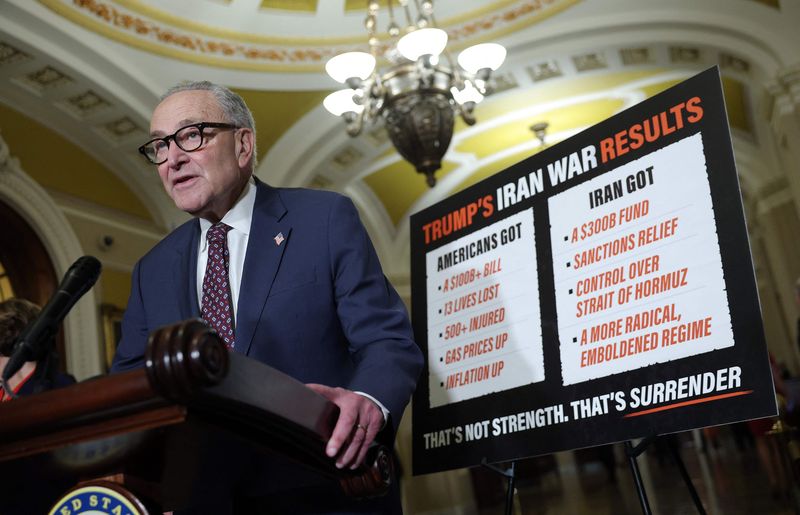
[Financial News] The United States Senate passed a resolution limiting President Donald Trump’s war powers after about 10 attempts. Although the measure is only symbolic and not enforceable, it is significant because even members of the ruling party voiced dissatisfaction with Trump’s Iran War.
U.S. media outlets, including CNBC, reported on the 23rd local time that the Senate approved the resolution, which calls on Trump to halt military action against Iran, by a vote of 50 to 48. Republicans currently hold 53 of the 100 seats in the Senate, but several lawmakers from the ruling party broke ranks. Four senators known to be at odds with Trump, including Susan Collins of Maine, Bill Cassidy of Louisiana, Lisa Murkowski of Alaska, and Rand Paul of Kentucky, voted for the resolution. In the Democratic Party, Senator John Fetterman of Pennsylvania voted against it. Republicans also failed to block passage because two of their senators, including Mitch McConnell of Kentucky, who was recently hospitalized, were unable to attend the floor vote.
Under the War Powers Resolution enacted in 1973, a U.S. president must notify Congress within 48 hours after launching combat. If Congress is not informed, U.S. forces must withdraw within 60 days or obtain congressional approval for military action. The U.S. House of Representatives passed a similar resolution on the 3rd, using the law as its basis, by a vote of 215 to 208, calling on Trump to end the Iran War unless Congress approves it. Despite Senate passage, the resolution has no legal force and does not require Trump’s signature.
Earlier, several versions of a resolution to end the Iran War, including binding measures, were introduced in Congress but repeatedly defeated because of Republican opposition. The resolution that cleared the Senate this time barely passed after 10 attempts.
Still, several U.S. media outlets said the vote brought Republican discontent over the Iran War to the surface. Trump signed a full armistice agreement with Iran on the 17th and entered a 60-day ceasefire and final peace negotiations. Some hard-line Republicans criticized him, saying he had conceded too much.
Before the vote on the 23rd, James Risch, the Republican chairman of the United States Senate Committee on Foreign Relations from Idaho, stressed that the resolution would have no effect and would weaken U.S. leverage in negotiations with Iran. He urged lawmakers, saying, "If it passes, Iran will simply get up and walk out of the negotiating table."
Chuck Schumer, the Democratic Party Senate floor leader from New York State, criticized Republicans, saying, "Republican senators in the Senate have continued to side with Trump instead of the American people," and "Americans have paid the price for Trump’s historic mistake." U.S. media also reported that Pete Hegseth, the U.S. Secretary of Defense, had planned to visit Congress this week to request a Defense budget of up to $80 billion, but the passage of this resolution has made that goal harder to achieve.
[email protected] Park Jong-won Reporter