"Will small investors be wiped out? Is a 'Black Wednesday' coming?" Micron plunges 13%, and even the U.S. turns red [Life and Times of Salarymen]
- Input
- 2026-06-24 07:29:36
- Updated
- 2026-06-24 07:29:36

[Financial News] On the afternoon of the 23rd, a salaried worker in his 30s, identified as A, said he checked his phone again after a meeting and froze when he saw the declines in Samsung Electronics and SK hynix. He had thought earlier in the day that "a correction could be a buying opportunity," but by the close both stocks had fallen more than 12%. A said, "I never thought blue-chip stocks could drop that much in a single day," adding that it felt like "a month’s salary had disappeared from the screen."
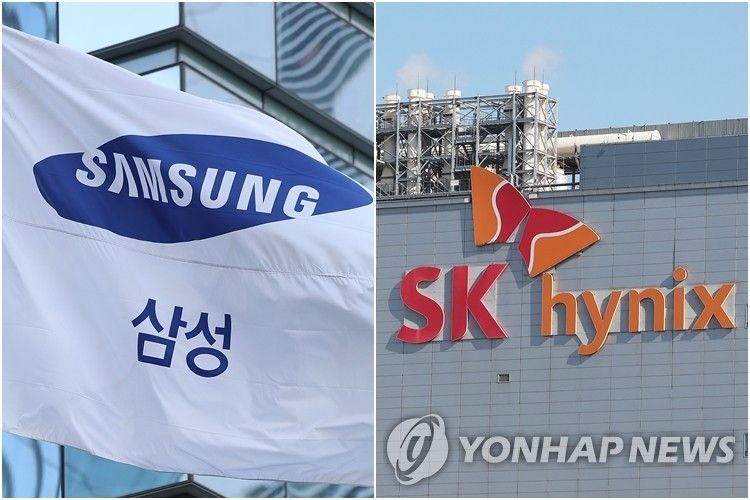
The semiconductor heavyweights that had led the domestic market swung sharply in just one day. Samsung Electronics and SK hynix both fell more than 12% on the Korea Exchange Main Board that day, the 23rd. For both stocks, it was the steepest decline since the 2008 financial crisis. As foreign investors and institutions dumped shares, individual investors net-bought more than 8 trillion won. For office workers who had been buying in fear of missing the rally, the plunge served as a reminder that even market leaders are not immune in a selloff.
That anxiety gradually became reality. Semiconductor stocks on the New York Stock Exchange plunged across the board on the 23rd local time.
Micron, a leading memory chip maker, tumbled more than 13%, while NVIDIA, the flagship name in the sector, dropped more than 4%. The broader semiconductor group was hit hard.
Even semiconductor leaders fell more than 12% in a single day
According to the Korea Exchange, SK hynix closed at 2,555,000 won on the 23rd, down 12.47% from the previous session. It was the biggest drop in 17 years and six months, since December 24, 2008, during the financial crisis.
Samsung Electronics also ended the day down 12.31% at 310,000 won. That was its sharpest decline in 17 years and eight months, since October 24, 2008.
The two stocks had recently been at the center of the semiconductor rally. With expectations rising for AI chips and high-bandwidth memory, Samsung Electronics and SK hynix were among the most familiar buying candidates for office worker investors. In investment communities and workplace conversations, remarks such as "Still Samsung" and "SK hynix has more room to run" were repeated often.
But the market moved differently that day. Stocks that had seemed to trim losses early in the session kept sliding as the day went on. Office workers who could not watch prices continuously reacted more strongly to the gap between lunchtime quotes and the numbers they saw just before leaving work.
A salaried worker in his 40s, identified as B, said, "In the morning, it looked like only a small drop, but by the afternoon the loss rate was close to double digits." He added, "It was even more unsettling because I couldn't respond while I was working."
Foreigners and institutions sold, while individuals bought
In a sharp selloff, the flow of funds was clearly split. On the Korea Exchange Main Board that day, foreigners net-sold 416.91 billion won, and institutions net-sold 454.90 billion won. Individuals, by contrast, net-bought 859.13 billion won.
Trading in the electricity and electronics sector, which includes Samsung Electronics and SK hynix, also moved in opposite directions. Foreigners net-sold 325.55 billion won, and institutions net-sold 405.42 billion won. Individuals bought 724.52 billion won.
One reason individual investors stepped in was their familiarity with semiconductor blue chips. Samsung Electronics and SK hynix are among the best-known stocks in the domestic market. Investors who know the company names, hear about industry trends, and see profit stories around them are more likely to view a sharp drop as a buying opportunity.
A salaried worker in his 30s, identified as C, said, "If it had been an unknown theme stock, I wouldn't have bought it, but because it was Samsung Electronics and SK hynix, I thought about it more." He added, "When I think it's cheap, I want to buy. When I hear foreigners are selling, I get scared. That thought stayed in my head all day."
Market-cap rankings also shifted intraday. SK hynix had overtaken Samsung Electronics' common stock market capitalization the previous day, but on the 23rd, Samsung Electronics' common stock briefly moved back ahead during the session. By the close, SK hynix still held the No. 1 spot in KOSPI market capitalization. However, if preferred shares are included, Samsung Electronics remained ahead.
Lingering anxiety among salarymen retail investors
The problem was not just the size of the decline. Samsung Electronics and SK hynix had recently drawn even more attention through leveraged single-stock products, higher target prices, and the race for the top spot in market capitalization. For office worker investors, that created both the fear of missing stocks that had already risen and the pressure to buy stocks that had fallen.
A selloff intensifies that psychology. Investors with losses wait for a rebound, while those holding cash struggle to decide when to buy. But a drop of more than 12% in a single day showed that even blue chips can shake portfolios violently in a short time.
A salaried worker in his 30s, identified as D, said, "For people who invest with their salary, once they take a big hit, it takes a long time to recover." He added, "I used to think blue chips were safe, but I realized that being safe and having low volatility are not the same thing."
Still, it would be hard to say expectations for the semiconductor industry have disappeared. Forecasts for AI server investment and memory demand remain key market variables. But after stocks rise sharply in a short period, profit-taking can hit all at once. In a market where foreigners and institutions are both selling while individuals are buying, the burden of judgment on retail investors becomes even heavier.
A said he checked his holdings again after the market closed. He did not sell immediately, but he also did not buy more. "At work, I have to focus on my job, but stocks keep moving," he said. "Today, instead of thinking about how to make money, I first thought about how much loss I can actually handle."
[email protected] Han Seung-gon Reporter