Rubio Says "No Strait of Hormuz Toll" as Pressure Mounts on Iran
- Input
- 2026-06-24 05:31:21
- Updated
- 2026-06-24 05:31:21
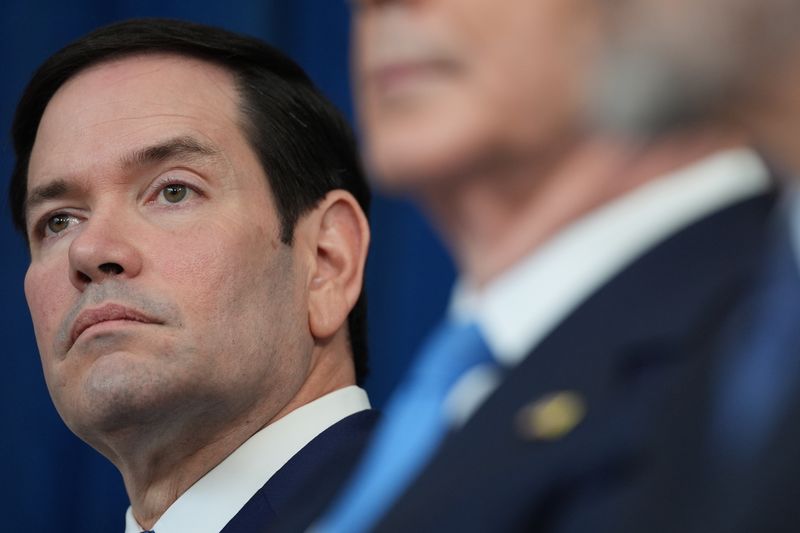
Rubio's remarks are being interpreted as a clear statement of the U.S. position on the dispute over control of the Strait of Hormuz, which has emerged as the biggest point of contention since the Memorandum of Understanding (MOU) signed by the United States and Iran last week.
The MOU stipulates that Iran has a certain degree of control over the Strait of Hormuz and that Iran and Oman will jointly work out a management plan. It also says that no country will impose tolls for the next 60 days, but it does not specify how the strait will be operated after that.
Iran, however, says it has the right to charge vessels using the Strait of Hormuz. The Iranian government insists this is a service fee rather than a toll, but the United States and the shipping industry view it as effectively the same thing.
President of the United States Donald Trump had previously said on social media that "a toll on the Strait of Hormuz will not be allowed unless it is imposed by the United States and for the benefit of the United States." Rubio did not separately comment on Trump's remarks on this day.
Rubio also expressed strong frustration over the controversy surrounding whether Iran will accept International Atomic Energy Agency (IAEA) inspections. He said, "We know what Iran agreed to," and added, "I don't know why they are making those remarks." He went on to warn, "Whatever the domestic politics may be, that is Iran's problem to solve. If it complies, the talks will move forward. If it does not, the president will make a decision."
Earlier, U.S. Vice President JD Vance and President of the United States Donald Trump said Iran had agreed to allow IAEA inspections, but the Iranian government has denied this outright.
Rubio also stressed that the issue of pro-Iranian armed groups is part of the negotiations. He said, "As long as pro-Iranian forces in Iraq are firing missiles and drones, and groups like Hamas and Hezbollah continue their terrorist activities, the conflict in the Middle East cannot end." He added that "this issue will also be addressed in the negotiations at the appropriate time."
He also said that if Iran chooses to become a normal state rather than a revolutionary movement exporting terrorism, it could attract foreign direct investment and achieve remarkable development. However, he drew a line, saying, "There will be no investment of U.S. government funds."
After visiting the United Arab Emirates (UAE) and Kuwait, Rubio is expected to attend the Gulf Cooperation Council (GCC) meeting in Bahrain to discuss follow-up measures to the peace agreement and regional security issues in the Middle East.
[email protected] Reporter Lee Byung-chul Reporter