[Editorial] In minimum wage talks, listen to the pleas of self-employed workers on the brink
- Input
- 2026-06-23 18:09:31
- Updated
- 2026-06-23 18:09:31
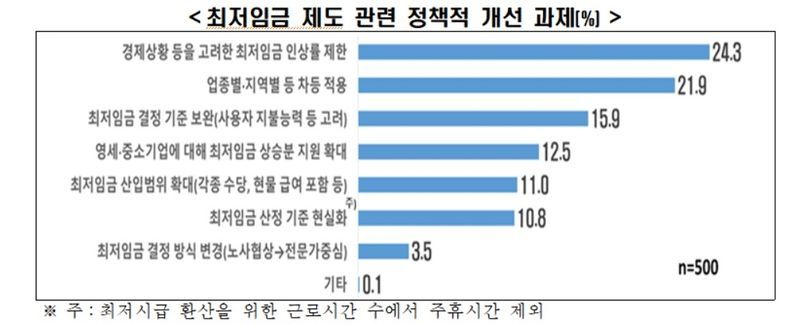
A recent survey by the Federation of Korean Industries of 500 self-employed workers nationwide shows just how far the impact of a higher minimum wage can reach. Fifty-seven percent of respondents said business conditions this year were worse than last year, while only 8.4% said they had improved. The decline in sentiment was especially pronounced in livelihood-oriented sectors such as wholesale and retail, at 66.3%, and lodging and restaurants, at 65.8%. As business gets harder, one in three self-employed workers takes home only about 2.15 million won a month, less than the minimum wage. In some cases, owners who struggle to run restaurants end up earning less than their employees. Meanwhile, 59.2% said they no longer have room to hire, and 25.2% said they are at the brink of closure. With fixed labor costs rising after a minimum wage hike, even the survival of self-employed businesses is being put at risk.
When business conditions are this poor, a steep minimum wage increase can also lead to a situation in which workers are not paid properly. In the self-employed sector, especially in lodging and food service, many businesses are running at a loss and cannot even pay workers the legal minimum. Pushing ahead with a hike while ignoring the reality that many businesses can barely afford the current minimum wage would only turn self-employed owners into criminals.
If a wage increase is forced through anyway, self-employed workers will have only the worst options left. They will have to cut jobs or, in extreme cases, shut down altogether. Moreover, according to a survey by KEF, more than one in three self-employed workers are already considering raising prices even at the current minimum wage level. If the minimum wage is raised to improve worker welfare, it could instead fuel inflation and end up hurting low-income workers. That is the paradox that may unfold.
The minimum wage is a key system for guaranteeing workers' basic livelihood. However, the debate should not proceed on principle alone. If the voices of self-employed workers are not sufficiently reflected in the decision-making process, the domestic economy and consumers will also suffer. Every year, must we repeat the same practice of discussing wage hikes without properly asking about employers' ability to pay or the employment conditions they face?
What is more, minimum wage discussions that drive self-employed workers to the edge eventually come back as a boomerang in the form of fewer jobs. The people who should benefit most from the minimum wage debate are low-wage workers. What is needed now is a clear-eyed view of reality and a balanced approach.