In this country where there is "no ruling or opposition party on semiconductors," GDP has overtaken Korea's after 22 years
- Input
- 2026-06-24 06:30:00
- Updated
- 2026-06-24 06:30:00
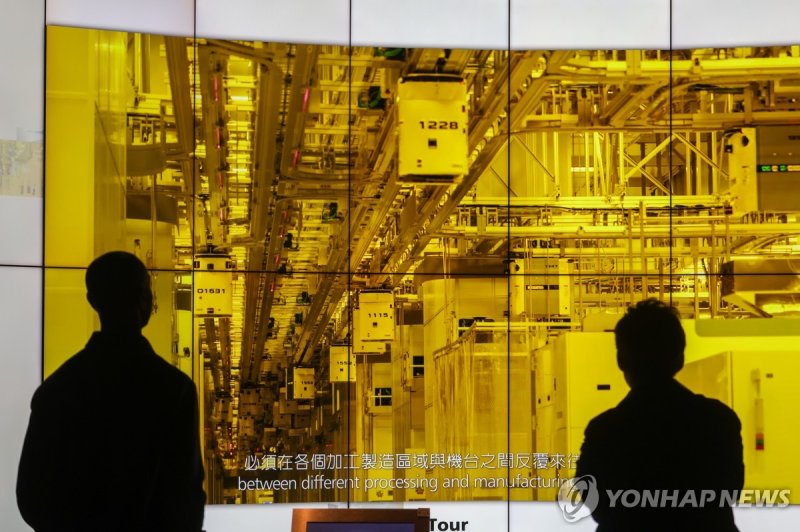
Both Korea and Taiwan have made semiconductors their key growth engine, but the difference has been a dense industrial ecosystem. The gains from the semiconductor boom have spread beyond TSMC as a single company to thousands of suppliers, lifting incomes across both businesses and households.

He pointed to a virtuous cycle as the defining feature of Taiwan's semiconductor industry: high-paying jobs and engineers' spending power remain in the country, supported by a homegrown ecosystem, and feed into private income growth. With an industrial network centered on TSMC and closely linked companies in design, materials, equipment and construction, the benefits of the semiconductor boom have spread across society.
Behind this ecosystem is a broad social consensus in Taiwan that semiconductors are a national security asset. They are seen not merely as a flagship industry, but as a strategic asset tied directly to national survival, the so-called "Silicon Shield." In semiconductor-related legislation, lawmakers move quickly regardless of party lines. Taiwan's political establishment treats strengthening semiconductor competitiveness as a national security task and pushes related policies on a bipartisan basis.
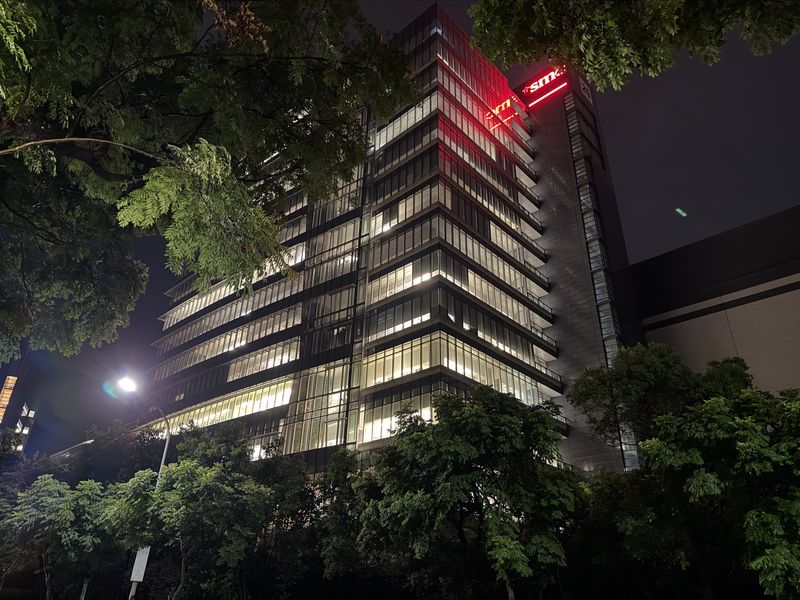
Liu said, "The collective view of semiconductors as a national security asset is what drives bipartisan consensus in Taiwan's political circles and allows related policies and legislation to move at a very fast pace." He added, "On issues such as land acquisition, tax breaks and deregulation for semiconductor companies, government ministries effectively operate a fast track and support administrative procedures at the pace of corporate investment."
By contrast, the Yongin Semiconductor Cluster General Industrial Complex, the centerpiece of Korea's K-Semiconductor ecosystem plan, took more than five years to break ground after it was announced in 2019, as water supply issues, transmission line construction, environmental impact assessments and coordination among local governments all piled up. That is one reason critics say the government must improve its coordination capacity and policy execution speed.
Liu suggested, "Korea appears to face much more complicated interest coordination among large companies, local governments, the National Assembly and regulators, and the central government's coordination power does not seem as strong as Taiwan's." He added, "A structure is needed in which the government supplies infrastructure and talent, while companies focus on investment and technological innovation."
Warnings are also being raised about an ecosystem overly concentrated in specific areas such as High Bandwidth Memory (HBM) within the AI supply chain. Liu said, "Memory semiconductors are inherently products with very large price swings depending on the business cycle and supply-demand conditions, which makes Korea, where the industry is concentrated in this area, vulnerable to sharp economic upturns and downturns." He added, "HBM may bring Korea a short-term boom, but unless it secures meaningful market share in advanced foundry and leading-edge processes, Korea's semiconductor industry is likely to remain a 'high-end supporting actor' in the global AI ecosystem."
[email protected] Jung Won-il Choi Hye-rim Reporter