"Corporate coffers are overflowing": Japanese stocks cheer 154 trillion won in share buybacks
- Input
- 2026-06-23 09:59:13
- Updated
- 2026-06-23 09:59:13
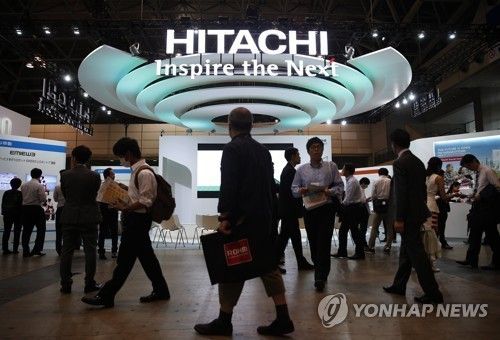
[Financial News, Tokyo = Seo Hye-jin, correspondent] The buyback limits announced by Japanese listed companies from January to May this year have exceeded 16 trillion yen, or about 154 trillion won, setting a record for the same period. The figure is close to last year’s full-year total and has emerged as a factor supporting the strength of Japanese stocks.
According to The Nikkei on the 23rd, Japanese listed companies had set buyback limits totaling 16.2 trillion yen, or about 154.34 trillion won, in the first five months of this year. That was up 34% from a year earlier and the highest on record for the same period. It is nearing last year’s annual buyback limit of 17.7 trillion yen, or about 168.63 trillion won.
About 620 companies announced share buybacks, down 14% from a year earlier, but large-scale purchases by major firms such as Sony Group and Hitachi, Ltd. pushed up the overall total.
In fact, Sony Group and Hitachi each announced buyback plans of up to 500 billion yen, or about 476.36 billion won. Both companies are expected to post record-high results for the fiscal year ending March 2027, covering April 2026 to March 2027.
Sony Group said the expansion of its buyback program reflects a sharp improvement in cash generation, which has given it room to increase both strategic investment and shareholder returns. Hitachi also pointed to the absence of large mergers and acquisitions and to solid earnings.
Japanese companies are stepping up buybacks amid growing demands to improve capital efficiency. Because treasury shares are treated as a deduction from net assets in accounting terms, canceling repurchased shares reduces equity and can lift return on equity, or ROE.
Buybacks are continuing even as Japanese stocks hit record highs, suggesting that investors are putting increasing pressure on companies to put their large cash holdings to better use.
Nomura Securities said, "As cash and cash equivalents held by Japanese companies have increased significantly, shareholder demands for better capital efficiency have also intensified."
Activist funds are also gaining influence. Daikin Industries bought back about 350 billion yen, or roughly 333.45 billion won, in shares after pressure from U.S. activist investor Elliott Management.
Transactions aimed at unwinding cross-shareholdings among companies are also active. KDDI recently announced a buyback plan worth up to 300 billion yen, or about 285.82 billion won. Of that amount, about 250 billion yen, or 238.18 billion won, will be used to acquire stakes held by Toyota Motor and Kyocera through a tender offer.
Notably, even companies expected to see weaker earnings are joining the buyback wave. Among firms that announced buybacks along with earnings releases in April and May, about 35% forecast a decline in net profit going forward.
Fujitsu said its net profit for the fiscal year ending March 2027 is expected to fall 31% from a year earlier, but added that it will continue expanding its buyback program over the medium to long term.
Market watchers say that since unused buyback capacity still totals about 8 trillion yen, or roughly 76.22 trillion won, actual repurchases in the months ahead could significantly improve supply-demand conditions in Japanese stocks.
Industry sources also say this year’s buyback total by Japanese companies could exceed 20 trillion yen, or about 190.54 trillion won, for the first time ever. Even amid instability in the Middle East and concerns over a global economic slowdown, the aggressive pace of buybacks is being seen as a sign of strong confidence in future earnings.
[email protected] Seo Hye-jin Reporter