The U.S. lifts 20-year-old crude oil restrictions on Iran; nuclear inspections remain at an impasse
- Input
- 2026-06-23 09:10:39
- Updated
- 2026-06-23 09:10:39
Oil sanctions eased for the first time in 20 years, with dollar payments also allowed
U.S. Treasury Secretary Scott Bessent said on the 22nd, local time, on X, formerly Twitter, that "as part of productive talks in Switzerland, Iran agreed to accept free and open passage through the Strait of Hormuz and the return of IAEA inspection teams." He added, "The Treasury has issued a 60-day temporary general license allowing the production, delivery, and sale of Iranian crude oil."
The biggest change under this measure is that Iranian crude can now be traded normally in dollars on the international market, including in the United States. Until now, U.S. financial sanctions had blocked dollar settlements, forcing Iran to export oil indirectly, mainly to China, using aging tankers and disguised vessels in what is known as a shadow fleet.
The U.S. Department of the Treasury explained that the waiver will allow Iran to receive oil payments directly in dollars and transfer sales proceeds back home through overseas banks. This is a broader step than the temporary sanctions waiver announced in March. At that time, only oil sales already at sea were permitted, while dollar transactions remained banned.
The measure goes beyond oil trade alone. Miaad Maleki, a senior researcher at the Foundation for Defense of Democracies (FDD) and a former senior U.S. Treasury sanctions official, said, "This waiver also includes relief from terrorism-related sanctions that had been applied to some institutions, including the Central Bank of Iran." He added that it is "a move that fundamentally shakes up the U.S. sanctions framework on Iran that has been in place for more than 20 years."
Frozen funds use also a source of disagreement as the two sides clash over agricultural purchases
But the two sides offered different interpretations of the follow-up measures after the talks. On the issue of overseas frozen funds, the United States said the released money should be used to buy U.S. agricultural products.
President Donald Trump told reporters at The White House after signing an executive order that "one of the measures we are pursuing is to use the unfrozen funds for food purchases." He added, "This food will be purchased entirely from American farmers." He went on to say, "Iran will buy everything it needs, including corn and soybeans, from American farmers," stressing that "American farmers are very happy."
Iran, however, rejected Washington's explanation. Abdolnaser Hemmati, governor of the Central Bank of Iran, said, "There is no obligation in the current agreement to buy U.S. agricultural products." He added, "The frozen funds do not have to be used only for essential goods, and they can also be used to purchase other items that are not under sanctions."
During the negotiations with the United States, Iran had asked for $12 billion in overseas frozen assets to be released first. Abbas Araghchi, Iran's Minister of Foreign Affairs, also said on X that "sanctions on exports of Iranian crude oil and petrochemical products have been waived, some frozen funds have been released, and Iran's reconstruction and development projects will also move forward in earnest."
Clash over IAEA inspections: "No new commitments"
The two sides were also clearly divided over the return of IAEA inspection teams to Iran. The United States portrayed the return of IAEA inspectors as a key achievement of the talks, but Iran flatly rejected that claim, saying there were "no new commitments." Washington said the nuclear negotiations had made progress, while Tehran downplayed the significance, saying it had only reaffirmed the existing scope of cooperation.
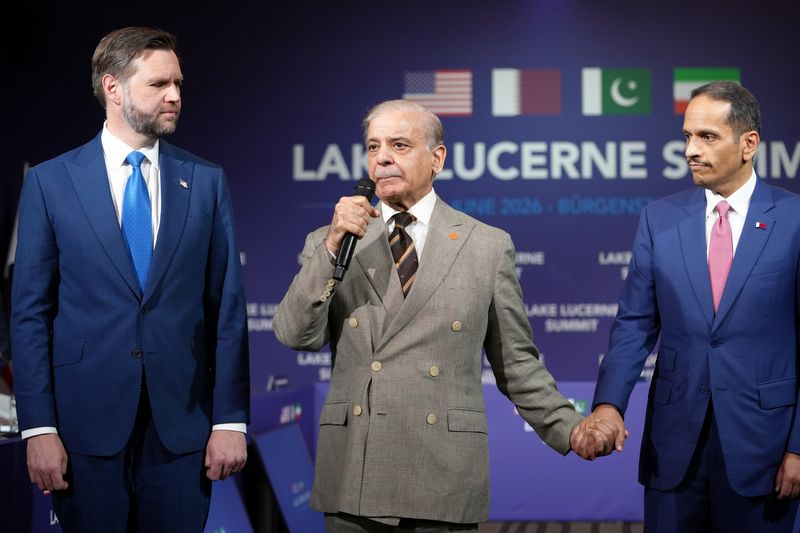
Earlier, U.S. Vice President JD Vance said after the talks in Bürgenstock, Switzerland, that "Iran has agreed to allow IAEA inspection teams back into the country."
However, Esmaeil Baghaei, spokesperson for Iran's Foreign Ministry, said through the state-run Islamic Republic News Agency (IRNA) that "Iran is cooperating with the IAEA only in line with its obligations under the safeguards agreement, parliamentary resolutions, and decisions by the Supreme National Security Council, and has made no new commitments." He explained that although parliament passed a law last year restricting cooperation with the IAEA, cooperation was never completely suspended. He also said inspections are still possible on a case-by-case basis at operating nuclear facilities such as the Bushehr Nuclear Power Plant.
The United States sees the normalization of IAEA inspections as the first step in verifying Iran's nuclear program, but Iran continues to insist that there will be no additional measures beyond the existing safeguards agreement. Although an economic incentive in the form of eased oil sanctions has been offered, disagreements over nuclear inspections and the use of frozen funds remain unresolved, suggesting that considerable friction will continue before any final nuclear agreement is reached.
[email protected] Lee Byung-chul Reporter