"More Than 5 Million Won a Month": A Record 3.7 Million Workers — While One Industry Lives in a Different World
- Input
- 2026-06-23 07:21:04
- Updated
- 2026-06-23 07:21:04
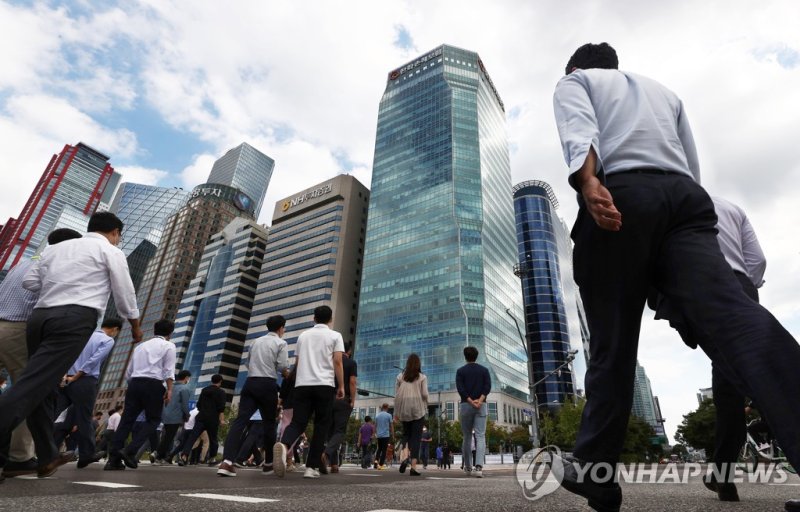
[Financial News] As rising prices and a broad trend of wage increases converge, the number of workers earning an average monthly salary of more than 5 million won has reached an all-time high since related statistics began. While the overall number of high-income workers has grown, the wage gap between certain industries — especially semiconductors and information technology (IT) on one side, and health and welfare services on the other, where care demand is surging — is becoming increasingly pronounced, raising concerns about labor market polarization.
According to data released on the 22nd by the National Data Office and the Korean Statistical Information Service (KOSIS), 3.713 million of the country's 22.488 million wage earners in the second half of last year, based on October figures, earned an average monthly wage of at least 5 million won over the previous three months, including bonuses and before tax.
That accounted for 16.5% of all wage earners, the highest figure both in number and share since the relevant statistics began in 2013. Compared with a year earlier, the number of wage earners making at least 5 million won rose by 296,000, while the share increased by 1.1 percentage points, showing a steady rise in high-paying jobs.
Manufacturing Is Flush, Health and Welfare Is Struggling... A Stark Divide Across Industries
Behind the clear increase in high-income workers lies a severe wage gap by industry. In manufacturing, the largest employer among wage earners in South Korea with 3.946 million workers, 948,000 workers earned at least 5 million won a month, accounting for 24.0% of the total. In other words, one in four manufacturing workers received high pay above that level. When workers earning at least 3 million won a month are included, the share rises to 68.2%, indicating an overall high wage level in the sector.
By contrast, the situation in health and social welfare, another key pillar of the labor market, is very different. Only 5.4% of workers in the sector earned at least 5 million won a month. More than 75% of all employees, meanwhile, made less than 3 million won. Broken down further, 29.2% earned less than 1 million won, 12.8% earned between 1 million and less than 2 million won, and 33.4% earned between 2 million and less than 3 million won, showing an overwhelmingly high share of low-wage workers.
Health and social welfare has been strongly supporting the labor market, adding 212,000 jobs even as total employment fell last month, driven by aging and rising care demand. But despite the quantitative expansion in job creation, the qualitative conditions of employment, including wages, remain poor, exposing a structural limitation in the sector.
Looking at other industries, the share of workers earning at least 5 million won was especially high in high-value-added sectors such as Financial and Insurance Industry (38.0%), Professional, scientific and technical services (35.8%), and Information and communications industry (34.8%). Accommodation and Food Service Activities, which is centered on face-to-face services, ranked last among all industries at just 1.4%.
Experts say the wage gap between industries is likely to widen further. As business conditions improve in semiconductor manufacturing and large IT companies distribute sizable performance bonuses, wage polarization is deepening even within manufacturing, especially between large corporations and small and medium-sized firms.
There are also broader concerns that rapid wage gains in specific sectors could fuel inflation across the economy. In a recent report, the Bank of Korea pointed out that of the 3.4% rise in nominal wages in the first quarter of this year, performance bonuses in the IT sector contributed 1.3 percentage points, accounting for more than one-third of the total increase in wages.
[email protected] Moon Young-jin Reporter