U.S. Allows Iran to Settle Crude Oil Sales in Dollars, Breaking 20-Year Sanctions Framework
- Input
- 2026-06-23 04:11:15
- Updated
- 2026-06-23 04:11:15
The U.S. Department of the Treasury said on the 22nd, local time, that it would temporarily exempt existing sanctions so Iran can sell crude oil in dollars and receive payments for the next two months. The measure will remain in effect while the United States and Iran discuss normalization of the Strait of Hormuz, nuclear talks, and further sanctions relief.
The biggest change is that Iranian crude can now also be sold to U.S. buyers. Until now, Iran had been blocked from dollar transactions by U.S. financial sanctions and had instead exported crude indirectly, mainly to China, through so-called shadow fleets made up of aging tankers and disguised vessels.
The Treasury Department explained that the exemption allows Iran to receive direct payments in US dollars and transfer oil sale proceeds back home through overseas banks. It is a broader step than the limited waiver announced in March. At that time, only crude already at sea could be sold, and dollar transactions were still prohibited.
In effect, the move brings Iran's shadow oil trade, on which it has relied for decades, into the legal market. The Treasury Department also said oil sales using tankers already under sanctions would be allowed during the waiver period.
The measure goes beyond oil transactions. Myad Maleki, a former senior Treasury sanctions official at the Foundation for Defense of Democracies (FDD), said, "This waiver includes easing terrorism-related sanctions on some institutions, including the Central Bank of Iran," and added, "It is a fundamentally different step from the sanctions framework the U.S. Congress has built over the past 20 years."
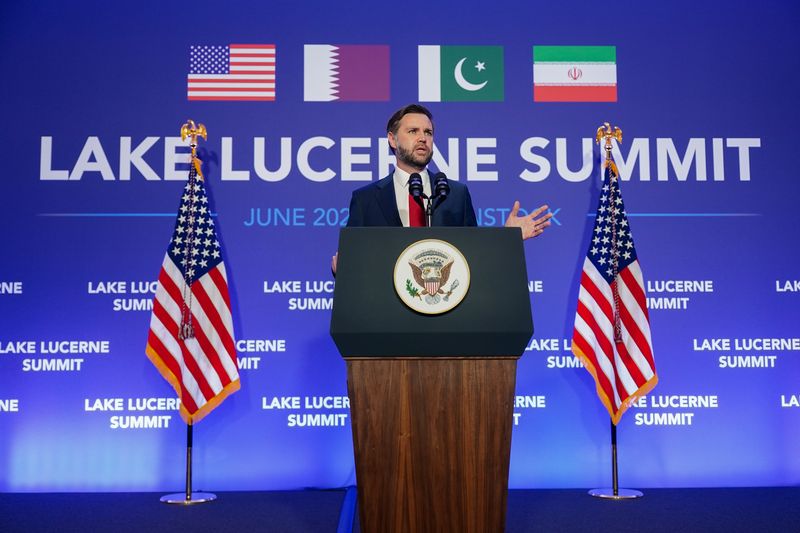
The United States is pursuing nuclear talks alongside economic incentives. Vice President JD Vance told reporters after negotiations in Bürgenstock, Switzerland, on the same day that Iran had, in principle, agreed to allow inspectors from the International Atomic Energy Agency (IAEA) to return. Iran has not officially confirmed the agreement, and the scope of the inspections has not yet been disclosed.
Washington is negotiating a phased easing of sanctions in exchange for Iran giving up its stockpile of highly enriched uranium. Iran continues to demand the lifting of economic sanctions, but says it cannot give up its right to enrich uranium.
[email protected] Lee Byung-chul Reporter