"Gave Up 8.8 Billion Won and Took the Criticism"... Starbucks Closed Early on 'That Day' [Useful Issue]
- Input
- 2026-06-23 06:34:45
- Updated
- 2026-06-23 06:34:45
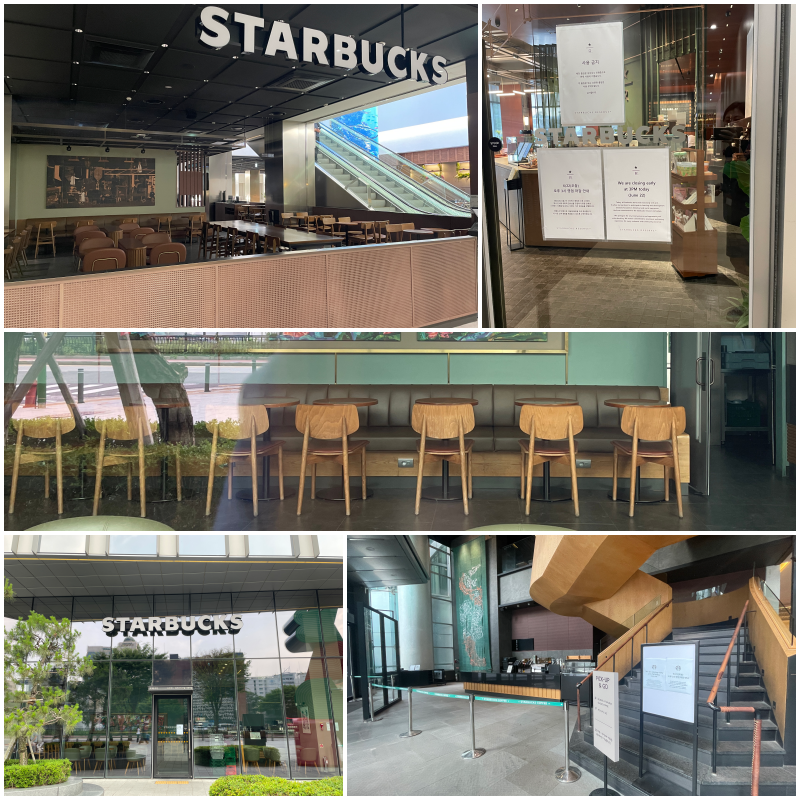
[Financial News] At 3 p.m. on the 22nd, customers at Starbucks stores across the country began leaving one by one as staff guided them out. The lights then went off, the blinds came down, and the doors were closed.
Inside the suddenly quiet stores, after the customers had left, employees sat in front of 27-inch monitors provided by headquarters. They then watched training videos for three hours.
That was the scene of Starbucks Korea's 'history awareness and social sensitivity training' for employees at more than 2,160 stores nationwide. The training was part of follow-up measures to address the so-called 'Gwangju Uprising Tank Day' marketing controversy. It was the first time since the company's entry into Korea in 1999 that all stores closed early at the same time.
In a phone interview with Financial News, Professor Gu Jeong-woo of the Department of Sociology, Sungkyunkwan University, who gave a lecture that day on 'social sensitivity and ethical standards,' said, "They invited me to give them some hard truths, so I was very direct." He added, "Starbucks employees shared the lecture I gave on the 17th, and I agreed with the idea that everyone shares the issue of corporate philosophy and values."
He also explained that the Starbucks 'Tank Day' incident was meaningful because it made clear that education on social sensitivity is needed across society, including companies, schools, public institutions, and the political world.
"Why did they close the doors?"... Foreign tourists who had no idea what was going on
That day, I walked about 3.5 kilometers from Gwanghwamun to Cheonggyecheon and Dongdaemun Design Plaza (DDP), visiting Starbucks stores along the way.
Most stores had only minimal lighting on, while some were completely dark.
However, notices were posted at each store entrance. Under the title, 'Notice of Store Closing at 3 p.m. on June 22 (Today),' the notice said, "All Starbucks stores are conducting training to build awareness of history and social sensitivity, as well as brand value workshops to reflect on Starbucks' mission," and added, "We apologize for any inconvenience caused by the shortened business hours."
There were also people who came to the stores without knowing what had happened and then turned back. In front of a Starbucks store in Jongno, I met foreign tourists who were surprised by the firmly locked door.
Jaden, 38, who said he was from Canada, accepted the explanation that it was due to employee training and said, "If it is an issue related to history, I think proper education is necessary."
Koreans were no exception.
Mr. Kang, 42, who asked to remain anonymous, said, "The coupon I got from Starbucks was valid until today, so I rushed over, but I forgot they were closing early."
"Distorting the democratization movement undermines the identity of the Republic of Korea"
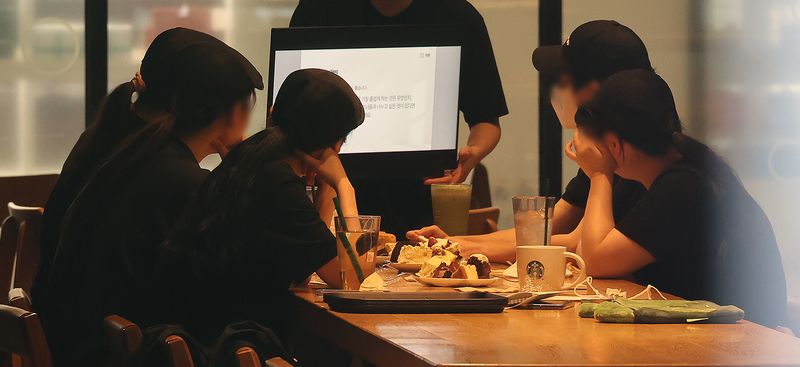
With the doors locked, Starbucks employees received training for about three hours that day.
Employees watched two lecture videos, each 50 minutes long, and then shared their thoughts and opinions. As Professor Gu had said earlier, the videos were recordings of a lecture held on the 17th for Starbucks Korea headquarters staff and executives from E-Mart affiliates. About 23,000 Starbucks Korea store and headquarters employees took part in the training that day.
Professor Je-Yeon Oh of the Department of History, Sungkyunkwan University, who lectured on 'the correct historical awareness companies should have,' stressed that "belittling, distorting, or denying the democratization movement is an act that undermines the identity of the Republic of Korea." He added that companies, too, must respect universal values such as human rights and peace based on a proper view of history.
Professor Gu explained the importance of managing social risk by citing marketing controversies involving companies in Korea and abroad. He also pointed to decision-making trapped in an internal corporate perspective, organizational cultures driven by sales pressure and speed, formal approval procedures, and organizational structures centered on homogeneous members as causes of such incidents.
Gu said, "Social sensitivity is not something you gain through good intentions alone. It is the ability to read society," adding that "it requires steady study and effort."
After the training ended around 6 p.m., some stores began preparing for the next day's business. When asked about the training, employees shared their own thoughts.
An employee identified as A at a Starbucks store in Jung-gu, Seoul, said, "After the controversy broke out, I personally felt a heavy burden." He added, "It was not an easy topic, dealing with historical awareness and social sensitivity, but I listened more intently than ever."
Another employee, identified as B, said, "At first, I thought, 'Why do I have to take this training?'" But after listening, he said, "I came to think that this is an issue that all members, not just one department, need to think about together."
"The store lights will no longer go out"
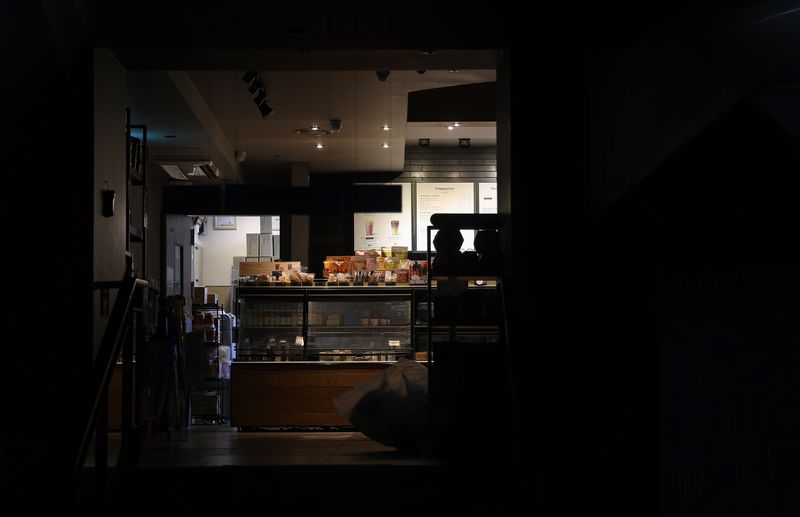
Starbucks Korea accepted a huge loss to hold the training that day. If daily sales are estimated at around 8.8 billion won, the loss from giving up key weekday afternoon business hours was substantial. Even so, analysts say the company chose full employee training because restoring long-term brand trust was more important than short-term sales losses.
Professor Gu, who led the training, also said, "Since the company asked for hard truths, I was quite blunt during the lecture."
He said, "It was a session mainly attended by executives, and I told them that if the people here cannot build and operate a verification system, the organization has no future." He added, "They asked for criticism, and I could feel their sincerity in wanting to change the organization."
He also addressed criticism that the burden of training was being shifted to store employees even though headquarters was at fault.
Gu pointed out, "If a problem occurs in one department, the same problem can easily repeat elsewhere." He added, "That is because this is not the fault of a particular employee, but an issue of corporate philosophy and values."
He also said the training should not remain a one-time event.
He said, "At present, Shinsegae Group appears willing to build a regular and continuous training system." He added, "What matters is whether these values are actually embedded in the organizational culture, and that is something consumers and the public should keep watching."
Starbucks also plans to use outside expert advice to build a 'Social Sensitivity Checklist' and overhaul its overall online and offline marketing review process in the wake of the incident. In addition, Shinsegae Group Chairman Jung Yong-jin, the parent company of Starbucks Korea, is scheduled to watch the training video with affiliate executives ahead of the executive meeting on the 24th.
We write only the news that is truly worth reading from the flood of headlines. We examine political, economic, social, and cultural issues from a fresh, sharp, and slightly offbeat perspective.[Useful Issue]If you want to read this more comfortably, please subscribe to the reporter page.
[email protected] Seo Yoon-kyung Reporter