[Editorial] Review of Higher Holding Taxes to Curb Home Prices Should Revisit Past Failures
- Input
- 2026-06-22 19:45:32
- Updated
- 2026-06-22 19:45:32
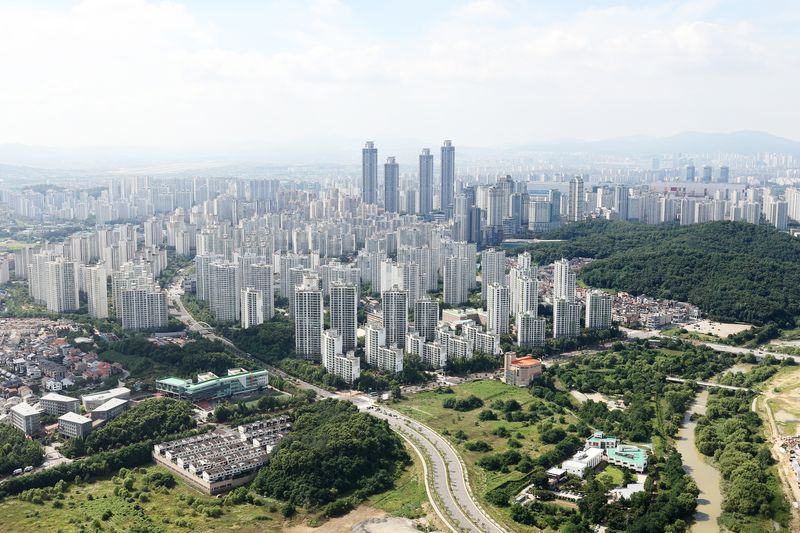
Kim’s remarks appear aimed at the recent surge in home prices in parts of the Seoul metropolitan area, including Dongtan, after large performance bonuses were paid out by Samsung Electronics and SK hynix. The Lee Jae-myung administration and the Blue House have repeatedly said they would stabilize the property market through the tax system. But after his comments, the market is watching closely for the possibility that next month’s tax reform plan will include increases in both holding taxes and capital gains taxes.
The government had initially expected that revitalizing the capital market would redirect money away from real estate and into stocks. In fact, helped by the semiconductor boom and capital market reforms, the KOSPI broke through the 9,000-point mark, and a significant amount of money moved into equities. But capital does not always move the way the government expects. Recently, signs of a reverse money move, with stock market funds flowing back into real estate, have also emerged.
It is also worrying that home prices have been rising rapidly in some areas after bonuses were paid by Samsung Electronics and SK hynix. According to the Korea Real Estate Board (KREB), apartment prices in Dongtan have jumped more than 4% over the past two weeks, and the cumulative gain this year has reached 9.57%. Some analysts say that, when performance bonuses for employees at the two companies and low-interest in-house loans are taken into account, the pool of waiting real estate funds linked to the two firms exceeds 50 trillion won. Even with abundant liquidity from fiscal expansion, it is not easy to control the market through regulation alone.
Past experience shows the same thing. During the Moon Jae-in administration, a series of punitive tax hikes led to a shortage of listings and increased the burden on homebuyers with actual demand. The side effects were also severe, as the tax burden was passed on to jeonse and monthly rent prices. The government has recently introduced strong demand-suppression measures, including expanding land transaction permit zones, tightening lending rules, and ending the grace period for heavier capital gains taxes on multi-home owners. But not only home prices, but also jeonse and rent prices are rising again, while the shortage of listings is worsening. It is like blocking one side of a levee during a flood only to have the other side burst.
In the end, the only way to stabilize home prices and ease the jeonse and rental crunch is to expand supply. Seoul and the metropolitan area lack developable land, and supply cannot be increased quickly. That does not mean the government can stand by. It should rationally ease regulations on reconstruction and redevelopment so that both the public and private sectors can participate, and move toward a meaningful expansion in supply.
Tax reform should also be aimed at encouraging transactions and expanding supply, rather than relying on one-sided tax hikes. If higher holding taxes are used to stabilize the property market, transaction taxes should be lowered to provide an exit. It is necessary to seriously consider ways to ease the burden of transaction taxes, including capital gains taxes, so that more listings come onto the market.